Breathing techniques for better rest are defined as controlled breath patterns that activate the parasympathetic nervous system, shifting the body from alert to calm. The clinical term for this process is autonomic modulation through respiratory control. When you slow your breath and extend your exhale, you stimulate the vagus nerve, lower your heart rate, and signal your body that sleep is safe. Research confirms that consistent nightly practice over four or more weeks improves sleep quality and nervous system resilience. The techniques covered here, including 4-7-8 breathing, box breathing, diaphragmatic breathing, and resonance breathing, are the most clinically supported methods available in 2026.
1. What is the 4-7-8 breathing technique and how does it improve sleep?
The 4-7-8 technique is the most widely practiced guided breathing method for sleep onset. It was popularized by Dr. Andrew Weil and follows a strict inhale-hold-exhale ratio that forces a long, controlled exhale. That extended exhale is the key. It activates the vagus nerve and pushes the body into parasympathetic dominance, the state your nervous system needs to fall asleep.
How to practice 4-7-8 breathing:
- Sit or lie in a comfortable position with your back supported.
- Exhale completely through your mouth to empty your lungs.
- Close your mouth and inhale quietly through your nose for 4 seconds.
- Hold your breath for 7 seconds.
- Exhale completely through your mouth for 8 seconds.
- Repeat the cycle 4 times to start.
The breath hold is what separates 4-7-8 from simpler deep breathing exercises. Holding for 7 seconds allows CO2 to accumulate slightly, which triggers a stronger relaxation signal when you finally exhale. Users report calming effects within 3–5 minutes of starting this pattern. That speed matters when you are lying awake at 11 p.m. with a racing mind.
Pro Tip: If the 7-second hold feels too intense at first, reduce the ratio to 3-5-6 and build up gradually. Forcing the full count before your body is ready can create tension instead of calm.
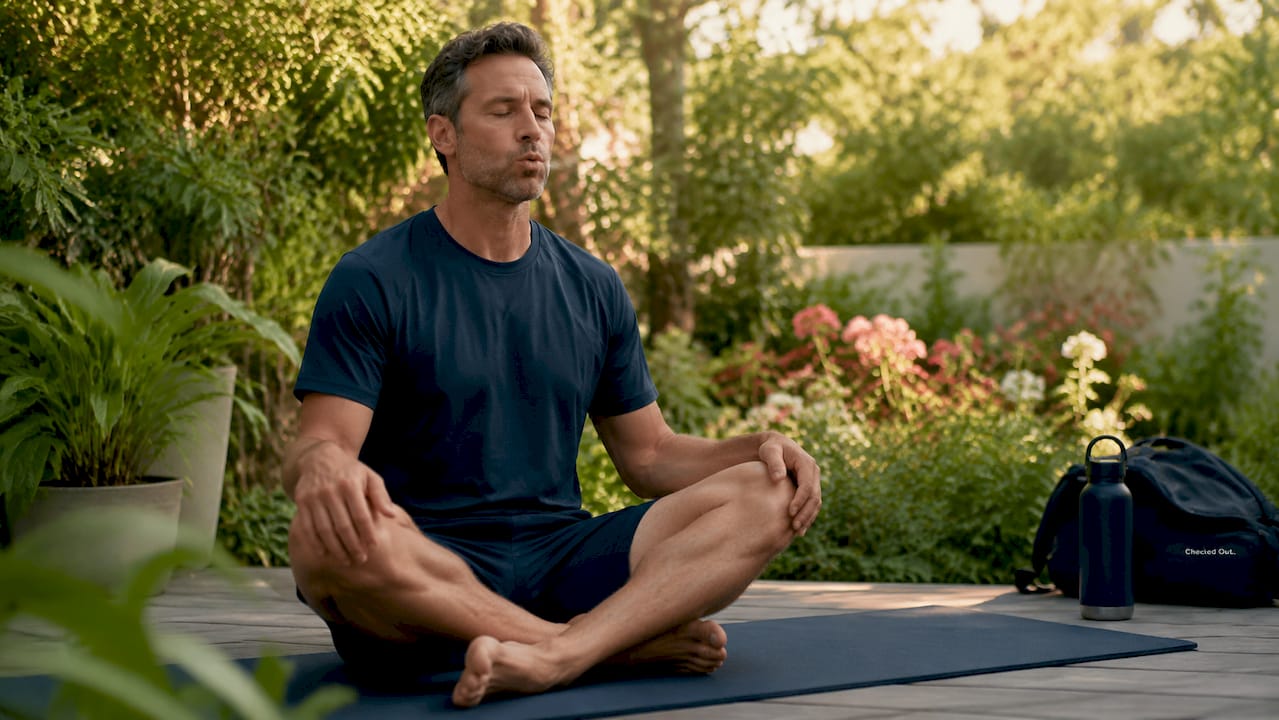
A common beginner mistake is breathing too deeply on the inhale, which can cause lightheadedness. Keep the inhale quiet and moderate. The power is in the exhale, not the intake.
2. How does box breathing (4-4-4-4) help you rest better?
Box breathing is a relaxation breathing technique built on four equal phases: inhale, hold, exhale, hold. Each phase lasts 4 seconds, creating a square rhythm that is easy to memorize and repeat. The equal timing is deliberate. It synchronizes your heart rate with your breath cycle, a process called respiratory sinus arrhythmia, which maximizes the baroreflex and deepens relaxation.
How to practice box breathing:
- Inhale through your nose for 4 seconds.
- Hold your breath for 4 seconds.
- Exhale slowly through your mouth for 4 seconds.
- Hold empty for 4 seconds.
- Repeat for 4–6 cycles.
“Slow breathing rhythms at approximately 5–6 breaths per minute synchronize heart rate and optimize baroreflex oscillation, enhancing relaxation.” Box breathing at 4-4-4-4 approximates this rhythm and is one of the easiest patterns to learn.
Beginners who find the 4-second hold uncomfortable can start with a 3-3-3-3 ratio. The goal is rhythm, not duration. Once the pattern feels natural, the nervous system begins to associate it with calm, which is exactly the conditioning you want before bed. Box breathing also works as a mid-day nervous system reset, making it one of the most practical calming breath practices for high performers who carry stress into the evening.
3. What is diaphragmatic breathing and why does it work for deeper rest?
Diaphragmatic breathing, also called belly breathing, is the foundation of all effective restful breathing strategies. Most adults breathe shallowly into the chest, which keeps the sympathetic nervous system slightly activated. Diaphragmatic breathing corrects this by directing breath into the abdomen, expanding the diaphragm fully, and improving oxygen efficiency while activating parasympathetic tone.
How to practice diaphragmatic breathing:
- Lie on your back with one hand on your chest and one on your belly.
- Breathe in slowly through your nose. Your belly should rise. Your chest should stay mostly still.
- Exhale through pursed lips or your nose. Feel your belly fall.
- Aim for 6–10 slow breaths per minute.
- Practice for 5–10 minutes before bed.
The hand placement is not just a teaching tool. It gives you real-time feedback on whether you are breathing correctly. If your chest rises first, you are still chest breathing. Redirect the breath lower until the belly leads.
Pro Tip: Place a lightweight book on your belly during practice. Watching it rise and fall gives you a visual anchor that keeps your attention on the breath and out of your thoughts.
Long-term practice with diaphragmatic breathing does more than help you fall asleep faster. It gradually retrains your resting breath pattern, so your body defaults to a calmer baseline throughout the day. That shift in baseline is what produces lasting sleep quality improvement over weeks, not just on the nights you practice.
4. How to use resonance breathing and extended exhale patterns for relaxation and sleep
Resonance breathing targets a specific respiratory rate of approximately 5–6 breaths per minute. At that rate, your heart rate variability (HRV) peaks, your baroreflex operates at maximum efficiency, and your body enters its deepest available relaxation state without sleep aids. Just 5 minutes of daily breathwork at this rhythm can significantly improve mood and anxiety markers within 30 days.
Extended exhale breathing is a simpler entry point into the same territory. Patterns like 4-6 (inhale 4, exhale 6) or 4-8 (inhale 4, exhale 8) produce the same vagal stimulation without requiring a breath hold. The extended exhalation slows heart rate and lowers muscle tension, preparing the body for sleep onset.
| Pattern |
Inhale |
Hold |
Exhale |
Hold |
Breaths/min |
| Resonance |
5 sec |
0 |
5 sec |
0 |
~6 |
| Extended exhale (4-6) |
4 sec |
0 |
6 sec |
0 |
~6 |
| Extended exhale (4-8) |
4 sec |
0 |
8 sec |
0 |
~4 |
| Box breathing (4-4-4-4) |
4 sec |
4 sec |
4 sec |
4 sec |
~4 |
Start with 5-minute sessions and build to 10–15 minutes over two to three weeks. The HRV benefits compound with consistency. Practitioners who maintain resonance breathing for four or more weeks report improved sleep resilience, meaning they fall back asleep faster after waking in the night. That is a different and deeper benefit than simply falling asleep faster.
5. What environmental and behavioral factors maximize breathing technique effectiveness?
A calming environment is nearly as important as the breathing technique itself. The nervous system cannot fully shift into parasympathetic mode when it is processing visual stimulation, noise, or thermal discomfort. Setting the right conditions before you begin removes friction and lets the breath do its work faster.
Conditions that amplify breathing practice results:
-
Lighting: Dim or eliminate lights at least 20 minutes before practice. Bright light suppresses melatonin and keeps the brain alert.
-
Noise: Use earplugs, a white noise machine, or silence. Reducing noise lowers cognitive load and allows full focus on the breath.
-
Temperature: A cool room (around 65–68°F) supports the body’s natural temperature drop during sleep onset.
-
Posture: Lie on your back or sit upright with your spine supported. Slouching compresses the diaphragm and limits breath depth.
-
Nasal breathing: Always breathe through your nose during practice. Nasal breathing optimizes oxygen exchange and promotes parasympathetic activation more effectively than mouth breathing.
-
Timing: Practice at the same time each night. Consistency trains the nervous system to begin its relaxation response on cue.
One behavioral factor that most people overlook is breath volume. Forcing deeper breaths can paradoxically trigger sympathetic arousal, making you more alert instead of calmer. Keep breaths quiet, light, and nasal. The goal is gentle rhythm, not maximum lung capacity.
Key takeaways
The most effective breathing techniques for better rest work by activating the parasympathetic nervous system through slow, controlled breath patterns practiced consistently at the same time each night.
| Point |
Details |
| Extended exhale is the mechanism |
Longer exhales stimulate the vagus nerve and lower heart rate, signaling the body to rest. |
| Consistency beats intensity |
Practicing any technique nightly for 4+ weeks conditions the nervous system to relax on cue. |
| Environment amplifies results |
Dim lighting, nasal breathing, and a cool room significantly improve technique effectiveness. |
| Start gentle, not deep |
Forcing deep breaths can activate stress responses; quiet nasal breathing works better for sleep. |
| Multiple techniques work |
4-7-8, box breathing, diaphragmatic, and resonance breathing each address different needs and preferences. |
What I’ve learned from years of breathing practice before bed
I spent a long time chasing the “best” technique. I tried 4-7-8 religiously for two weeks, then switched to box breathing, then to resonance breathing, convinced that the right pattern would finally fix my sleep. What I eventually understood is that the technique matters far less than the consistency.
The nervous system does not respond to a single perfect session. It responds to repetition. Regular practice over weeks conditions the autonomic nervous system, making the relaxation response automatic with familiar breathing patterns. That is not a motivational claim. It is how neural conditioning actually works.
The other thing I got wrong early on was effort. I was breathing too hard, too deep, too deliberately. I thought more effort meant more benefit. The opposite is true. The nights I breathe quietly, lightly, and without forcing anything are the nights I fall asleep fastest. The body does not need to be pushed into rest. It needs permission.
If you are new to breathwork, pick one technique, practice it for 30 days at the same time each night, and resist the urge to switch. You will likely feel subtle results in the first week and meaningful results by week four. Pair it with a complete sleep health approach and the compounding effect is real.
— Geeta
How Checkedoutwellness supports your breathing and rest routine
Breathing practice is one layer of a complete sleep system. Checkedoutwellness builds the other layers around it.

The natural sleep patch delivers magnesium, GABA, B6, and B12 transdermally while you sleep, supporting your body’s own melatonin production without synthetic additives. The Sleep Duo bundle pairs the patch with a mouth tape that keeps you breathing nasally through the night, reinforcing the same parasympathetic state your breathing practice creates before bed. Every product is manufactured in South Korea under ISO 22716 GMP pharmaceutical standards. If you want to know the science behind the formulation, Checkedoutwellness publishes it openly at the science page.
FAQ
How long does it take for breathing techniques to improve sleep?
Consistent practice over 4+ weeks produces measurable improvements in sleep quality and nervous system resilience. Most people notice calming effects within 3–5 minutes of starting a session from the first night.
Is 4-7-8 breathing or box breathing better for sleep?
Both are effective. 4-7-8 breathing works faster for acute sleep onset because the long exhale and breath hold produce a stronger immediate relaxation signal. Box breathing is better for sustained nervous system conditioning and mid-day stress resets.
Can breathing exercises replace sleep medication?
Breathing techniques are effective for sleep onset and anxiety-related sleeplessness but are not a replacement for medical treatment of structural sleep disorders like sleep apnea. They work best as a drug-free complement to a broader sleep health routine.
Why do I feel lightheaded during breathing exercises?
Lightheadedness usually results from breathing too deeply or too quickly, which lowers CO2 levels. Reduce your breath volume, slow your pace, and keep breaths quiet and nasal. Beginners also experience mild “air hunger,” which is a normal sign of CO2 balance adjustment and resolves with practice.
What is the best time to practice breathing techniques for sleep?
Practice at the same time each night, ideally within 20–30 minutes of your target sleep time. Timing and routine condition the nervous system to begin its relaxation response on cue, which is what makes the practice progressively more effective over weeks.
Recommended

Breathing Techniques for Better Rest: 2026 Guide
Breathing techniques for better rest are defined as controlled breath patterns that activate the parasympathetic nervous system, shifting the body from alert to calm. The clinical term for this process is autonomic modulation through respiratory control. When you slow your breath and extend your exhale, you stimulate the vagus nerve, lower your heart rate, and signal your body that sleep is safe. Research confirms that consistent nightly practice over four or more weeks improves sleep quality and nervous system resilience. The techniques covered here, including 4-7-8 breathing, box breathing, diaphragmatic breathing, and resonance breathing, are the most clinically supported methods available in 2026.
1. What is the 4-7-8 breathing technique and how does it improve sleep?
The 4-7-8 technique is the most widely practiced guided breathing method for sleep onset. It was popularized by Dr. Andrew Weil and follows a strict inhale-hold-exhale ratio that forces a long, controlled exhale. That extended exhale is the key. It activates the vagus nerve and pushes the body into parasympathetic dominance, the state your nervous system needs to fall asleep.
How to practice 4-7-8 breathing:
The breath hold is what separates 4-7-8 from simpler deep breathing exercises. Holding for 7 seconds allows CO2 to accumulate slightly, which triggers a stronger relaxation signal when you finally exhale. Users report calming effects within 3–5 minutes of starting this pattern. That speed matters when you are lying awake at 11 p.m. with a racing mind.
Pro Tip: If the 7-second hold feels too intense at first, reduce the ratio to 3-5-6 and build up gradually. Forcing the full count before your body is ready can create tension instead of calm.
A common beginner mistake is breathing too deeply on the inhale, which can cause lightheadedness. Keep the inhale quiet and moderate. The power is in the exhale, not the intake.
2. How does box breathing (4-4-4-4) help you rest better?
Box breathing is a relaxation breathing technique built on four equal phases: inhale, hold, exhale, hold. Each phase lasts 4 seconds, creating a square rhythm that is easy to memorize and repeat. The equal timing is deliberate. It synchronizes your heart rate with your breath cycle, a process called respiratory sinus arrhythmia, which maximizes the baroreflex and deepens relaxation.
How to practice box breathing:
Beginners who find the 4-second hold uncomfortable can start with a 3-3-3-3 ratio. The goal is rhythm, not duration. Once the pattern feels natural, the nervous system begins to associate it with calm, which is exactly the conditioning you want before bed. Box breathing also works as a mid-day nervous system reset, making it one of the most practical calming breath practices for high performers who carry stress into the evening.
3. What is diaphragmatic breathing and why does it work for deeper rest?
Diaphragmatic breathing, also called belly breathing, is the foundation of all effective restful breathing strategies. Most adults breathe shallowly into the chest, which keeps the sympathetic nervous system slightly activated. Diaphragmatic breathing corrects this by directing breath into the abdomen, expanding the diaphragm fully, and improving oxygen efficiency while activating parasympathetic tone.
How to practice diaphragmatic breathing:
The hand placement is not just a teaching tool. It gives you real-time feedback on whether you are breathing correctly. If your chest rises first, you are still chest breathing. Redirect the breath lower until the belly leads.
Pro Tip: Place a lightweight book on your belly during practice. Watching it rise and fall gives you a visual anchor that keeps your attention on the breath and out of your thoughts.
Long-term practice with diaphragmatic breathing does more than help you fall asleep faster. It gradually retrains your resting breath pattern, so your body defaults to a calmer baseline throughout the day. That shift in baseline is what produces lasting sleep quality improvement over weeks, not just on the nights you practice.
4. How to use resonance breathing and extended exhale patterns for relaxation and sleep
Resonance breathing targets a specific respiratory rate of approximately 5–6 breaths per minute. At that rate, your heart rate variability (HRV) peaks, your baroreflex operates at maximum efficiency, and your body enters its deepest available relaxation state without sleep aids. Just 5 minutes of daily breathwork at this rhythm can significantly improve mood and anxiety markers within 30 days.
Extended exhale breathing is a simpler entry point into the same territory. Patterns like 4-6 (inhale 4, exhale 6) or 4-8 (inhale 4, exhale 8) produce the same vagal stimulation without requiring a breath hold. The extended exhalation slows heart rate and lowers muscle tension, preparing the body for sleep onset.
Start with 5-minute sessions and build to 10–15 minutes over two to three weeks. The HRV benefits compound with consistency. Practitioners who maintain resonance breathing for four or more weeks report improved sleep resilience, meaning they fall back asleep faster after waking in the night. That is a different and deeper benefit than simply falling asleep faster.
5. What environmental and behavioral factors maximize breathing technique effectiveness?
A calming environment is nearly as important as the breathing technique itself. The nervous system cannot fully shift into parasympathetic mode when it is processing visual stimulation, noise, or thermal discomfort. Setting the right conditions before you begin removes friction and lets the breath do its work faster.
Conditions that amplify breathing practice results:
One behavioral factor that most people overlook is breath volume. Forcing deeper breaths can paradoxically trigger sympathetic arousal, making you more alert instead of calmer. Keep breaths quiet, light, and nasal. The goal is gentle rhythm, not maximum lung capacity.
Key takeaways
The most effective breathing techniques for better rest work by activating the parasympathetic nervous system through slow, controlled breath patterns practiced consistently at the same time each night.
What I’ve learned from years of breathing practice before bed
I spent a long time chasing the “best” technique. I tried 4-7-8 religiously for two weeks, then switched to box breathing, then to resonance breathing, convinced that the right pattern would finally fix my sleep. What I eventually understood is that the technique matters far less than the consistency.
The nervous system does not respond to a single perfect session. It responds to repetition. Regular practice over weeks conditions the autonomic nervous system, making the relaxation response automatic with familiar breathing patterns. That is not a motivational claim. It is how neural conditioning actually works.
The other thing I got wrong early on was effort. I was breathing too hard, too deep, too deliberately. I thought more effort meant more benefit. The opposite is true. The nights I breathe quietly, lightly, and without forcing anything are the nights I fall asleep fastest. The body does not need to be pushed into rest. It needs permission.
If you are new to breathwork, pick one technique, practice it for 30 days at the same time each night, and resist the urge to switch. You will likely feel subtle results in the first week and meaningful results by week four. Pair it with a complete sleep health approach and the compounding effect is real.
How Checkedoutwellness supports your breathing and rest routine
Breathing practice is one layer of a complete sleep system. Checkedoutwellness builds the other layers around it.
The natural sleep patch delivers magnesium, GABA, B6, and B12 transdermally while you sleep, supporting your body’s own melatonin production without synthetic additives. The Sleep Duo bundle pairs the patch with a mouth tape that keeps you breathing nasally through the night, reinforcing the same parasympathetic state your breathing practice creates before bed. Every product is manufactured in South Korea under ISO 22716 GMP pharmaceutical standards. If you want to know the science behind the formulation, Checkedoutwellness publishes it openly at the science page.
FAQ
How long does it take for breathing techniques to improve sleep?
Consistent practice over 4+ weeks produces measurable improvements in sleep quality and nervous system resilience. Most people notice calming effects within 3–5 minutes of starting a session from the first night.
Is 4-7-8 breathing or box breathing better for sleep?
Both are effective. 4-7-8 breathing works faster for acute sleep onset because the long exhale and breath hold produce a stronger immediate relaxation signal. Box breathing is better for sustained nervous system conditioning and mid-day stress resets.
Can breathing exercises replace sleep medication?
Breathing techniques are effective for sleep onset and anxiety-related sleeplessness but are not a replacement for medical treatment of structural sleep disorders like sleep apnea. They work best as a drug-free complement to a broader sleep health routine.
Why do I feel lightheaded during breathing exercises?
Lightheadedness usually results from breathing too deeply or too quickly, which lowers CO2 levels. Reduce your breath volume, slow your pace, and keep breaths quiet and nasal. Beginners also experience mild “air hunger,” which is a normal sign of CO2 balance adjustment and resolves with practice.
What is the best time to practice breathing techniques for sleep?
Practice at the same time each night, ideally within 20–30 minutes of your target sleep time. Timing and routine condition the nervous system to begin its relaxation response on cue, which is what makes the practice progressively more effective over weeks.
Recommended