Sleep quality is defined as how restorative and uninterrupted your sleep is, and it matters far more than the number of hours you log. Most people chasing better mornings focus on bedtime, when the real leverage sits in what happens during the 16 hours before you close your eyes. This sleep quality improvement list draws on guidance from Harvard Health, Mayo Clinic, Johns Hopkins Medicine, and 2026 behavioral research to give you a ranked, practical framework. Sleep hygiene, the clinical term for behavioral and environmental sleep practices, is the foundation every biohacker and high performer should build on before reaching for any supplement or device.
1. Align your circadian rhythm with consistent wake times
Your circadian rhythm is a 24-hour biological clock that governs cortisol, melatonin, and core body temperature. Disrupting it even slightly has measurable consequences. Varying wake time by more than 30 minutes between weekdays and weekends creates a social jet lag effect that fragments your sleep architecture across the entire week. That means Monday morning grogginess is often self-inflicted on Saturday night.
The fix is simpler than most people expect. Set one wake time and hold it seven days a week, including days off. Your body will begin consolidating sleep pressure into a tighter, deeper window. Morning light exposure within 30 minutes of waking anchors the rhythm further by suppressing residual melatonin and triggering the cortisol awakening response that sharpens alertness.
- Wake at the same time daily, no exceptions on weekends
- Get outside or near a bright window within 30 minutes of waking
- Avoid sleeping in more than 30 minutes even after a poor night
Pro Tip: If you travel across time zones frequently, shift your wake time by 15-minute increments over several days rather than jumping cold. This is the same principle elite athletes use to manage competition schedules.
2. Optimize your bedroom environment
The bedroom is a physiological cue, not just a room. Every sensory input, temperature, light, and sound, either reinforces or undermines your brain’s sleep association. The ideal sleep temperature sits between 65 and 68°F. Your core body temperature must drop by about 2 to 3 degrees Fahrenheit to initiate and maintain deep sleep, and a cool room accelerates that process.
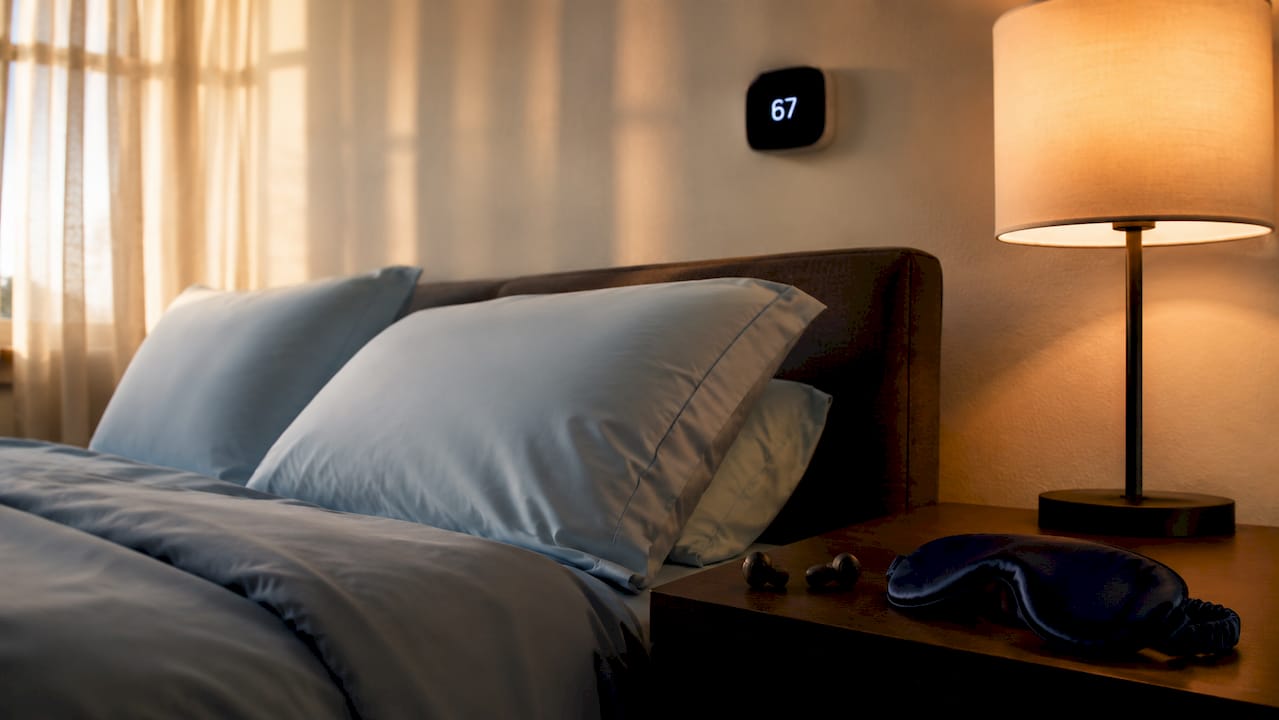
Darkness matters just as much. Using low-wattage lighting during any nighttime awakening preserves melatonin production and makes returning to sleep significantly easier. Overhead lights at 2 a.m. are one of the most underrated sleep disruptors in modern households. A blackout mask or blackout curtains can eliminate ambient light from streetlamps and devices entirely.
| Environment factor |
Optimal condition |
Common mistake |
| Temperature |
65 to 68°F |
Room too warm, above 72°F |
| Light |
Complete darkness |
Leaving TV or phone on standby |
| Noise |
Quiet or consistent white noise |
Intermittent sounds like notifications |
| Bed use |
Sleep and sex only |
Working or watching TV in bed |
Pro Tip: A quality mattress that supports spinal alignment reduces micro-arousals you never consciously register. These brief interruptions suppress slow-wave sleep even when you feel like you slept through the night.
3. Build a wind-down routine that actually works
The body does not switch from high alert to deep sleep on command. A wind-down routine is the physiological ramp-down your nervous system needs, and it should begin 30 to 60 minutes before your target sleep time. The goal is not relaxation for its own sake. It is a deliberate drop in core body temperature and cortisol that signals the brain to release melatonin.
A warm bath or shower 60 to 90 minutes before bed is one of the most evidence-backed tools available. Moving from a warm bath to a cooler bedroom triggers a rapid drop in core body temperature, accelerating sleep onset. The contrast does the work, not the bath alone.
- Dim all lights in your home 60 minutes before bed
- Take a warm shower or bath 60 to 90 minutes before sleep
- Spend 20 minutes reading physical print or doing light stretching
- Put your phone in another room or enable full Do Not Disturb mode
- Practice 4-7-8 breathing or a short body scan meditation
“If you can’t fall asleep within 20 minutes, get out of bed and do something calm in low light until you feel genuinely sleepy. Lying awake in bed trains your brain to associate the mattress with wakefulness, which compounds insomnia over time.” — MedlinePlus, National Library of Medicine
Blue light from screens suppresses melatonin production for up to two hours after exposure. Swapping your phone for a physical book is not a lifestyle choice. It is a neurochemical one.
4. Use CBT-i principles before reaching for supplements
CBT-i (Cognitive Behavioral Therapy for Insomnia) resets the brain’s sleep controllers through behavioral adjustments and relaxation techniques rather than medication. Harvard Health identifies it as the gold standard for chronic sleep issues, outperforming sleep aids in long-term outcomes. The reason is structural: CBT-i addresses the thought patterns and behaviors that perpetuate poor sleep, not just the symptoms.
One of its most counterintuitive tools is sleep compression. Sleep compression restricts time in bed to match actual sleep duration, then gradually expands it as efficiency improves. This sounds uncomfortable, and it is at first. But it eliminates the sleep anxiety that comes from lying awake for hours, which is often the real driver of chronic insomnia. You can explore science-backed sleep steps that incorporate these principles without a formal therapist.
5. Exercise daily, but time it carefully
As little as 10 minutes of daily walking improves sleep quality, with outdoor exercise providing an added benefit by reinforcing the circadian rhythm through natural light exposure. This is one of the most accessible and underused strategies for restful sleep. You do not need a gym membership or a structured program to see results.
Timing matters more than most people realize. Vigorous exercise within three hours of bedtime raises core body temperature and cortisol, both of which delay sleep onset. Morning or early afternoon workouts produce the opposite effect, deepening slow-wave sleep later that night. If evening is your only window, opt for yoga, walking, or mobility work rather than high-intensity training.
- Aim for at least 10 minutes of movement daily, preferably outdoors
- Schedule intense workouts before 6 p.m. when possible
- Use evening walks as both light exercise and a wind-down transition
6. Manage caffeine, alcohol, and late meals
Caffeine has a half-life of five to seven hours in most adults, meaning a 3 p.m. coffee still has half its stimulant load in your system at 8 p.m. The practical cutoff for most people is 1 to 2 p.m., though individual metabolism varies. Alcohol is equally misunderstood. It may help you fall asleep faster, but it fragments REM sleep in the second half of the night, leaving you groggy despite a full eight hours.
Heavy meals within two to three hours of bedtime force your digestive system into active work during a period when your body wants to downregulate. This raises core temperature and disrupts the hormonal cascade that initiates deep sleep. Light snacks that support the tryptophan-to-serotonin-to-melatonin conversion pathway, such as warm milk, tart cherry juice, or a small handful of walnuts, are a smarter choice if you need something before bed. Johns Hopkins Medicine also notes that chamomile tea and tart cherry juice are among the most evidence-supported natural sleep aids available.
Pro Tip: Tart cherry juice contains naturally occurring melatonin precursors. Drinking four to eight ounces about an hour before bed is a drug-free way to nudge your body’s own melatonin production without the dosing variability that comes with supplements.
7. Approach melatonin supplements with precision
Melatonin is not a sleeping pill. It is a timing signal. Taking it correctly means using low doses (0.5 to 1 mg) about 60 to 90 minutes before your target sleep time, not at the moment you want to fall asleep. Most over-the-counter doses are five to ten times higher than what research supports for circadian shifting. Higher doses do not produce deeper sleep. They produce grogginess and can suppress your body’s own melatonin production over time.
Melatonin supplements vary significantly between brands due to inconsistent manufacturing standards, which means the dose on the label may not match what you actually consume. Sticking with one reputable brand reduces this variability. A better long-term strategy is supporting your body’s own melatonin synthesis through cofactors like magnesium, vitamin B6, and GABA, which feed the tryptophan-to-serotonin-to-melatonin conversion pathway without creating dependency. You can read more about supplements for deeper sleep to understand which compounds have the strongest clinical backing.
8. Manage stress before it manages your sleep
Cortisol dysregulation is one of the most common and least addressed drivers of poor sleep. When your stress response stays elevated into the evening, it directly suppresses melatonin release and keeps your nervous system in a low-grade alert state. You may feel tired but wired, which is the hallmark of a dysregulated HPA axis. The body keeps score quietly, and sleep is where it presents the bill.
Practical stress management does not require an hour of meditation. A five-minute journaling practice that offloads tomorrow’s to-do list before bed reduces cognitive arousal significantly. Progressive muscle relaxation, where you tense and release muscle groups from feet to face, activates the parasympathetic nervous system within minutes. Consistent practice matters more than duration. Even three minutes of deliberate breathing before bed produces measurable reductions in heart rate variability that support sleep onset.
9. Track your sleep to find your personal patterns
Sleep tracking with tools like the Oura Ring, Whoop, or even a basic sleep diary reveals patterns that subjective memory misses entirely. Most people dramatically overestimate how long they sleep and underestimate how fragmented that sleep is. Seeing your actual data removes the guesswork and makes your sleep quality enhancement efforts measurable.
The goal of tracking is not to obsess over numbers. It is to identify which variables, bedtime, alcohol, exercise timing, or screen use, correlate most strongly with your worst nights. Once you know your personal triggers, you can address them directly rather than applying generic advice. One week of consistent tracking typically reveals two or three high-leverage changes that produce immediate results.
10. Protect sleep quality during travel and disruption
Travel is one of the most reliable sleep disruptors for high performers, and it is rarely managed well. Crossing time zones shifts your circadian rhythm by hours, but the damage compounds when you add poor hotel lighting, unfamiliar noise, and disrupted meal timing. The sleep hygiene checklist from Northwell Health confirms that quality of sleep matters more than duration, which means protecting sleep architecture during travel is worth more than simply logging more hours in a hotel bed.
Practical travel protocols include bringing a blackout mask, using white noise through earbuds or a phone app, maintaining your home wake time in the new time zone for the first 24 hours, and avoiding alcohol on flights. These are not comfort measures. They are circadian anchors that reduce the recovery debt you accumulate when sleep architecture collapses across multiple nights.
Key takeaways
Consistent sleep quality improvement requires aligning your circadian rhythm, optimizing your environment, and addressing behavioral patterns before turning to supplements or technology.
| Point |
Details |
| Circadian consistency |
Hold your wake time within 30 minutes daily to prevent social jet lag. |
| Environment optimization |
Keep your room between 65 and 68°F with complete darkness for deeper sleep. |
| Wind-down routine |
Begin dimming lights and reducing stimulation 60 minutes before bed. |
| Behavioral tools first |
CBT-i and sleep compression outperform supplements for chronic sleep issues. |
| Natural melatonin support |
Use cofactors like magnesium and B6 to support your body’s own melatonin production. |
What I’ve learned after years of chasing better sleep
I spent a long time believing sleep was something that happened to me, not something I could actively shape. The turning point was not a supplement or a gadget. It was realizing that my 6 a.m. wake time on weekdays and my 8:30 a.m. Saturday sleep-in were quietly dismantling every other effort I made.
The most common mistake I see is people layering biohacks on top of a broken foundation. Expensive trackers, high-dose melatonin, elaborate supplement stacks. None of it compensates for irregular wake times, a warm bedroom, and a phone that stays lit until midnight. Sleep hygiene basics are not the boring part you do before the real work. They are the real work.
What I have found genuinely useful is the mindset shift from “I need to sleep more” to “I need to sleep better.” Duration without quality is just time in bed. Once you start measuring sleep efficiency rather than hours, the whole picture changes. You stop trying to force eight hours and start protecting the architecture of the hours you have.
Patience matters here too. Circadian rhythms take days to shift, and behavioral patterns take weeks to consolidate. The people who see the fastest results are not the ones who overhaul everything at once. They are the ones who pick two or three changes, hold them consistently for three weeks, and then layer in the next adjustment. Progress is incremental, and that is not a limitation. It is how the biology actually works.
— Geeta
Natural sleep support from Checkedoutwellness
If you have worked through the behavioral fundamentals and want to add a drug-free layer of support, Checkedoutwellness builds products specifically for this moment. Their sleep patches and mouth tape are manufactured in South Korea under ISO 22716 GMP pharmaceutical standards and formulated with cofactors like magnesium, B6, B12, and GABA that support your body’s own melatonin production rather than replacing it. No synthetic melatonin. No dependency risk.

The Sleep Patch is designed for high performers, travelers, and anyone whose sleep patterns get disrupted by schedule changes or stress. It works with the behavioral strategies in this list, not instead of them. If you want to understand the research behind the formulation, the science page breaks down exactly how each ingredient supports overnight recovery.
FAQ
What is sleep quality and why does it matter more than duration?
Sleep quality refers to how restorative and uninterrupted your sleep is, including time spent in deep and REM stages. Poor quality sleep leaves you groggy even after eight hours, while high-quality sleep of six hours can feel more restorative.
How do I fix a disrupted sleep pattern quickly?
Set a fixed wake time and hold it for seven consecutive days, regardless of how poorly you slept the night before. This rebuilds sleep pressure and resets your circadian rhythm faster than any other single intervention.
Does CBT-i actually work without a therapist?
CBT-i principles including sleep restriction, stimulus control, and relaxation techniques can be self-applied using structured guides and apps. Research shows self-directed CBT-i produces meaningful improvements in sleep efficiency within two to four weeks.
What is the best natural sleep aid to try first?
Tart cherry juice, chamomile tea, and magnesium glycinate are among the most evidence-supported options with minimal side effects. These work by supporting the body’s own melatonin pathway rather than introducing synthetic hormones.
How long does it take to see results from better sleep habits?
Most people notice measurable improvement in sleep onset and morning energy within one to two weeks of consistent behavioral changes. Full circadian stabilization typically takes three to four weeks of maintained habits.
Recommended

Sleep Quality Improvement List: 10 Proven Strategies
Sleep quality is defined as how restorative and uninterrupted your sleep is, and it matters far more than the number of hours you log. Most people chasing better mornings focus on bedtime, when the real leverage sits in what happens during the 16 hours before you close your eyes. This sleep quality improvement list draws on guidance from Harvard Health, Mayo Clinic, Johns Hopkins Medicine, and 2026 behavioral research to give you a ranked, practical framework. Sleep hygiene, the clinical term for behavioral and environmental sleep practices, is the foundation every biohacker and high performer should build on before reaching for any supplement or device.
1. Align your circadian rhythm with consistent wake times
Your circadian rhythm is a 24-hour biological clock that governs cortisol, melatonin, and core body temperature. Disrupting it even slightly has measurable consequences. Varying wake time by more than 30 minutes between weekdays and weekends creates a social jet lag effect that fragments your sleep architecture across the entire week. That means Monday morning grogginess is often self-inflicted on Saturday night.
The fix is simpler than most people expect. Set one wake time and hold it seven days a week, including days off. Your body will begin consolidating sleep pressure into a tighter, deeper window. Morning light exposure within 30 minutes of waking anchors the rhythm further by suppressing residual melatonin and triggering the cortisol awakening response that sharpens alertness.
Pro Tip: If you travel across time zones frequently, shift your wake time by 15-minute increments over several days rather than jumping cold. This is the same principle elite athletes use to manage competition schedules.
2. Optimize your bedroom environment
The bedroom is a physiological cue, not just a room. Every sensory input, temperature, light, and sound, either reinforces or undermines your brain’s sleep association. The ideal sleep temperature sits between 65 and 68°F. Your core body temperature must drop by about 2 to 3 degrees Fahrenheit to initiate and maintain deep sleep, and a cool room accelerates that process.
Darkness matters just as much. Using low-wattage lighting during any nighttime awakening preserves melatonin production and makes returning to sleep significantly easier. Overhead lights at 2 a.m. are one of the most underrated sleep disruptors in modern households. A blackout mask or blackout curtains can eliminate ambient light from streetlamps and devices entirely.
Pro Tip: A quality mattress that supports spinal alignment reduces micro-arousals you never consciously register. These brief interruptions suppress slow-wave sleep even when you feel like you slept through the night.
3. Build a wind-down routine that actually works
The body does not switch from high alert to deep sleep on command. A wind-down routine is the physiological ramp-down your nervous system needs, and it should begin 30 to 60 minutes before your target sleep time. The goal is not relaxation for its own sake. It is a deliberate drop in core body temperature and cortisol that signals the brain to release melatonin.
A warm bath or shower 60 to 90 minutes before bed is one of the most evidence-backed tools available. Moving from a warm bath to a cooler bedroom triggers a rapid drop in core body temperature, accelerating sleep onset. The contrast does the work, not the bath alone.
Blue light from screens suppresses melatonin production for up to two hours after exposure. Swapping your phone for a physical book is not a lifestyle choice. It is a neurochemical one.
4. Use CBT-i principles before reaching for supplements
CBT-i (Cognitive Behavioral Therapy for Insomnia) resets the brain’s sleep controllers through behavioral adjustments and relaxation techniques rather than medication. Harvard Health identifies it as the gold standard for chronic sleep issues, outperforming sleep aids in long-term outcomes. The reason is structural: CBT-i addresses the thought patterns and behaviors that perpetuate poor sleep, not just the symptoms.
One of its most counterintuitive tools is sleep compression. Sleep compression restricts time in bed to match actual sleep duration, then gradually expands it as efficiency improves. This sounds uncomfortable, and it is at first. But it eliminates the sleep anxiety that comes from lying awake for hours, which is often the real driver of chronic insomnia. You can explore science-backed sleep steps that incorporate these principles without a formal therapist.
5. Exercise daily, but time it carefully
As little as 10 minutes of daily walking improves sleep quality, with outdoor exercise providing an added benefit by reinforcing the circadian rhythm through natural light exposure. This is one of the most accessible and underused strategies for restful sleep. You do not need a gym membership or a structured program to see results.
Timing matters more than most people realize. Vigorous exercise within three hours of bedtime raises core body temperature and cortisol, both of which delay sleep onset. Morning or early afternoon workouts produce the opposite effect, deepening slow-wave sleep later that night. If evening is your only window, opt for yoga, walking, or mobility work rather than high-intensity training.
6. Manage caffeine, alcohol, and late meals
Caffeine has a half-life of five to seven hours in most adults, meaning a 3 p.m. coffee still has half its stimulant load in your system at 8 p.m. The practical cutoff for most people is 1 to 2 p.m., though individual metabolism varies. Alcohol is equally misunderstood. It may help you fall asleep faster, but it fragments REM sleep in the second half of the night, leaving you groggy despite a full eight hours.
Heavy meals within two to three hours of bedtime force your digestive system into active work during a period when your body wants to downregulate. This raises core temperature and disrupts the hormonal cascade that initiates deep sleep. Light snacks that support the tryptophan-to-serotonin-to-melatonin conversion pathway, such as warm milk, tart cherry juice, or a small handful of walnuts, are a smarter choice if you need something before bed. Johns Hopkins Medicine also notes that chamomile tea and tart cherry juice are among the most evidence-supported natural sleep aids available.
Pro Tip: Tart cherry juice contains naturally occurring melatonin precursors. Drinking four to eight ounces about an hour before bed is a drug-free way to nudge your body’s own melatonin production without the dosing variability that comes with supplements.
7. Approach melatonin supplements with precision
Melatonin is not a sleeping pill. It is a timing signal. Taking it correctly means using low doses (0.5 to 1 mg) about 60 to 90 minutes before your target sleep time, not at the moment you want to fall asleep. Most over-the-counter doses are five to ten times higher than what research supports for circadian shifting. Higher doses do not produce deeper sleep. They produce grogginess and can suppress your body’s own melatonin production over time.
Melatonin supplements vary significantly between brands due to inconsistent manufacturing standards, which means the dose on the label may not match what you actually consume. Sticking with one reputable brand reduces this variability. A better long-term strategy is supporting your body’s own melatonin synthesis through cofactors like magnesium, vitamin B6, and GABA, which feed the tryptophan-to-serotonin-to-melatonin conversion pathway without creating dependency. You can read more about supplements for deeper sleep to understand which compounds have the strongest clinical backing.
8. Manage stress before it manages your sleep
Cortisol dysregulation is one of the most common and least addressed drivers of poor sleep. When your stress response stays elevated into the evening, it directly suppresses melatonin release and keeps your nervous system in a low-grade alert state. You may feel tired but wired, which is the hallmark of a dysregulated HPA axis. The body keeps score quietly, and sleep is where it presents the bill.
Practical stress management does not require an hour of meditation. A five-minute journaling practice that offloads tomorrow’s to-do list before bed reduces cognitive arousal significantly. Progressive muscle relaxation, where you tense and release muscle groups from feet to face, activates the parasympathetic nervous system within minutes. Consistent practice matters more than duration. Even three minutes of deliberate breathing before bed produces measurable reductions in heart rate variability that support sleep onset.
9. Track your sleep to find your personal patterns
Sleep tracking with tools like the Oura Ring, Whoop, or even a basic sleep diary reveals patterns that subjective memory misses entirely. Most people dramatically overestimate how long they sleep and underestimate how fragmented that sleep is. Seeing your actual data removes the guesswork and makes your sleep quality enhancement efforts measurable.
The goal of tracking is not to obsess over numbers. It is to identify which variables, bedtime, alcohol, exercise timing, or screen use, correlate most strongly with your worst nights. Once you know your personal triggers, you can address them directly rather than applying generic advice. One week of consistent tracking typically reveals two or three high-leverage changes that produce immediate results.
10. Protect sleep quality during travel and disruption
Travel is one of the most reliable sleep disruptors for high performers, and it is rarely managed well. Crossing time zones shifts your circadian rhythm by hours, but the damage compounds when you add poor hotel lighting, unfamiliar noise, and disrupted meal timing. The sleep hygiene checklist from Northwell Health confirms that quality of sleep matters more than duration, which means protecting sleep architecture during travel is worth more than simply logging more hours in a hotel bed.
Practical travel protocols include bringing a blackout mask, using white noise through earbuds or a phone app, maintaining your home wake time in the new time zone for the first 24 hours, and avoiding alcohol on flights. These are not comfort measures. They are circadian anchors that reduce the recovery debt you accumulate when sleep architecture collapses across multiple nights.
Key takeaways
Consistent sleep quality improvement requires aligning your circadian rhythm, optimizing your environment, and addressing behavioral patterns before turning to supplements or technology.
What I’ve learned after years of chasing better sleep
I spent a long time believing sleep was something that happened to me, not something I could actively shape. The turning point was not a supplement or a gadget. It was realizing that my 6 a.m. wake time on weekdays and my 8:30 a.m. Saturday sleep-in were quietly dismantling every other effort I made.
The most common mistake I see is people layering biohacks on top of a broken foundation. Expensive trackers, high-dose melatonin, elaborate supplement stacks. None of it compensates for irregular wake times, a warm bedroom, and a phone that stays lit until midnight. Sleep hygiene basics are not the boring part you do before the real work. They are the real work.
What I have found genuinely useful is the mindset shift from “I need to sleep more” to “I need to sleep better.” Duration without quality is just time in bed. Once you start measuring sleep efficiency rather than hours, the whole picture changes. You stop trying to force eight hours and start protecting the architecture of the hours you have.
Patience matters here too. Circadian rhythms take days to shift, and behavioral patterns take weeks to consolidate. The people who see the fastest results are not the ones who overhaul everything at once. They are the ones who pick two or three changes, hold them consistently for three weeks, and then layer in the next adjustment. Progress is incremental, and that is not a limitation. It is how the biology actually works.
Natural sleep support from Checkedoutwellness
If you have worked through the behavioral fundamentals and want to add a drug-free layer of support, Checkedoutwellness builds products specifically for this moment. Their sleep patches and mouth tape are manufactured in South Korea under ISO 22716 GMP pharmaceutical standards and formulated with cofactors like magnesium, B6, B12, and GABA that support your body’s own melatonin production rather than replacing it. No synthetic melatonin. No dependency risk.
The Sleep Patch is designed for high performers, travelers, and anyone whose sleep patterns get disrupted by schedule changes or stress. It works with the behavioral strategies in this list, not instead of them. If you want to understand the research behind the formulation, the science page breaks down exactly how each ingredient supports overnight recovery.
FAQ
What is sleep quality and why does it matter more than duration?
Sleep quality refers to how restorative and uninterrupted your sleep is, including time spent in deep and REM stages. Poor quality sleep leaves you groggy even after eight hours, while high-quality sleep of six hours can feel more restorative.
How do I fix a disrupted sleep pattern quickly?
Set a fixed wake time and hold it for seven consecutive days, regardless of how poorly you slept the night before. This rebuilds sleep pressure and resets your circadian rhythm faster than any other single intervention.
Does CBT-i actually work without a therapist?
CBT-i principles including sleep restriction, stimulus control, and relaxation techniques can be self-applied using structured guides and apps. Research shows self-directed CBT-i produces meaningful improvements in sleep efficiency within two to four weeks.
What is the best natural sleep aid to try first?
Tart cherry juice, chamomile tea, and magnesium glycinate are among the most evidence-supported options with minimal side effects. These work by supporting the body’s own melatonin pathway rather than introducing synthetic hormones.
How long does it take to see results from better sleep habits?
Most people notice measurable improvement in sleep onset and morning energy within one to two weeks of consistent behavioral changes. Full circadian stabilization typically takes three to four weeks of maintained habits.
Recommended