Walking into any supplement aisle — or scrolling through any wellness feed — quickly reveals a flood of products promising deeper, more restorative sleep. Most of them lean on vague claims, underdosed formulas, and marketing that outpaces the actual science. For health-conscious travelers, biohackers, and high performers, sorting the real from the noise isn’t just inconvenient; it directly affects recovery, performance, and long-term wellbeing. This guide cuts through the confusion with a clear, evidence-based framework for choosing sleep supplements that genuinely support the way your body was designed to rest.
Table of Contents
Key Takeaways
| Point |
Details |
| Criteria first |
Start by clarifying your sleep needs and priorities before choosing a supplement. |
| Magnesium evidence |
Magnesium bisglycinate showed significant benefits for sleep quality in a 2025 clinical trial. |
| Melatonin for travel |
Melatonin remains the best-studied option for resetting sleep patterns after jet lag. |
| Situational choosing |
Match your supplement to your lifestyle—travel, stress, or workout recovery—for best results. |
| Real results stack |
Supplements work best when combined with consistent habits and a personalized routine. |
How to choose supplements for deeper sleep
Not all sleep supplements are created equal, and the difference between a product that helps and one that simply looks good on a label often comes down to the quality of its evidence. Before you invest in anything, it pays to build a personal criteria checklist based on science, safety, and your specific sleep challenges.
Start with the evidence base. Ask whether a supplement has been tested in randomized controlled trials (RCTs), the gold standard in clinical research. Observational studies and animal data can be interesting, but they rarely tell the full story. A supplement backed by well-designed human RCTs is worth more than a dozen products backed by testimonials.
Prioritize natural and cofactor-based ingredients. Look for supplements that work with your body’s own systems rather than overriding them. Ingredients like magnesium, B vitamins, GABA, and amino acid precursors (like L-tryptophan) support the tryptophan-to-serotonin-to-melatonin conversion pathway naturally. This is a fundamentally different approach from flooding your system with synthetic melatonin every night. Reviewing natural steps for better sleep can help you see how these ingredients fit into a broader sleep strategy.
Match the supplement to your actual need. Are you dealing with jet lag, workout recovery, chronic low-level stress, or fragmented sleep? The right answer for a transatlantic traveler looks different from what a biohacker optimizing deep-sleep stages needs. Specificity matters.
Here are the most common red flags when evaluating a sleep product:
-
Proprietary blends that hide individual ingredient doses
-
Massive melatonin doses (5 mg or more) far above physiological levels
-
No third-party testing or transparent manufacturing standards
-
Buzzword-heavy labels with no citations to support them
-
One-size-fits-all positioning that ignores real individual variation
Pro Tip: Before buying any supplement, search for the specific formulation in a clinical trials database or peer-reviewed journal. If the brand can’t point you to at least one human study, that’s useful information on its own.
Top natural supplements for deeper sleep: science and evidence
With the framework in mind, let’s examine the natural supplements that consistently meet these criteria and appear most often in credible sleep research.
Magnesium bisglycinate
Magnesium is arguably the most well-studied mineral for sleep support. It regulates GABA receptors in the brain, directly influencing the nervous system’s ability to shift into a restful state. Not all forms of magnesium are equally effective, though. Magnesium bisglycinate, a chelated form bound to the amino acid glycine, has superior bioavailability compared to magnesium oxide or sulfate.
A 2025 RCT (n=155) found that 250 mg of magnesium bisglycinate significantly reduced Insomnia Severity Index scores by 3.9 points versus 2.3 points in the placebo group. That’s a clinically meaningful difference for people reporting insufficient sleep without a clinical insomnia diagnosis.
“The magnitude of improvement observed in the magnesium bisglycinate group, compared to placebo, suggests this formulation offers a practical and well-tolerated option for adults experiencing mild to moderate sleep insufficiency.” — Summary of findings from the 2025 RCT on magnesium bisglycinate
Magnesium is particularly well-suited for people under stress, athletes managing training loads, and older adults, because all three groups tend to show measurable magnesium depletion. The body keeps score quietly: stress hormones like cortisol actively deplete magnesium reserves, which then impair the very sleep needed to manage cortisol.
Melatonin
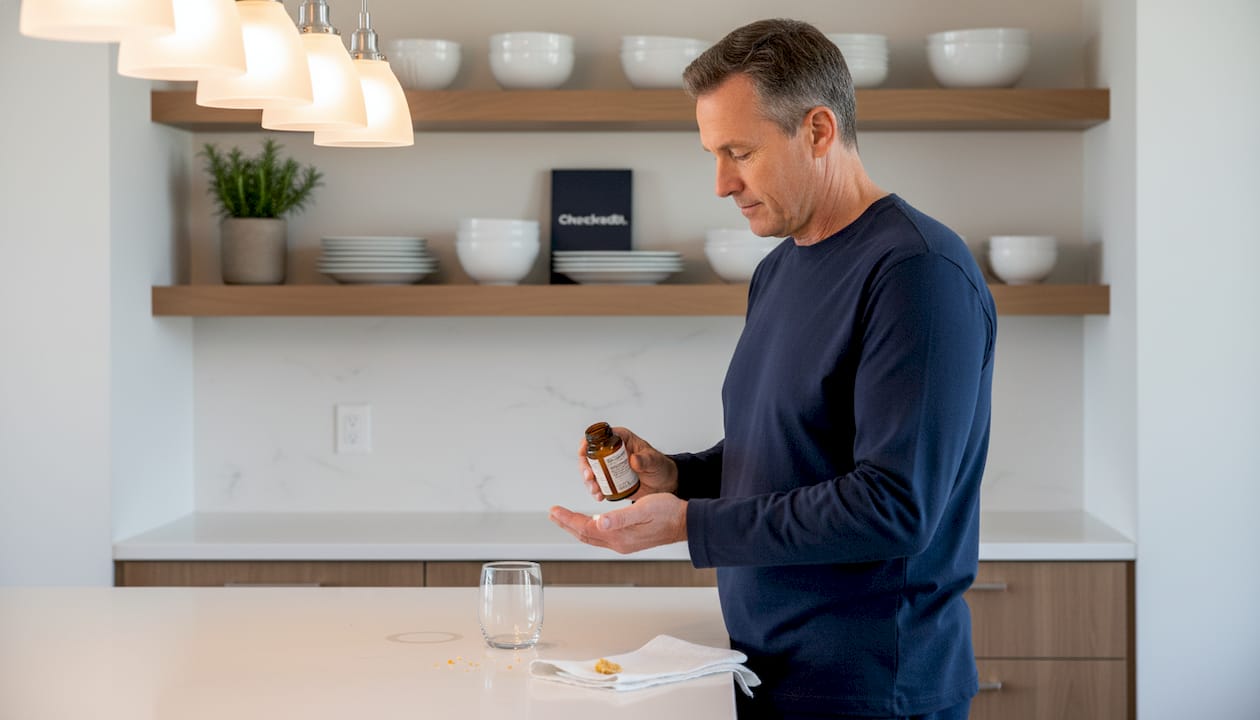
Melatonin is the body’s primary sleep-onset signal, produced in the pineal gland as light fades in the evening. Supplemental melatonin is most effective for circadian rhythm disruption, such as jet lag or shift work transitions, rather than for improving overall sleep architecture night after night. Understanding the melatonin science and safety picture is important here, because many products dramatically overdose this hormone.
Effective doses for circadian resetting typically range from 0.3 mg to 1.0 mg taken at the appropriate time relative to your target sleep window. Larger doses don’t produce better sleep; they can actually blunt the natural melatonin receptor response over time. Melatonin works best as a timed tool, not a nightly crutch.
CBD
Cannabidiol (CBD) has gained significant attention in the sleep wellness space, and while the research is still maturing, early findings are promising. CBD appears to reduce anxiety-driven sleep disruption and may support deeper sleep stages by modulating the endocannabinoid system. Food intolerances and gut health also play a documented role in sleep quality, and CBD’s anti-inflammatory properties may address some of that overlap, as noted in research on how food intolerance impacts sleep.
Among delivery formats, CBD oral spray before bed offers a fast-absorbing sublingual option, which many users find more consistent than capsules. The bioavailability through sublingual absorption is substantially higher than through digestion alone.
Quick comparison of top sleep supplements:
- 🧲 Magnesium bisglycinate: Strong RCT evidence, best for stress, depletion, and general deeper sleep
- 🌙 Melatonin (low dose): Best for jet lag and circadian reset, less effective as a nightly deep-sleep aid
- 🌿 CBD: Emerging evidence, strong fit for anxiety-related sleep disruption and inflammation
- 🌿 L-theanine: Amino acid from green tea; reduces sleep-onset tension without sedation
- 💊 GABA: Direct calming neurotransmitter support; best paired with magnesium for synergistic effect
Integrating these options with sleep routine tips consistently produces better outcomes than using any supplement in isolation.
Side-by-side comparison: Sleep supplement effectiveness and safety
Now that you know the science and pros/cons of each supplement, see how they stack up head-to-head in a single, easy-to-read table.
| Supplement |
Evidence level |
Typical dose |
Best for |
Safety notes |
| Magnesium bisglycinate |
Strong RCT data (2025, n=155) |
250 mg nightly |
Stress, recovery, ongoing deeper sleep |
Very well tolerated; caution with kidney disease |
| Melatonin |
Strong for circadian use |
0.3–1.0 mg timed |
Jet lag, shift work, travel |
Avoid high doses; receptor blunting risk |
| CBD |
Moderate; growing fast |
15–30 mg sublingual |
Anxiety-driven sleep disruption |
Check CBD oral spray side effects before starting |
| L-theanine |
Moderate human data |
100–200 mg |
Tension at sleep onset, racing thoughts |
Excellent safety profile; synergistic with magnesium |
| GABA |
Emerging evidence |
100–300 mg |
General calming, deep sleep architecture |
Generally safe; stack with magnesium for best results |
| Valerian root |
Mixed; older studies |
300–600 mg |
Mild sleep-onset issues |
May cause grogginess; less precise than other options |
For travelers and biohackers specifically, the pairing of low-dose melatonin for jet lag plus magnesium bisglycinate for sustained deeper sleep architecture is one of the most evidence-aligned stacking strategies available. These two supplements address different mechanisms: one resets the clock, the other deepens the sleep itself. Reviewing proven ways to improve sleep gives you the behavioral layer that makes supplement effects more pronounced.
Situational recommendations: Supplement picks by lifestyle and need
To make this even more practical, here’s how to match the right supplement to your unique lifestyle and needs.
-
Frequent travelers (cross-timezone flights): Lead with low-dose melatonin (0.5 mg) timed to your destination’s sleep window starting the night of arrival. Add magnesium bisglycinate at 250 mg nightly to support sleep depth in an unfamiliar environment. The body’s natural sleep signals are disrupted by travel, and this combination addresses both the timing issue and the quality issue simultaneously.
-
Biohackers optimizing recovery: Magnesium bisglycinate is your primary tool here. The 2025 RCT data showing a 3.9-point ISI reduction suggests real, measurable improvement in sleep sufficiency. Stack it with L-theanine at 200 mg to reduce cognitive arousal that often follows intense training or screen-heavy work sessions. GABA at 100 mg can further support slow-wave sleep depth.
-
People in high-stress periods: Cortisol dysregulation during acute stress phases leads to lighter, more fragmented sleep. Magnesium’s GABA-receptor modulation is directly relevant here. CBD benefits for bedtime may also address the anxiety-related hyperarousal that characterizes stress-period sleep. Consider this combination as a short-term stack rather than a permanent solution.
-
Shift workers and irregular schedule individuals: Melatonin timing becomes especially important and complex for shift workers. A sleep specialist consultation is genuinely worthwhile here. In terms of general supplement support, magnesium bisglycinate at bedtime regardless of the clock time provides consistent calming support without circadian dependency.
-
Athletes in heavy training blocks: Magnesium depletion is well-documented in high-output athletes. Daily magnesium bisglycinate replenishes what training strips away, and sleep is when adaptation actually happens. Prioritize sleep as the third pillar of athletic performance alongside nutrition and training load.
Integrating these recommendations with sleep routine best practices amplifies every supplement’s effectiveness. A supplement taken in a chaotic pre-sleep environment will underperform one taken within a consistent, well-designed nighttime routine.
Pro Tip: Don’t just add a supplement to your existing routine. Redesign the 60 minutes before bed around sleep as a priority: dim lighting, reduced screen exposure, and a consistent wind-down sequence. The supplement becomes far more effective when the body is already signaled toward rest.
What most supplement guides miss about real sleep enhancement
Here’s the uncomfortable truth we’ve noticed: most supplement guides stop at the pill. They rank options, cite a few studies, and send you off to buy something. But the deeper question — the one that actually determines whether your sleep improves — isn’t which supplement you take. It’s whether you’re addressing the underlying conditions that make deep sleep elusive in the first place.
We’ve seen health-conscious biohackers cycle through five or six sleep products in a single year, chasing marginal gains from each new formula while their cortisol remains chronically elevated and their screen exposure two hours before bed stays unchanged. The supplement never had a chance. The body was simply too wired to respond.
Bio-individuality is also genuinely underappreciated. The same dose of magnesium that transforms one person’s sleep may have minimal effect on someone who isn’t deficient in the first place. Genetic factors influence GABA receptor sensitivity, melatonin receptor expression, and even how effectively you convert tryptophan into serotonin. That’s why the obsessive search for a universally “best” sleep supplement is somewhat misguided. The best supplement is the one that addresses your specific gap.
Expectations shape outcomes more than most people realize. Research on the nocebo and placebo effect in sleep studies consistently shows that how you approach a sleep intervention influences its effectiveness. Building genuine confidence in a routine, rather than anxiously monitoring your sleep tracker for data points each morning, may actually be more predictive of improvement than the supplement itself.
The path we believe in is an integrated one. Evidence-based natural sleep improvement starts with understanding your personal sleep architecture, then stacking targeted supplements on top of sleep habits that work. Not the other way around. A supplement is a tool in a larger system, not the system itself.
Discover proven solutions for deeper sleep
If you want to put these strategies into practice with trusted, natural options, here’s how Checked Out Wellness can help.
Our approach was built for exactly the audience reading this — high performers, travelers, and biohackers who take sleep as seriously as their nutrition protocols. We don’t rely on synthetic melatonin. Instead, our natural sleep patch delivers cofactors like magnesium, B6, B12, and GABA transdermally throughout the night, supporting your body’s own melatonin production at the rate it was designed for.

Pair it with our contoured sleep mask, engineered to deliver complete light blockade without compressing your eyelids or disrupting REM eye movement. All products are manufactured in South Korea under ISO 22716 GMP pharmaceutical standards, cruelty-free, and formulated without harmful additives. Because deeper sleep should be something you earn every night, not something you force.
Frequently asked questions
Is magnesium safe to use for sleep every night?
Magnesium bisglycinate is generally considered safe for daily use at moderate doses, with the 2025 RCT supporting its tolerability at 250 mg nightly, though you should consult your healthcare provider if you have kidney conditions or take other medications.
Which supplement works best for jet lag?
Low-dose melatonin (0.3–1.0 mg) timed to your destination’s sleep window is the most studied option for jet lag and helps reset your internal body clock more effectively than higher doses.
Can I stack sleep supplements?
Combining magnesium bisglycinate with L-theanine or low-dose melatonin can be effective for specific needs, but introduce one supplement at a time and consult a professional before combining multiple agents.
Are natural supplements better than prescription sleep aids?
Natural supplements like magnesium and L-theanine typically carry fewer side effects and no dependency risk, though they work more gradually and may be less immediately potent than prescription sedatives for severe insomnia.
How soon will I notice deeper sleep using magnesium?
Based on the 2025 clinical trial, meaningful sleep improvements from magnesium bisglycinate can occur within a few weeks of consistent nightly use at 250 mg.
Recommended

Top supplements for deeper sleep: evidence-backed picks
Walking into any supplement aisle — or scrolling through any wellness feed — quickly reveals a flood of products promising deeper, more restorative sleep. Most of them lean on vague claims, underdosed formulas, and marketing that outpaces the actual science. For health-conscious travelers, biohackers, and high performers, sorting the real from the noise isn’t just inconvenient; it directly affects recovery, performance, and long-term wellbeing. This guide cuts through the confusion with a clear, evidence-based framework for choosing sleep supplements that genuinely support the way your body was designed to rest.
Table of Contents
Key Takeaways
How to choose supplements for deeper sleep
Not all sleep supplements are created equal, and the difference between a product that helps and one that simply looks good on a label often comes down to the quality of its evidence. Before you invest in anything, it pays to build a personal criteria checklist based on science, safety, and your specific sleep challenges.
Start with the evidence base. Ask whether a supplement has been tested in randomized controlled trials (RCTs), the gold standard in clinical research. Observational studies and animal data can be interesting, but they rarely tell the full story. A supplement backed by well-designed human RCTs is worth more than a dozen products backed by testimonials.
Prioritize natural and cofactor-based ingredients. Look for supplements that work with your body’s own systems rather than overriding them. Ingredients like magnesium, B vitamins, GABA, and amino acid precursors (like L-tryptophan) support the tryptophan-to-serotonin-to-melatonin conversion pathway naturally. This is a fundamentally different approach from flooding your system with synthetic melatonin every night. Reviewing natural steps for better sleep can help you see how these ingredients fit into a broader sleep strategy.
Match the supplement to your actual need. Are you dealing with jet lag, workout recovery, chronic low-level stress, or fragmented sleep? The right answer for a transatlantic traveler looks different from what a biohacker optimizing deep-sleep stages needs. Specificity matters.
Here are the most common red flags when evaluating a sleep product:
Pro Tip: Before buying any supplement, search for the specific formulation in a clinical trials database or peer-reviewed journal. If the brand can’t point you to at least one human study, that’s useful information on its own.
Top natural supplements for deeper sleep: science and evidence
With the framework in mind, let’s examine the natural supplements that consistently meet these criteria and appear most often in credible sleep research.
Magnesium bisglycinate
Magnesium is arguably the most well-studied mineral for sleep support. It regulates GABA receptors in the brain, directly influencing the nervous system’s ability to shift into a restful state. Not all forms of magnesium are equally effective, though. Magnesium bisglycinate, a chelated form bound to the amino acid glycine, has superior bioavailability compared to magnesium oxide or sulfate.
A 2025 RCT (n=155) found that 250 mg of magnesium bisglycinate significantly reduced Insomnia Severity Index scores by 3.9 points versus 2.3 points in the placebo group. That’s a clinically meaningful difference for people reporting insufficient sleep without a clinical insomnia diagnosis.
Magnesium is particularly well-suited for people under stress, athletes managing training loads, and older adults, because all three groups tend to show measurable magnesium depletion. The body keeps score quietly: stress hormones like cortisol actively deplete magnesium reserves, which then impair the very sleep needed to manage cortisol.
Melatonin
Melatonin is the body’s primary sleep-onset signal, produced in the pineal gland as light fades in the evening. Supplemental melatonin is most effective for circadian rhythm disruption, such as jet lag or shift work transitions, rather than for improving overall sleep architecture night after night. Understanding the melatonin science and safety picture is important here, because many products dramatically overdose this hormone.
Effective doses for circadian resetting typically range from 0.3 mg to 1.0 mg taken at the appropriate time relative to your target sleep window. Larger doses don’t produce better sleep; they can actually blunt the natural melatonin receptor response over time. Melatonin works best as a timed tool, not a nightly crutch.
CBD
Cannabidiol (CBD) has gained significant attention in the sleep wellness space, and while the research is still maturing, early findings are promising. CBD appears to reduce anxiety-driven sleep disruption and may support deeper sleep stages by modulating the endocannabinoid system. Food intolerances and gut health also play a documented role in sleep quality, and CBD’s anti-inflammatory properties may address some of that overlap, as noted in research on how food intolerance impacts sleep.
Among delivery formats, CBD oral spray before bed offers a fast-absorbing sublingual option, which many users find more consistent than capsules. The bioavailability through sublingual absorption is substantially higher than through digestion alone.
Quick comparison of top sleep supplements:
Integrating these options with sleep routine tips consistently produces better outcomes than using any supplement in isolation.
Side-by-side comparison: Sleep supplement effectiveness and safety
Now that you know the science and pros/cons of each supplement, see how they stack up head-to-head in a single, easy-to-read table.
For travelers and biohackers specifically, the pairing of low-dose melatonin for jet lag plus magnesium bisglycinate for sustained deeper sleep architecture is one of the most evidence-aligned stacking strategies available. These two supplements address different mechanisms: one resets the clock, the other deepens the sleep itself. Reviewing proven ways to improve sleep gives you the behavioral layer that makes supplement effects more pronounced.
Situational recommendations: Supplement picks by lifestyle and need
To make this even more practical, here’s how to match the right supplement to your unique lifestyle and needs.
Frequent travelers (cross-timezone flights): Lead with low-dose melatonin (0.5 mg) timed to your destination’s sleep window starting the night of arrival. Add magnesium bisglycinate at 250 mg nightly to support sleep depth in an unfamiliar environment. The body’s natural sleep signals are disrupted by travel, and this combination addresses both the timing issue and the quality issue simultaneously.
Biohackers optimizing recovery: Magnesium bisglycinate is your primary tool here. The 2025 RCT data showing a 3.9-point ISI reduction suggests real, measurable improvement in sleep sufficiency. Stack it with L-theanine at 200 mg to reduce cognitive arousal that often follows intense training or screen-heavy work sessions. GABA at 100 mg can further support slow-wave sleep depth.
People in high-stress periods: Cortisol dysregulation during acute stress phases leads to lighter, more fragmented sleep. Magnesium’s GABA-receptor modulation is directly relevant here. CBD benefits for bedtime may also address the anxiety-related hyperarousal that characterizes stress-period sleep. Consider this combination as a short-term stack rather than a permanent solution.
Shift workers and irregular schedule individuals: Melatonin timing becomes especially important and complex for shift workers. A sleep specialist consultation is genuinely worthwhile here. In terms of general supplement support, magnesium bisglycinate at bedtime regardless of the clock time provides consistent calming support without circadian dependency.
Athletes in heavy training blocks: Magnesium depletion is well-documented in high-output athletes. Daily magnesium bisglycinate replenishes what training strips away, and sleep is when adaptation actually happens. Prioritize sleep as the third pillar of athletic performance alongside nutrition and training load.
Integrating these recommendations with sleep routine best practices amplifies every supplement’s effectiveness. A supplement taken in a chaotic pre-sleep environment will underperform one taken within a consistent, well-designed nighttime routine.
Pro Tip: Don’t just add a supplement to your existing routine. Redesign the 60 minutes before bed around sleep as a priority: dim lighting, reduced screen exposure, and a consistent wind-down sequence. The supplement becomes far more effective when the body is already signaled toward rest.
What most supplement guides miss about real sleep enhancement
Here’s the uncomfortable truth we’ve noticed: most supplement guides stop at the pill. They rank options, cite a few studies, and send you off to buy something. But the deeper question — the one that actually determines whether your sleep improves — isn’t which supplement you take. It’s whether you’re addressing the underlying conditions that make deep sleep elusive in the first place.
We’ve seen health-conscious biohackers cycle through five or six sleep products in a single year, chasing marginal gains from each new formula while their cortisol remains chronically elevated and their screen exposure two hours before bed stays unchanged. The supplement never had a chance. The body was simply too wired to respond.
Bio-individuality is also genuinely underappreciated. The same dose of magnesium that transforms one person’s sleep may have minimal effect on someone who isn’t deficient in the first place. Genetic factors influence GABA receptor sensitivity, melatonin receptor expression, and even how effectively you convert tryptophan into serotonin. That’s why the obsessive search for a universally “best” sleep supplement is somewhat misguided. The best supplement is the one that addresses your specific gap.
Expectations shape outcomes more than most people realize. Research on the nocebo and placebo effect in sleep studies consistently shows that how you approach a sleep intervention influences its effectiveness. Building genuine confidence in a routine, rather than anxiously monitoring your sleep tracker for data points each morning, may actually be more predictive of improvement than the supplement itself.
The path we believe in is an integrated one. Evidence-based natural sleep improvement starts with understanding your personal sleep architecture, then stacking targeted supplements on top of sleep habits that work. Not the other way around. A supplement is a tool in a larger system, not the system itself.
Discover proven solutions for deeper sleep
If you want to put these strategies into practice with trusted, natural options, here’s how Checked Out Wellness can help.
Our approach was built for exactly the audience reading this — high performers, travelers, and biohackers who take sleep as seriously as their nutrition protocols. We don’t rely on synthetic melatonin. Instead, our natural sleep patch delivers cofactors like magnesium, B6, B12, and GABA transdermally throughout the night, supporting your body’s own melatonin production at the rate it was designed for.
Pair it with our contoured sleep mask, engineered to deliver complete light blockade without compressing your eyelids or disrupting REM eye movement. All products are manufactured in South Korea under ISO 22716 GMP pharmaceutical standards, cruelty-free, and formulated without harmful additives. Because deeper sleep should be something you earn every night, not something you force.
Frequently asked questions
Is magnesium safe to use for sleep every night?
Magnesium bisglycinate is generally considered safe for daily use at moderate doses, with the 2025 RCT supporting its tolerability at 250 mg nightly, though you should consult your healthcare provider if you have kidney conditions or take other medications.
Which supplement works best for jet lag?
Low-dose melatonin (0.3–1.0 mg) timed to your destination’s sleep window is the most studied option for jet lag and helps reset your internal body clock more effectively than higher doses.
Can I stack sleep supplements?
Combining magnesium bisglycinate with L-theanine or low-dose melatonin can be effective for specific needs, but introduce one supplement at a time and consult a professional before combining multiple agents.
Are natural supplements better than prescription sleep aids?
Natural supplements like magnesium and L-theanine typically carry fewer side effects and no dependency risk, though they work more gradually and may be less immediately potent than prescription sedatives for severe insomnia.
How soon will I notice deeper sleep using magnesium?
Based on the 2025 clinical trial, meaningful sleep improvements from magnesium bisglycinate can occur within a few weeks of consistent nightly use at 250 mg.
Recommended