Sleep support for travelers is the practice of using behavioral, environmental, and nutritional strategies to counteract the neurological and circadian disruptions that make restorative sleep nearly impossible in unfamiliar settings. If you travel frequently and wake up feeling wrecked despite a full night in bed, the problem is not your effort. It is your brain working against you. The first-night effect keeps part of your brain on alert in new environments, while jet lag throws your circadian rhythm into a state of genuine physiological confusion. Understanding why travelers need sleep support is the first step toward actually fixing it.
Why travelers struggle with sleep: the biology behind it
The core reason travelers struggle with sleep is not psychological weakness. It is an evolved survival mechanism that the modern brain has not outgrown. When you sleep in an unfamiliar place, your left hemisphere stays more alert to environmental sounds and stimuli, even while the rest of your brain attempts to enter deep sleep. This half-awake state is called the first-night effect, and it is the single most underestimated cause of poor travel sleep.
The brain’s vigilance during the first night in a new place is an evolved safety mechanism, not a sign of pathological insomnia. That reframe matters. You are not broken. Your nervous system is doing exactly what it was designed to do in an unfamiliar cave, or in this case, a hotel room in Singapore or Chicago.
Environmental mismatches compound the problem significantly. Unfamiliar light levels, different bedding textures, ambient noise from HVAC systems or street traffic, and even the smell of a new room all register as low-level threat signals. Each one nudges your arousal system just enough to prevent the neurological disengagement required for deep, restorative sleep.
“Travelers often misattribute sleep problems to duration rather than incomplete neurological disengagement. Addressing stimulus mismatch can yield better sleep quality than simply trying to extend sleep time.” — ABC News, 2026
What makes this worse is that positive emotional arousal — excitement about a destination, anticipation of a big meeting, or even the thrill of a new city — activates the same arousal systems as stress. Your brain does not distinguish between “I’m excited” and “I’m threatened.” Both states compete with sleep onset, which is why frequent travelers often report lying awake despite feeling physically exhausted.
Key biological and psychological factors that disrupt travel sleep include:
-
First-night effect: Partial brain shutdown in unfamiliar environments, with the left hemisphere remaining vigilant
-
Environmental mismatch: Unfamiliar light, noise, bedding, and temperature signals that register as low-level threat
-
Emotional arousal: Excitement, stress, or anticipation that activates the brain’s alerting systems
-
Conditioned arousal: Using the hotel bed for work or scrolling, which trains the brain to associate the bed with wakefulness
How does jet lag affect sleep quality and recovery?
Jet lag is not simply tiredness from a long flight. It is a genuine physiological state in which your internal circadian clock is misaligned with the local time at your destination. Your circadian rhythm governs not just sleep and wakefulness, but also cortisol release, body temperature, digestion, and immune function. When you cross multiple time zones, all of these systems fall out of sync simultaneously.
Travel fatigue and jet lag are distinct conditions, and conflating them leads to poor recovery choices. Travel fatigue is the physical exhaustion from sitting in a pressurized cabin, dehydration, and disrupted meals. It resolves with rest. Jet lag is a neurological misalignment that requires active circadian recalibration and can persist for days.
Common jet lag symptoms that impair traveler performance include:
- Difficulty falling asleep or staying asleep at the destination’s local nighttime
- Daytime fatigue and cognitive fog that persists despite adequate sleep hours
- Gastrointestinal disruption from misaligned meal and digestion timing
- Mood instability and reduced stress tolerance
- Impaired reaction time and decision-making capacity
| Travel Direction |
Primary Challenge |
Key Reset Strategy |
| Eastbound (e.g., New York to London) |
Falling asleep earlier than body clock allows |
Morning light exposure at destination |
| Westbound (e.g., London to Los Angeles) |
Staying awake until local bedtime |
Late afternoon or evening light exposure |
| Long-haul multi-zone |
Compound misalignment across multiple systems |
Gradual pre-travel schedule shift plus light timing |
Realigning circadian rhythms through light exposure, meal timing, and consistent routines speeds recovery and reduces the duration of jet lag symptoms. This is not optional maintenance. For frequent travelers, unmanaged jet lag accumulates into chronic sleep debt that degrades performance, immune resilience, and long-term health.
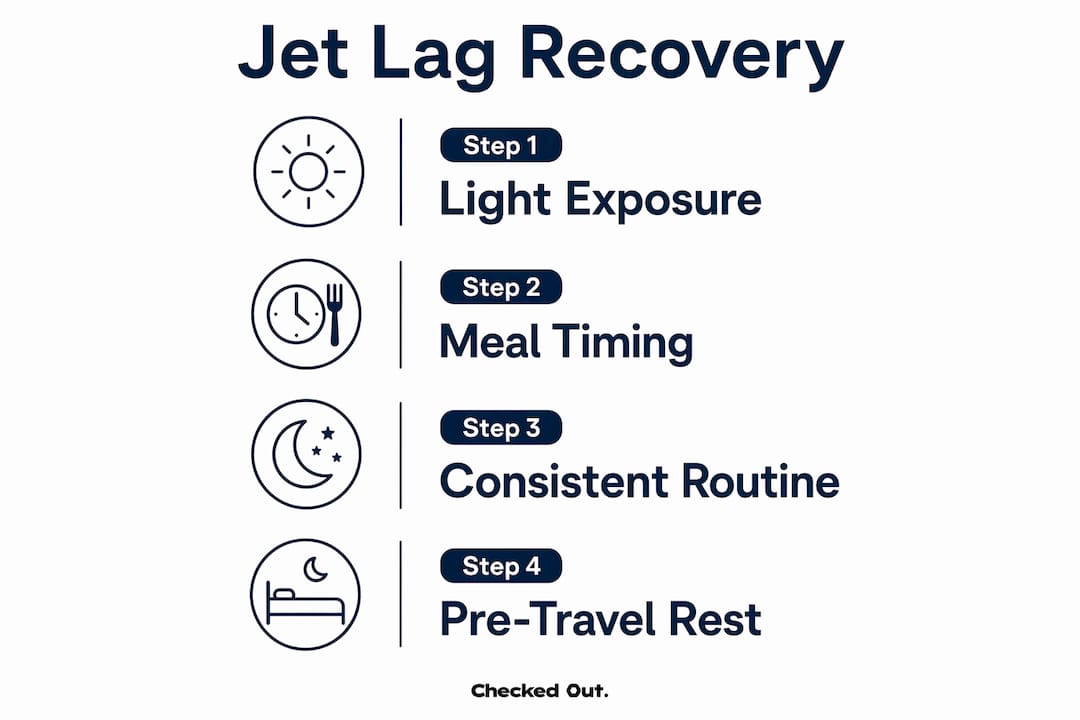
Critically, travelers who are sleep-deprived before departure experience worse jet lag symptoms and slower recovery. Arriving at the airport already running a sleep deficit is the equivalent of starting a marathon with a sprained ankle.
What practical sleep support strategies actually work for travelers?
The most effective travel sleep support combines environmental control with behavioral discipline and targeted natural remedies. Generic relaxation advice does not move the needle. Sleep kits combining environmental aids with behavioral tactics outperform generic relaxation advice for travelers. The specifics matter.
Stimulus control: the most overlooked strategy
Using the bed exclusively for sleep improves the ability to fall asleep and reduces nighttime awakenings during travel. This means no working from the hotel bed, no scrolling through emails, and no eating in bed. It sounds simple. It is surprisingly hard to follow when the hotel room is also your office. But behavioral adjustments that preserve the bed as a sleep-only environment directly improve insomnia symptoms on trips, and the research is consistent on this point.
Building a portable sleep environment
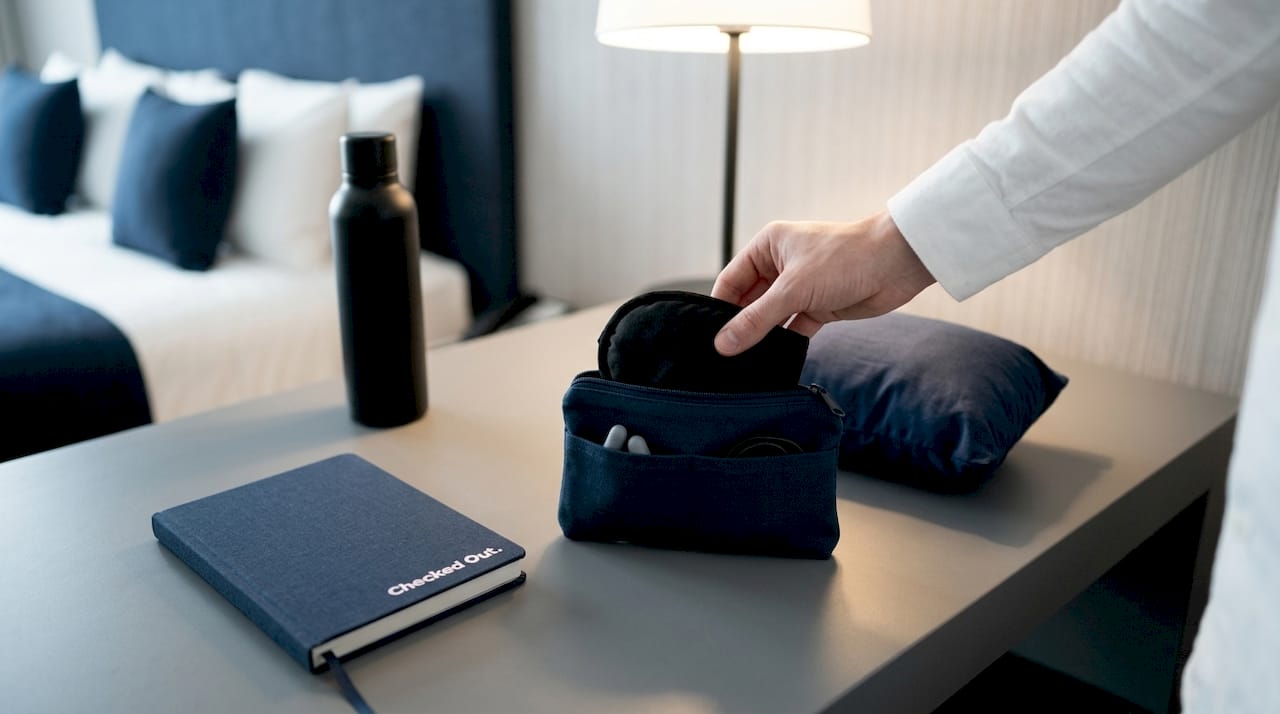
Your brain responds to sensory cues that signal safety and routine. Packing familiar sleep cues like your own pillowcase, a white noise machine or app, and a quality blackout sleep mask creates environmental consistency that reduces the first-night effect’s impact. These are not comfort items. They are neurological anchors that tell your brain the sleep context is safe and familiar.
Practical items worth packing in a dedicated sleep kit:
- A blackout sleep mask to block inconsistent hotel lighting and window light
- A white noise app or compact sound machine to mask unfamiliar ambient noise
- Your own pillowcase from home, which carries familiar scent cues
- Earplugs as a backup for environments where white noise is insufficient
- A natural sleep supplement that supports your body’s own melatonin production without synthetic additives
Melatonin and natural supplements: use with precision
Melatonin in low doses for one to two nights can ease the transition across time zones, but natural light exposure remains the most effective tool for resetting the body clock. Melatonin is a timing signal, not a sedative. Taking it at the wrong time of day can worsen circadian misalignment rather than correct it. A more sustainable approach is supporting the body’s own tryptophan-to-serotonin-to-melatonin conversion pathway using cofactors like magnesium, B6, and GABA, which is the approach Checkedoutwellness has built its product line around.
Pro Tip: If you use melatonin for travel, take 0.5mg to 1mg at the destination’s target bedtime, not at your departure city’s bedtime. Timing is everything with circadian signals.
How to align your schedule and behaviors to reduce jet lag
Circadian adaptation does not happen passively. It requires deliberate behavioral choices before, during, and after your flight. The travelers who recover fastest are the ones who treat their schedule as a tool, not an afterthought.
-
Shift your sleep schedule before departure. Begin moving your bedtime 30 minutes earlier per night for eastbound travel, or later for westbound travel, starting three to four days before your flight. This pre-loads partial adaptation before you even board.
-
Time your light exposure strategically. Morning sun for eastbound travel and late afternoon or evening sun for westbound travel accelerates circadian adaptation. Light is the most powerful zeitgeber (time-giver) the body has. Fifteen to thirty minutes of outdoor exposure at the right time is more effective than any supplement alone.
-
Adjust meal timing to destination time. Your digestive system has its own circadian clock. Eating meals at the destination’s local mealtimes signals to your gut and liver that the new time zone is real, reinforcing the brain’s adaptation.
-
Manage in-flight behavior deliberately. Limit caffeine and alcohol, both of which fragment sleep architecture. Stay hydrated. If your flight arrives in the morning, try to sleep on the plane during the destination’s nighttime hours. Use a blackout mask and earplugs to create a sleep-conducive environment at 35,000 feet.
-
Control naps carefully after arrival. A short nap of 20 to 30 minutes before 3 p.m. local time can reduce fatigue without disrupting nighttime sleep. Longer naps or naps taken late in the afternoon will delay your circadian shift and extend jet lag.
Pro Tip: Build a natural jet lag recovery workflow before your next trip. Having a written plan removes decision fatigue when you are already exhausted and disoriented at your destination.
For travelers who want a deeper framework, exploring holistic sleep support approaches can help integrate these tactics into a consistent system rather than a patchwork of one-off fixes.
Key takeaways
Travelers need sleep support because the brain’s vigilance in new environments, combined with circadian misalignment from time zone changes, creates compounding sleep deficits that behavioral strategies and natural remedies can meaningfully correct.
| Point |
Details |
| First-night effect is biological |
The brain’s left hemisphere stays alert in new environments; this is evolution, not insomnia. |
| Jet lag and travel fatigue differ |
Jet lag requires active circadian recalibration; travel fatigue resolves with rest alone. |
| Stimulus control is non-negotiable |
Reserve the hotel bed exclusively for sleep to prevent conditioned arousal from undermining rest. |
| Light timing drives adaptation |
Morning light for eastbound travel, evening light for westbound travel, applied consistently. |
| Pre-travel sleep debt worsens outcomes |
Arriving sleep-deprived amplifies jet lag severity and extends recovery time significantly. |
What I’ve learned from years of traveling on empty
By Geeta
I used to think the solution to bad travel sleep was more sleep. More hours, earlier bedtime, longer naps. It took years of frequent travel and a genuine burnout episode to understand that the problem was never the quantity. It was the quality of neurological disengagement I was achieving, and the answer was not more time in bed. It was smarter preparation.
The shift that changed everything for me was treating sleep as a system, not a passive activity. I started packing a sleep kit before I packed anything else. I stopped working from hotel beds. I started timing my light exposure based on travel direction rather than just hoping my body would catch up. These are not dramatic interventions. They are small, consistent choices that compound over time.
What I see most often in high-performing travelers is an all-or-nothing mindset: either they sleep perfectly or they write off the night and push through on caffeine. Neither extreme serves you. Gradual improvement, built on science-backed sleep practices, is more sustainable and more effective than any single intervention. The body keeps score quietly. Give it the conditions it needs, and it will recover faster than you expect.
— Geeta
Rest better on the road with Checkedoutwellness

Checkedoutwellness was built for travelers who refuse to accept poor sleep as the price of a demanding life. The Sleep Patch by Checked Out is a melatonin-free, transdermal sleep aid manufactured under ISO 22716 GMP pharmaceutical standards in South Korea. It delivers magnesium, B6, B12, and GABA transdermally to support your body’s own melatonin production pathway, without synthetic hormones or dependency risk. Pair it with the contoured blackout sleep mask to block hotel room light completely, and you have a travel sleep kit built on science rather than guesswork. Explore the full range at Checkedoutwellness and find the combination that fits your travel pattern.
FAQ
What is the first-night effect and why does it matter for travelers?
The first-night effect is a state of partial brain arousal in which the left hemisphere remains alert to unfamiliar stimuli during sleep in a new environment. It is the primary biological reason travelers struggle to sleep well on their first night at a destination, even when physically exhausted.
How long does jet lag typically last?
Jet lag generally lasts one day per time zone crossed, though this varies based on travel direction, pre-travel sleep status, and how actively you use circadian reset strategies like light timing and meal adjustment.
Are melatonin supplements safe for frequent travelers?
Low-dose melatonin (0.5mg to 1mg) used for one to two nights at the destination’s target bedtime can help ease circadian transition. However, natural light exposure is more effective for long-term adaptation, and melatonin taken at the wrong time can worsen misalignment.
What should go in a travel sleep kit?
A practical travel sleep kit includes a blackout sleep mask, a white noise app or compact sound machine, your own pillowcase from home, earplugs, and a natural sleep supplement that supports your body’s melatonin production without synthetic additives.
Does sleeping on the plane help with jet lag?
Sleeping on the plane helps when timed to the destination’s nighttime hours. Sleeping at the wrong time relative to your destination can reinforce the misalignment rather than correct it, so timing in-flight sleep intentionally is more effective than sleeping whenever fatigue hits.
Recommended

Why Travelers Need Sleep Support: A Science-Backed Guide
Sleep support for travelers is the practice of using behavioral, environmental, and nutritional strategies to counteract the neurological and circadian disruptions that make restorative sleep nearly impossible in unfamiliar settings. If you travel frequently and wake up feeling wrecked despite a full night in bed, the problem is not your effort. It is your brain working against you. The first-night effect keeps part of your brain on alert in new environments, while jet lag throws your circadian rhythm into a state of genuine physiological confusion. Understanding why travelers need sleep support is the first step toward actually fixing it.
Why travelers struggle with sleep: the biology behind it
The core reason travelers struggle with sleep is not psychological weakness. It is an evolved survival mechanism that the modern brain has not outgrown. When you sleep in an unfamiliar place, your left hemisphere stays more alert to environmental sounds and stimuli, even while the rest of your brain attempts to enter deep sleep. This half-awake state is called the first-night effect, and it is the single most underestimated cause of poor travel sleep.
The brain’s vigilance during the first night in a new place is an evolved safety mechanism, not a sign of pathological insomnia. That reframe matters. You are not broken. Your nervous system is doing exactly what it was designed to do in an unfamiliar cave, or in this case, a hotel room in Singapore or Chicago.
Environmental mismatches compound the problem significantly. Unfamiliar light levels, different bedding textures, ambient noise from HVAC systems or street traffic, and even the smell of a new room all register as low-level threat signals. Each one nudges your arousal system just enough to prevent the neurological disengagement required for deep, restorative sleep.
What makes this worse is that positive emotional arousal — excitement about a destination, anticipation of a big meeting, or even the thrill of a new city — activates the same arousal systems as stress. Your brain does not distinguish between “I’m excited” and “I’m threatened.” Both states compete with sleep onset, which is why frequent travelers often report lying awake despite feeling physically exhausted.
Key biological and psychological factors that disrupt travel sleep include:
How does jet lag affect sleep quality and recovery?
Jet lag is not simply tiredness from a long flight. It is a genuine physiological state in which your internal circadian clock is misaligned with the local time at your destination. Your circadian rhythm governs not just sleep and wakefulness, but also cortisol release, body temperature, digestion, and immune function. When you cross multiple time zones, all of these systems fall out of sync simultaneously.
Travel fatigue and jet lag are distinct conditions, and conflating them leads to poor recovery choices. Travel fatigue is the physical exhaustion from sitting in a pressurized cabin, dehydration, and disrupted meals. It resolves with rest. Jet lag is a neurological misalignment that requires active circadian recalibration and can persist for days.
Common jet lag symptoms that impair traveler performance include:
Realigning circadian rhythms through light exposure, meal timing, and consistent routines speeds recovery and reduces the duration of jet lag symptoms. This is not optional maintenance. For frequent travelers, unmanaged jet lag accumulates into chronic sleep debt that degrades performance, immune resilience, and long-term health.
Critically, travelers who are sleep-deprived before departure experience worse jet lag symptoms and slower recovery. Arriving at the airport already running a sleep deficit is the equivalent of starting a marathon with a sprained ankle.
What practical sleep support strategies actually work for travelers?
The most effective travel sleep support combines environmental control with behavioral discipline and targeted natural remedies. Generic relaxation advice does not move the needle. Sleep kits combining environmental aids with behavioral tactics outperform generic relaxation advice for travelers. The specifics matter.
Stimulus control: the most overlooked strategy
Using the bed exclusively for sleep improves the ability to fall asleep and reduces nighttime awakenings during travel. This means no working from the hotel bed, no scrolling through emails, and no eating in bed. It sounds simple. It is surprisingly hard to follow when the hotel room is also your office. But behavioral adjustments that preserve the bed as a sleep-only environment directly improve insomnia symptoms on trips, and the research is consistent on this point.
Building a portable sleep environment
Your brain responds to sensory cues that signal safety and routine. Packing familiar sleep cues like your own pillowcase, a white noise machine or app, and a quality blackout sleep mask creates environmental consistency that reduces the first-night effect’s impact. These are not comfort items. They are neurological anchors that tell your brain the sleep context is safe and familiar.
Practical items worth packing in a dedicated sleep kit:
Melatonin and natural supplements: use with precision
Melatonin in low doses for one to two nights can ease the transition across time zones, but natural light exposure remains the most effective tool for resetting the body clock. Melatonin is a timing signal, not a sedative. Taking it at the wrong time of day can worsen circadian misalignment rather than correct it. A more sustainable approach is supporting the body’s own tryptophan-to-serotonin-to-melatonin conversion pathway using cofactors like magnesium, B6, and GABA, which is the approach Checkedoutwellness has built its product line around.
Pro Tip: If you use melatonin for travel, take 0.5mg to 1mg at the destination’s target bedtime, not at your departure city’s bedtime. Timing is everything with circadian signals.
How to align your schedule and behaviors to reduce jet lag
Circadian adaptation does not happen passively. It requires deliberate behavioral choices before, during, and after your flight. The travelers who recover fastest are the ones who treat their schedule as a tool, not an afterthought.
Shift your sleep schedule before departure. Begin moving your bedtime 30 minutes earlier per night for eastbound travel, or later for westbound travel, starting three to four days before your flight. This pre-loads partial adaptation before you even board.
Time your light exposure strategically. Morning sun for eastbound travel and late afternoon or evening sun for westbound travel accelerates circadian adaptation. Light is the most powerful zeitgeber (time-giver) the body has. Fifteen to thirty minutes of outdoor exposure at the right time is more effective than any supplement alone.
Adjust meal timing to destination time. Your digestive system has its own circadian clock. Eating meals at the destination’s local mealtimes signals to your gut and liver that the new time zone is real, reinforcing the brain’s adaptation.
Manage in-flight behavior deliberately. Limit caffeine and alcohol, both of which fragment sleep architecture. Stay hydrated. If your flight arrives in the morning, try to sleep on the plane during the destination’s nighttime hours. Use a blackout mask and earplugs to create a sleep-conducive environment at 35,000 feet.
Control naps carefully after arrival. A short nap of 20 to 30 minutes before 3 p.m. local time can reduce fatigue without disrupting nighttime sleep. Longer naps or naps taken late in the afternoon will delay your circadian shift and extend jet lag.
Pro Tip: Build a natural jet lag recovery workflow before your next trip. Having a written plan removes decision fatigue when you are already exhausted and disoriented at your destination.
For travelers who want a deeper framework, exploring holistic sleep support approaches can help integrate these tactics into a consistent system rather than a patchwork of one-off fixes.
Key takeaways
Travelers need sleep support because the brain’s vigilance in new environments, combined with circadian misalignment from time zone changes, creates compounding sleep deficits that behavioral strategies and natural remedies can meaningfully correct.
What I’ve learned from years of traveling on empty
By Geeta
I used to think the solution to bad travel sleep was more sleep. More hours, earlier bedtime, longer naps. It took years of frequent travel and a genuine burnout episode to understand that the problem was never the quantity. It was the quality of neurological disengagement I was achieving, and the answer was not more time in bed. It was smarter preparation.
The shift that changed everything for me was treating sleep as a system, not a passive activity. I started packing a sleep kit before I packed anything else. I stopped working from hotel beds. I started timing my light exposure based on travel direction rather than just hoping my body would catch up. These are not dramatic interventions. They are small, consistent choices that compound over time.
What I see most often in high-performing travelers is an all-or-nothing mindset: either they sleep perfectly or they write off the night and push through on caffeine. Neither extreme serves you. Gradual improvement, built on science-backed sleep practices, is more sustainable and more effective than any single intervention. The body keeps score quietly. Give it the conditions it needs, and it will recover faster than you expect.
Rest better on the road with Checkedoutwellness
Checkedoutwellness was built for travelers who refuse to accept poor sleep as the price of a demanding life. The Sleep Patch by Checked Out is a melatonin-free, transdermal sleep aid manufactured under ISO 22716 GMP pharmaceutical standards in South Korea. It delivers magnesium, B6, B12, and GABA transdermally to support your body’s own melatonin production pathway, without synthetic hormones or dependency risk. Pair it with the contoured blackout sleep mask to block hotel room light completely, and you have a travel sleep kit built on science rather than guesswork. Explore the full range at Checkedoutwellness and find the combination that fits your travel pattern.
FAQ
What is the first-night effect and why does it matter for travelers?
The first-night effect is a state of partial brain arousal in which the left hemisphere remains alert to unfamiliar stimuli during sleep in a new environment. It is the primary biological reason travelers struggle to sleep well on their first night at a destination, even when physically exhausted.
How long does jet lag typically last?
Jet lag generally lasts one day per time zone crossed, though this varies based on travel direction, pre-travel sleep status, and how actively you use circadian reset strategies like light timing and meal adjustment.
Are melatonin supplements safe for frequent travelers?
Low-dose melatonin (0.5mg to 1mg) used for one to two nights at the destination’s target bedtime can help ease circadian transition. However, natural light exposure is more effective for long-term adaptation, and melatonin taken at the wrong time can worsen misalignment.
What should go in a travel sleep kit?
A practical travel sleep kit includes a blackout sleep mask, a white noise app or compact sound machine, your own pillowcase from home, earplugs, and a natural sleep supplement that supports your body’s melatonin production without synthetic additives.
Does sleeping on the plane help with jet lag?
Sleeping on the plane helps when timed to the destination’s nighttime hours. Sleeping at the wrong time relative to your destination can reinforce the misalignment rather than correct it, so timing in-flight sleep intentionally is more effective than sleeping whenever fatigue hits.
Recommended