Sleep quality is defined as how effectively your sleep allows the brain and body to complete essential restorative processes, not simply how many hours you spend in bed. The NIH and the American Heart Association both recognize that poor sleep quality, even with adequate duration, raises the risk of cardiovascular disease, cognitive decline, and immune dysfunction. Sleep interruptions reduce next-day thinking clarity, increase mistakes, and worsen mood in measurable ways. Understanding why sleep quality is important means looking beyond the clock and into the biology of what happens when your sleep is truly restorative.
Why sleep quality is important for brain function
The brain does not simply rest during sleep. It performs critical maintenance work, and the quality of your sleep determines how thoroughly that work gets done. The glymphatic system, first described by researchers at the University of Rochester, is most active during deep non-REM sleep. It clears metabolic waste products, including proteins linked to Alzheimer’s disease, from brain tissue. Fragmented or shallow sleep cuts this process short.
Sleep fragmentation refers to micro-awakenings throughout the night, brief interruptions you may not even remember. These events reduce time spent in deep non-REM sleep even when total time in bed stays the same. The University of Rochester research shows that fragmentation reduces glymphatic clearance and blunts the brain maintenance processes that protect long-term cognitive health. The body keeps score quietly, accumulating a deficit that shows up years later.

A large study published in BMC Public Health, drawing data from China, England, and India, found that sleep duration and cognition follow an inverted-U relationship, with approximately seven hours representing the optimal point. Both shorter and longer durations correlate with poorer cognitive performance. This pattern held across all three countries, suggesting a universal biological mechanism rather than a cultural one.
The practical implication is direct: you can sleep eight hours and still wake up cognitively impaired if your sleep architecture is disrupted. Depth and continuity matter as much as duration. To understand what deep sleep actually does at a cellular level, the Checkedoutwellness guide on deep non-REM sleep offers a clear breakdown of the stages involved.
Pro Tip: If you wake feeling unrefreshed despite sleeping seven or eight hours, the issue is almost certainly sleep architecture, not duration. Focus on reducing fragmentation before extending time in bed.
How poor sleep quality damages physical health
The health effects of sleep extend well beyond the brain. Poor sleep quality is a systemic stressor, and the cardiovascular and immune systems bear the heaviest load. The American Heart Association identifies poor sleep quality as a risk factor for hypertension, heart disease, obesity, and type 2 diabetes. About one-third of American adults regularly fall short of sufficient, restorative sleep. That figure represents a population-level health crisis, not a personal productivity issue.
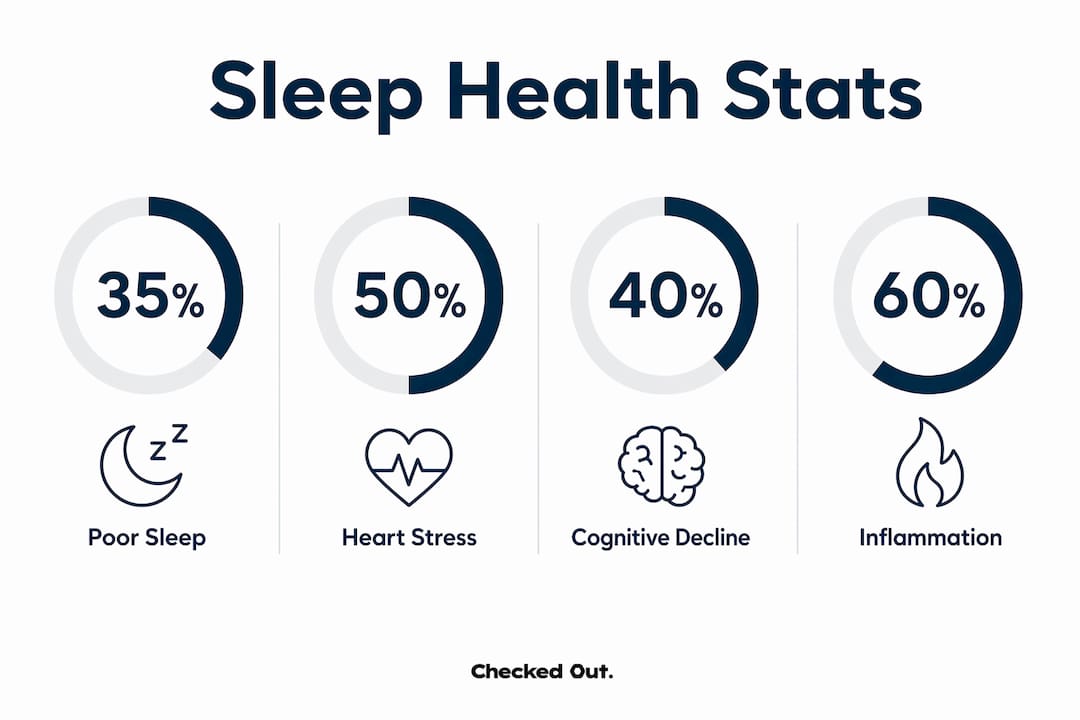
The immune system is where the impact of sleep on wellbeing becomes biochemically precise. Research published in BMC Psychiatry found that poor sleep quality is associated with elevated levels of pro-inflammatory cytokines, specifically IL-6, TNF-α, and CRP. These are proteins your immune system releases in response to infection or injury. When they remain chronically elevated due to disrupted sleep, they contribute to systemic inflammation linked to depression, metabolic disease, and accelerated aging.
Here is what chronic sleep disruption does to the body over time:
-
Cardiovascular system: Elevated blood pressure, increased arterial stiffness, and higher risk of coronary artery disease
-
Metabolic function: Disrupted insulin sensitivity and increased appetite-regulating hormone imbalance, driving weight gain
-
Immune regulation: Chronically elevated inflammatory cytokines that weaken pathogen response and promote chronic disease
-
Hormonal balance: Reduced growth hormone secretion during deep sleep, impairing tissue repair and muscle recovery
-
Mental health: Higher rates of anxiety and depression linked to immune-inflammatory dysregulation from poor sleep
CDC data from 2024 highlights that sleep difficulties vary significantly by age, sex, and demographic group, confirming that poor sleep quality is not evenly distributed and that certain populations carry disproportionate health risk.
Does sleep quality matter more than sleep quantity?
The honest answer is that both matter, but quality is the variable most people underestimate. Sleep quantity refers to total hours. Sleep quality refers to consolidation, depth, timing, and continuity. You can hit eight hours and still miss the restorative stages that make sleep worth having.
| Factor |
Sleep quantity |
Sleep quality |
| What it measures |
Total hours in bed or asleep |
Depth, continuity, and architecture of sleep |
| Primary health risk when low |
Cognitive impairment, metabolic disruption |
Glymphatic failure, immune dysregulation, fragmentation |
| Can you compensate? |
Partially, with consistent longer sleep |
Harder to compensate; requires structural change |
| Medication impact |
Sedatives increase duration |
Some sedatives suppress restorative deep sleep |
| Key research source |
BMC Public Health inverted-U study |
University of Rochester glymphatic research |
The medication point deserves emphasis. University of Rochester researchers found that zolpidem suppressed glymphatic activity in animal studies. Zolpidem is one of the most commonly prescribed sleep aids in the United States. This means sedated sleep, even when it produces hours on a tracker, may not deliver the brain-clearing benefits of natural, consolidated sleep. Sedation and restoration are not the same thing.
Sleep timing and consistency also shape quality in ways that duration cannot fix. Irregular sleep schedules fragment circadian rhythm, reducing the proportion of time spent in deep non-REM sleep regardless of total hours. The National Geographic has noted that sleep is multidimensional, with timing, consistency, and quality each contributing independently to health outcomes.
Pro Tip: Track your sleep with a wearable like Oura Ring or Whoop for two weeks before making any changes. Knowing your actual deep sleep percentage is more useful than guessing based on how you feel.
Common signs your sleep quality needs attention
Recognizing poor sleep quality requires looking past the number on your alarm clock. The most telling signals show up during your waking hours, not while you are in bed.
-
Persistent morning fatigue. Waking tired after a full night is the clearest sign that your sleep is not restorative. This points to fragmentation or insufficient deep sleep, not insufficient hours.
-
Daytime cognitive fog. Difficulty concentrating, slow recall, or trouble making decisions mid-morning often trace back to impaired thinking from sleep interruptions the night before.
-
Mood instability. Irritability, low frustration tolerance, or mild depression that lifts by afternoon frequently reflects poor sleep architecture rather than a mood disorder.
-
Increased error rate. Making more mistakes than usual at work or feeling accident-prone are documented consequences of fragmented sleep, as MedlinePlus research confirms.
-
Craving high-calorie foods. Disrupted sleep alters ghrelin and leptin levels, the hormones that regulate hunger and satiety, driving cravings that feel physical but are neurochemical in origin.
Subjective assessment through a sleep diary, noting bedtime, wake time, perceived depth, and morning energy, gives you a baseline. Objective tools like the Oura Ring, Fitbit, or a clinical polysomnography study provide architectural data including deep sleep percentage and fragmentation index. CDC data confirms that many adults underestimate their own sleep difficulties, making structured tracking more reliable than intuition alone.
Practical strategies for improving sleep quality naturally
Improving sleep quality naturally means working with your body’s own biology rather than overriding it. The goal is to protect and deepen your natural sleep architecture, not just extend time in bed.
Consistency is the single most powerful lever. Going to bed and waking at the same time every day, including weekends, anchors your circadian rhythm and increases the proportion of deep non-REM sleep you achieve each night. A structured sleep routine signals the brain to begin its wind-down sequence predictably, which shortens sleep onset and deepens early sleep cycles.
Your sleep environment shapes quality more than most people realize. Light is the most potent circadian disruptor. Even low-level ambient light during sleep suppresses melatonin and reduces deep sleep duration. Blackout conditions, whether through blackout curtains or a contoured sleep mask, protect the hormonal environment your brain needs to cycle properly. Temperature matters too. A room between 65 and 68 degrees Fahrenheit supports the core body temperature drop that triggers deep sleep.
-
Avoid alcohol within three hours of sleep. Alcohol fragments sleep architecture in the second half of the night, reducing REM and deep sleep even when it initially accelerates sleep onset.
-
Limit blue light exposure after 9 p.m. Blue light from screens suppresses melatonin production by signaling daylight to the brain’s suprachiasmatic nucleus.
-
Support your body’s own melatonin production. Cofactors like magnesium, vitamin B6, and GABA support the tryptophan-to-serotonin-to-melatonin conversion pathway naturally, without synthetic supplementation.
-
Avoid sedative sleep aids as a long-term solution. As University of Rochester research shows, some sedatives suppress glymphatic activity, trading hours for depth.
For a deeper look at non-pharmacological approaches, the Checkedoutwellness resource on natural sleep improvement covers evidence-backed steps in practical detail.
Pro Tip: Nasal breathing during sleep significantly reduces micro-awakenings. Mouth taping is a simple, drug-free method that many high performers use to maintain airway quality and reduce fragmentation throughout the night.
Key takeaways
Sleep quality determines whether your brain clears waste, your immune system regulates inflammation, and your body performs genuine overnight recovery, making it the most undervalued pillar of long-term health.
| Point |
Details |
| Quality over quantity |
Fragmented sleep fails the brain even when total hours look adequate. |
| Glymphatic system |
Deep non-REM sleep drives brain waste clearance; disruption accelerates cognitive decline. |
| Immune-inflammatory link |
Poor sleep raises IL-6, TNF-α, and CRP, connecting sleep to chronic disease risk. |
| Sedatives are not restorative |
Zolpidem suppresses glymphatic activity, meaning sedated sleep is not the same as natural sleep. |
| Track before you fix |
Wearables and sleep diaries reveal architectural problems that duration alone cannot diagnose. |
Sleep quality is the metric worth obsessing over
I spent years treating sleep as a recovery variable, something to optimize around training and work output. I tracked hours religiously and felt confused when eight hours still left me foggy. What shifted my thinking was learning about the glymphatic system and what fragmentation actually does at a biological level. Hours were never the problem. Architecture was.
The research from the University of Rochester and BMC Psychiatry confirmed what I had experienced personally: the body keeps score quietly. Chronic low-grade inflammation, slower recall, mood that never quite settles. These are not personality traits or signs of aging. They are measurable consequences of sleep that looks adequate on a tracker but fails the restorative test.
What I have found actually works is treating sleep quality the way serious athletes treat nutrition. You do not just eat enough calories. You track macros, timing, and quality. Sleep deserves the same precision. Consistent timing, a dark and cool environment, nasal breathing, and cofactors that support your own melatonin production are not biohacks. They are the fundamentals that most people skip because they sound too simple.
The science is clear. The benefits of good sleep are not about feeling rested in the morning. They are about brain health at sixty, cardiovascular resilience at fifty, and immune competence right now. Prioritizing sleep quality is not self-indulgence. It is the most evidence-backed investment you can make in your long-term health.
— Geeta
Support your sleep quality with science-backed solutions
If this article has you rethinking your approach to overnight recovery, Checkedoutwellness was built for exactly this moment. The brand’s products are designed around one principle: support the body’s own sleep biology without synthetic melatonin or sedative compounds that compromise natural sleep architecture.

The melatonin-free sleep patch delivers magnesium, B6, B12, and GABA transdermally, supporting your tryptophan-to-melatonin conversion pathway while you sleep. Pair it with the contoured blackout sleep mask to eliminate light fragmentation, or explore the Sleep Duo bundle that combines the patch with mouth tape for complete overnight support. Every product is manufactured in South Korea under ISO 22716 GMP pharmaceutical standards. This is sleep wellness built for people who take recovery as seriously as their training.
FAQ
What does sleep quality actually mean?
Sleep quality refers to how restorative and consolidated your sleep is, including depth, continuity, and proper cycling through sleep stages. It is distinct from sleep duration and is a stronger predictor of health outcomes in many cases.
How does sleep quality affect mental health?
Poor sleep quality raises pro-inflammatory cytokines like IL-6 and TNF-α, which are directly linked to depression and anxiety. Immune-inflammatory dysregulation from fragmented sleep is one of the primary biological pathways connecting sleep disturbance to mood disorders.
Can you sleep too much and still have poor quality?
Yes. The BMC Public Health study found that both short and long sleep durations correlate with poorer cognition, and sleep duration and cognition follow an inverted-U curve with roughly seven hours as optimal. Long sleep with fragmentation is not restorative.
Are sleep medications a reliable fix for poor sleep quality?
University of Rochester research found that zolpidem suppressed glymphatic activity in animal studies, meaning some sedatives reduce the brain-clearing benefits of natural sleep. Sedated sleep and restorative sleep are biologically different outcomes.
What is the fastest way to improve sleep quality?
Fixing your sleep environment comes first: blackout conditions, a room temperature between 65 and 68 degrees Fahrenheit, and a consistent sleep and wake time. These changes protect sleep architecture more reliably than any supplement or device used in isolation.
Recommended

Why Sleep Quality Is Important for Your Health
Sleep quality is defined as how effectively your sleep allows the brain and body to complete essential restorative processes, not simply how many hours you spend in bed. The NIH and the American Heart Association both recognize that poor sleep quality, even with adequate duration, raises the risk of cardiovascular disease, cognitive decline, and immune dysfunction. Sleep interruptions reduce next-day thinking clarity, increase mistakes, and worsen mood in measurable ways. Understanding why sleep quality is important means looking beyond the clock and into the biology of what happens when your sleep is truly restorative.
Why sleep quality is important for brain function
The brain does not simply rest during sleep. It performs critical maintenance work, and the quality of your sleep determines how thoroughly that work gets done. The glymphatic system, first described by researchers at the University of Rochester, is most active during deep non-REM sleep. It clears metabolic waste products, including proteins linked to Alzheimer’s disease, from brain tissue. Fragmented or shallow sleep cuts this process short.
Sleep fragmentation refers to micro-awakenings throughout the night, brief interruptions you may not even remember. These events reduce time spent in deep non-REM sleep even when total time in bed stays the same. The University of Rochester research shows that fragmentation reduces glymphatic clearance and blunts the brain maintenance processes that protect long-term cognitive health. The body keeps score quietly, accumulating a deficit that shows up years later.
A large study published in BMC Public Health, drawing data from China, England, and India, found that sleep duration and cognition follow an inverted-U relationship, with approximately seven hours representing the optimal point. Both shorter and longer durations correlate with poorer cognitive performance. This pattern held across all three countries, suggesting a universal biological mechanism rather than a cultural one.
The practical implication is direct: you can sleep eight hours and still wake up cognitively impaired if your sleep architecture is disrupted. Depth and continuity matter as much as duration. To understand what deep sleep actually does at a cellular level, the Checkedoutwellness guide on deep non-REM sleep offers a clear breakdown of the stages involved.
Pro Tip: If you wake feeling unrefreshed despite sleeping seven or eight hours, the issue is almost certainly sleep architecture, not duration. Focus on reducing fragmentation before extending time in bed.
How poor sleep quality damages physical health
The health effects of sleep extend well beyond the brain. Poor sleep quality is a systemic stressor, and the cardiovascular and immune systems bear the heaviest load. The American Heart Association identifies poor sleep quality as a risk factor for hypertension, heart disease, obesity, and type 2 diabetes. About one-third of American adults regularly fall short of sufficient, restorative sleep. That figure represents a population-level health crisis, not a personal productivity issue.
The immune system is where the impact of sleep on wellbeing becomes biochemically precise. Research published in BMC Psychiatry found that poor sleep quality is associated with elevated levels of pro-inflammatory cytokines, specifically IL-6, TNF-α, and CRP. These are proteins your immune system releases in response to infection or injury. When they remain chronically elevated due to disrupted sleep, they contribute to systemic inflammation linked to depression, metabolic disease, and accelerated aging.
Here is what chronic sleep disruption does to the body over time:
CDC data from 2024 highlights that sleep difficulties vary significantly by age, sex, and demographic group, confirming that poor sleep quality is not evenly distributed and that certain populations carry disproportionate health risk.
Does sleep quality matter more than sleep quantity?
The honest answer is that both matter, but quality is the variable most people underestimate. Sleep quantity refers to total hours. Sleep quality refers to consolidation, depth, timing, and continuity. You can hit eight hours and still miss the restorative stages that make sleep worth having.
The medication point deserves emphasis. University of Rochester researchers found that zolpidem suppressed glymphatic activity in animal studies. Zolpidem is one of the most commonly prescribed sleep aids in the United States. This means sedated sleep, even when it produces hours on a tracker, may not deliver the brain-clearing benefits of natural, consolidated sleep. Sedation and restoration are not the same thing.
Sleep timing and consistency also shape quality in ways that duration cannot fix. Irregular sleep schedules fragment circadian rhythm, reducing the proportion of time spent in deep non-REM sleep regardless of total hours. The National Geographic has noted that sleep is multidimensional, with timing, consistency, and quality each contributing independently to health outcomes.
Pro Tip: Track your sleep with a wearable like Oura Ring or Whoop for two weeks before making any changes. Knowing your actual deep sleep percentage is more useful than guessing based on how you feel.
Common signs your sleep quality needs attention
Recognizing poor sleep quality requires looking past the number on your alarm clock. The most telling signals show up during your waking hours, not while you are in bed.
Subjective assessment through a sleep diary, noting bedtime, wake time, perceived depth, and morning energy, gives you a baseline. Objective tools like the Oura Ring, Fitbit, or a clinical polysomnography study provide architectural data including deep sleep percentage and fragmentation index. CDC data confirms that many adults underestimate their own sleep difficulties, making structured tracking more reliable than intuition alone.
Practical strategies for improving sleep quality naturally
Improving sleep quality naturally means working with your body’s own biology rather than overriding it. The goal is to protect and deepen your natural sleep architecture, not just extend time in bed.
Consistency is the single most powerful lever. Going to bed and waking at the same time every day, including weekends, anchors your circadian rhythm and increases the proportion of deep non-REM sleep you achieve each night. A structured sleep routine signals the brain to begin its wind-down sequence predictably, which shortens sleep onset and deepens early sleep cycles.
Your sleep environment shapes quality more than most people realize. Light is the most potent circadian disruptor. Even low-level ambient light during sleep suppresses melatonin and reduces deep sleep duration. Blackout conditions, whether through blackout curtains or a contoured sleep mask, protect the hormonal environment your brain needs to cycle properly. Temperature matters too. A room between 65 and 68 degrees Fahrenheit supports the core body temperature drop that triggers deep sleep.
For a deeper look at non-pharmacological approaches, the Checkedoutwellness resource on natural sleep improvement covers evidence-backed steps in practical detail.
Pro Tip: Nasal breathing during sleep significantly reduces micro-awakenings. Mouth taping is a simple, drug-free method that many high performers use to maintain airway quality and reduce fragmentation throughout the night.
Key takeaways
Sleep quality determines whether your brain clears waste, your immune system regulates inflammation, and your body performs genuine overnight recovery, making it the most undervalued pillar of long-term health.
Sleep quality is the metric worth obsessing over
I spent years treating sleep as a recovery variable, something to optimize around training and work output. I tracked hours religiously and felt confused when eight hours still left me foggy. What shifted my thinking was learning about the glymphatic system and what fragmentation actually does at a biological level. Hours were never the problem. Architecture was.
The research from the University of Rochester and BMC Psychiatry confirmed what I had experienced personally: the body keeps score quietly. Chronic low-grade inflammation, slower recall, mood that never quite settles. These are not personality traits or signs of aging. They are measurable consequences of sleep that looks adequate on a tracker but fails the restorative test.
What I have found actually works is treating sleep quality the way serious athletes treat nutrition. You do not just eat enough calories. You track macros, timing, and quality. Sleep deserves the same precision. Consistent timing, a dark and cool environment, nasal breathing, and cofactors that support your own melatonin production are not biohacks. They are the fundamentals that most people skip because they sound too simple.
The science is clear. The benefits of good sleep are not about feeling rested in the morning. They are about brain health at sixty, cardiovascular resilience at fifty, and immune competence right now. Prioritizing sleep quality is not self-indulgence. It is the most evidence-backed investment you can make in your long-term health.
Support your sleep quality with science-backed solutions
If this article has you rethinking your approach to overnight recovery, Checkedoutwellness was built for exactly this moment. The brand’s products are designed around one principle: support the body’s own sleep biology without synthetic melatonin or sedative compounds that compromise natural sleep architecture.
The melatonin-free sleep patch delivers magnesium, B6, B12, and GABA transdermally, supporting your tryptophan-to-melatonin conversion pathway while you sleep. Pair it with the contoured blackout sleep mask to eliminate light fragmentation, or explore the Sleep Duo bundle that combines the patch with mouth tape for complete overnight support. Every product is manufactured in South Korea under ISO 22716 GMP pharmaceutical standards. This is sleep wellness built for people who take recovery as seriously as their training.
FAQ
What does sleep quality actually mean?
Sleep quality refers to how restorative and consolidated your sleep is, including depth, continuity, and proper cycling through sleep stages. It is distinct from sleep duration and is a stronger predictor of health outcomes in many cases.
How does sleep quality affect mental health?
Poor sleep quality raises pro-inflammatory cytokines like IL-6 and TNF-α, which are directly linked to depression and anxiety. Immune-inflammatory dysregulation from fragmented sleep is one of the primary biological pathways connecting sleep disturbance to mood disorders.
Can you sleep too much and still have poor quality?
Yes. The BMC Public Health study found that both short and long sleep durations correlate with poorer cognition, and sleep duration and cognition follow an inverted-U curve with roughly seven hours as optimal. Long sleep with fragmentation is not restorative.
Are sleep medications a reliable fix for poor sleep quality?
University of Rochester research found that zolpidem suppressed glymphatic activity in animal studies, meaning some sedatives reduce the brain-clearing benefits of natural sleep. Sedated sleep and restorative sleep are biologically different outcomes.
What is the fastest way to improve sleep quality?
Fixing your sleep environment comes first: blackout conditions, a room temperature between 65 and 68 degrees Fahrenheit, and a consistent sleep and wake time. These changes protect sleep architecture more reliably than any supplement or device used in isolation.
Recommended