Sleep onset latency is the clinical term for how long it takes you to fall asleep, and reducing it is entirely within your control. Most adults who struggle to fall asleep faster are missing a combination of three things: the right relaxation technique, a properly calibrated sleep environment, and a consistent pre-sleep routine. This guide covers all three, drawing on clinical guidelines from the Cleveland Clinic, the Sleep Foundation, and Mayo Clinic, plus the science behind why each method works. You will leave with a specific plan, not a vague list of suggestions.
What are the most effective relaxation techniques to fall asleep faster?
The military sleep method is the most documented rapid sleep onset technique available. Developed to help soldiers fall asleep in under two minutes, it combines deep breathing, progressive muscle relaxation, and mental visualization into a single sequence. Research shows the method can reduce sleep onset to 1–2 minutes compared to 30 or more minutes without any intervention. That gap is significant because every extra minute of wakefulness in bed deepens the frustration cycle.
Here is the core sequence:
-
Relax your face. Release your jaw, tongue, and the muscles around your eyes. Most people carry tension there without realizing it.
-
Drop your shoulders. Let them fall as low as they will go. Allow your arms to go limp at your sides.
-
Exhale and relax your chest. Breathe out slowly and feel your ribcage soften.
-
Release your legs. Let your thighs, calves, and feet go completely loose.
-
Clear your mind for 10 seconds. Picture a still lake, a dark room, or simply repeat the phrase “don’t think” as a mental anchor.
The 4-7-8 breathing technique works through a different mechanism. You inhale for 4 counts, hold for 7, and exhale slowly for 8. The extended exhale activates the parasympathetic nervous system, which lowers heart rate and cortisol. This directly reduces physiological arousal, which is one of the primary barriers to quick sleep onset. Incorporating tension relief practices like progressive muscle relaxation alongside 4-7-8 breathing compounds the calming effect.
Progressive muscle relaxation (PMR) involves tensing each muscle group for five seconds, then releasing for 30 seconds, moving from your feet upward. PMR reduces anxiety by giving the nervous system a concrete physical task. Visualization of calming scenes, such as a quiet beach or a forest path, works by occupying the part of the brain that would otherwise replay stressful thoughts.
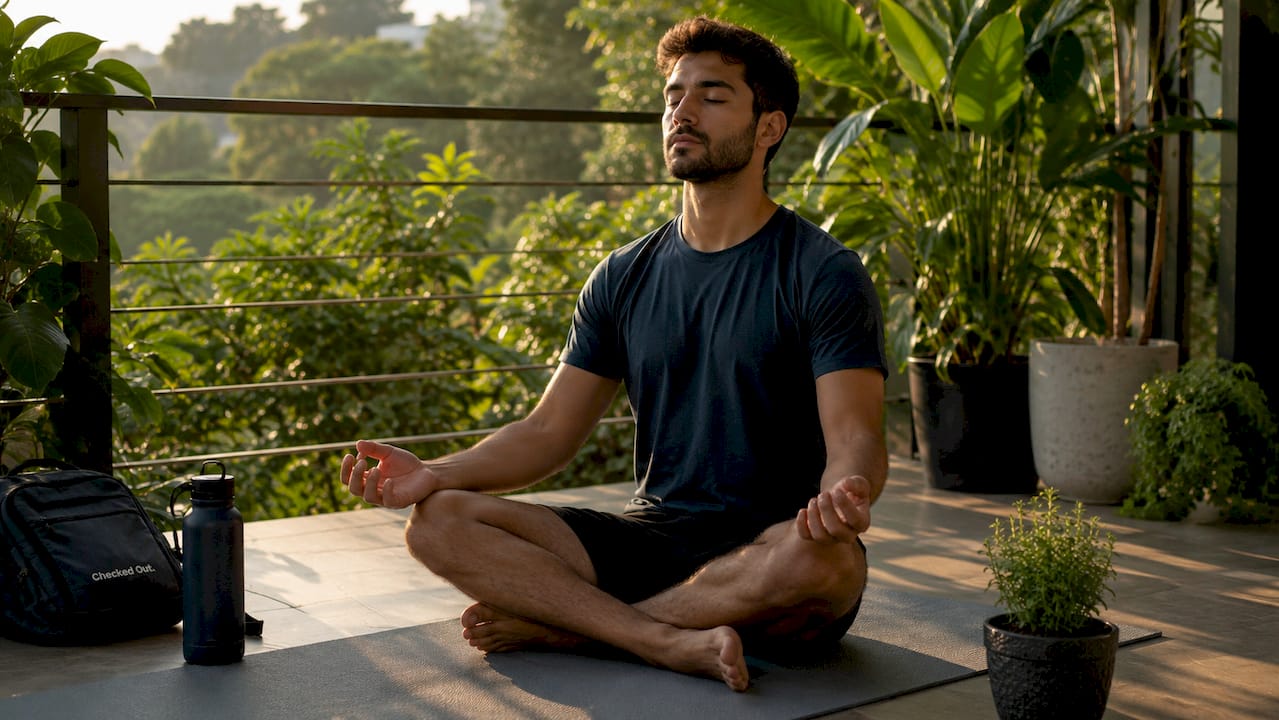
Pro Tip: Combine the military method’s body scan with 4-7-8 breathing for the first two minutes in bed. The physical release plus the breath pattern creates a faster physiological shift than either technique alone.

How can optimizing your bedroom environment help you fall asleep more quickly?
The bedroom environment sends constant signals to your nervous system. Get those signals wrong and your brain stays alert regardless of how tired you feel. The Cleveland Clinic recommends a bedroom temperature of 60°F to 68°F as the target range for sleep. The reason is physiological: your core body temperature must drop by 1–2 degrees Fahrenheit to trigger sleep onset, and a cool room accelerates that process.
| Environmental Factor |
Optimal Condition |
Why It Matters |
| Room temperature |
60°F–68°F |
Supports core temperature drop needed for sleep onset |
| Light exposure |
Near total darkness |
Darkness triggers melatonin release from the pineal gland |
| Sound level |
Quiet or consistent white noise |
Eliminates disruptive sound spikes that fragment sleep |
| Electronics |
Removed or powered off |
Reduces blue light and cognitive arousal before bed |
| Bedding |
Breathable, season-appropriate |
Prevents overheating that disrupts sleep cycles |
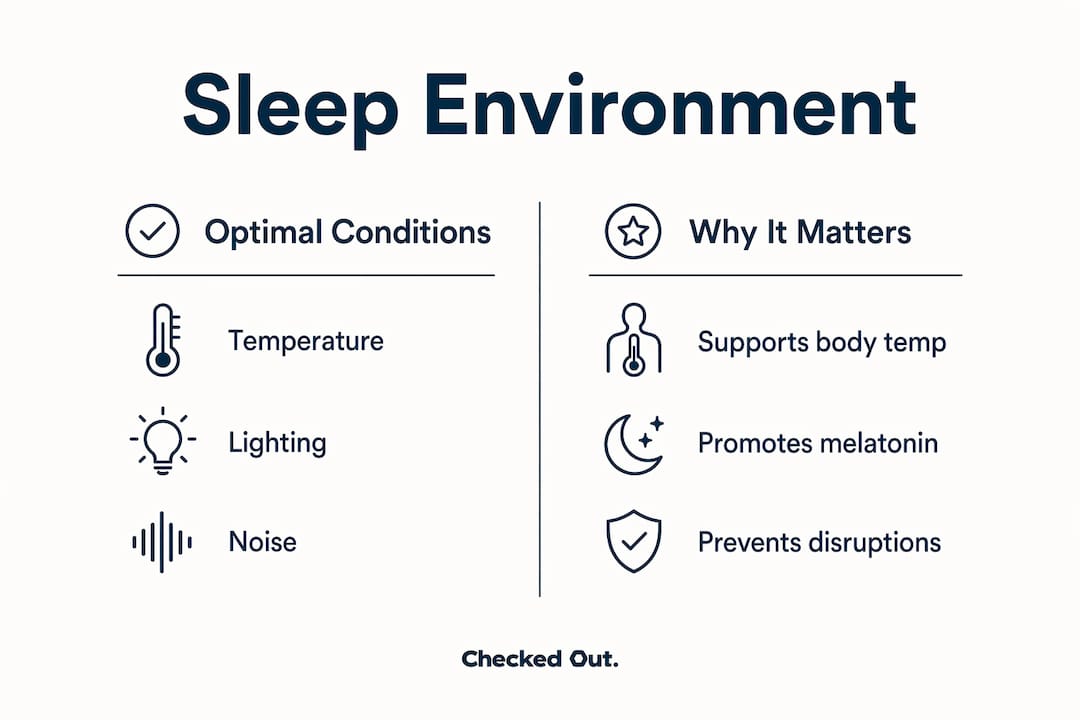
Darkness is equally non-negotiable. Light suppresses melatonin production, even at low intensities. Blackout curtains eliminate streetlight and early morning sun. A sleep-friendly environment also means removing or covering any LED indicators on electronics, which many people underestimate as a light source.
Key environmental adjustments to make tonight:
- Set your thermostat to 65°F as a starting point and adjust from there
- Use a contoured blackout sleep mask if curtains are not an option
- Place your phone in another room or enable full “Do Not Disturb” mode
- Run a fan or white noise app to mask irregular sounds from outside
Electronics deserve special attention beyond just light. Checking email or social media within 30 minutes of bed keeps the prefrontal cortex engaged in problem-solving mode. That cognitive arousal raises your heart rate and delays sleep onset by a measurable amount. The screen goes off, and the brain starts to wind down. It is that direct.
What lifestyle and pre-sleep routines support faster sleep onset?
Behavioral consistency is the foundation that makes every other technique work. The Cleveland Clinic recommends waking at the same time every day, including weekends, to anchor your circadian rhythm. A stable wake time trains your body to feel sleepy at a predictable hour, which shortens the time it takes to fall asleep each night.
Follow these steps to build a pre-sleep routine that actually works:
-
Set a fixed wake time and protect it. Choose a time you can maintain seven days a week. Sleeping in on weekends resets your circadian clock and makes Monday nights harder.
-
Limit naps to 20 minutes before 3:00 PM. The Cleveland Clinic identifies naps over 20 minutes as a primary driver of nighttime sleep difficulty. Short naps restore alertness without depleting sleep pressure.
-
Cut caffeine by early afternoon. Caffeine has a half-life of roughly five to six hours. A 3:00 PM coffee still has meaningful caffeine in your system at 9:00 PM.
-
Finish exercise at least three hours before bed. Vigorous exercise raises core temperature and adrenaline. Both work against sleep onset if timed too close to bedtime.
-
Dim your lights one hour before bed. Bright overhead lighting suppresses melatonin. Switch to lamps or warm-toned bulbs in the evening.
-
Write down your worries before you lie down. Writing down concerns and a specific next step offloads mental stress, allowing the brain to shift from analytic to restful mode. This is one of the most underused and most effective pre-sleep tools available.
The 20-minute toss-and-turn rule comes from cognitive behavioral therapy for insomnia (CBT-I). If you lie awake for more than 20 minutes, leaving the bed and doing a quiet, non-stimulating activity in dim light breaks the negative association between your bed and wakefulness. Return only when you feel genuinely sleepy. This feels counterintuitive, but it rebuilds the mental link between bed and sleep.
Taking a warm bath or shower one to two hours before bed is one of the most physiologically sound pre-sleep habits. The warm bath followed by a cool room accelerates the core temperature drop that signals sleep onset. You are essentially tricking your body into the exact physiological state it needs to fall asleep quickly.
Pro Tip: Pair your warm shower with a room set to 65°F and a journaling session immediately after. The combination of temperature drop, mental offloading, and dim lighting creates a powerful three-part sleep signal.
What role do natural and over-the-counter sleep aids play in falling asleep faster?
Natural sleep aids are supplemental tools, not primary solutions. The Sleep Foundation notes that supplements like melatonin and valerian are not regulated as drugs, which means quality, dosage accuracy, and purity vary widely between products. That regulatory gap matters because you may not be getting what the label says.
Key facts about sleep aids:
-
Melatonin works best for circadian disruptions like jet lag, not for chronic sleep onset difficulty caused by anxiety or poor habits
-
Valerian root has mixed evidence and should be discussed with a physician before use
-
OTC antihistamine-based aids (diphenhydramine, doxylamine) cause rapid tolerance development, making them ineffective within days and unsuitable for ongoing use
-
Magnesium, B6, B12, and GABA are cofactors that support the body’s own melatonin production pathway, a meaningfully different approach from taking synthetic melatonin directly
The smarter question is not which pill helps you sleep tonight, but which approach supports your body’s own sleep chemistry long-term. Synthetic shortcuts often create dependency. Supporting the tryptophan-to-serotonin-to-melatonin conversion pathway with cofactors works with your biology, not around it.
Always consult a healthcare professional before starting any supplement. If you are curious about non-synthetic sleep options, the distinction between supporting natural melatonin production and replacing it with synthetic versions is worth understanding in detail. For a deeper look at the risks of relying on sleep medication, the risks of OTC sleep aids are well documented and worth reviewing before reaching for the medicine cabinet.
Key Takeaways
The fastest path to better sleep onset combines a proven relaxation technique, a cool and dark bedroom, a consistent pre-sleep routine, and careful evaluation of any supplements you consider.
| Point |
Details |
| Use the military sleep method |
Combine body relaxation, 4-7-8 breathing, and visualization to target 1–2 minute sleep onset. |
| Set your room to 60°F–68°F |
A cool room accelerates the core temperature drop your body needs to initiate sleep. |
| Apply the 20-minute rule |
Leave the bed after 20 minutes of wakefulness to break the negative bed-wakefulness association. |
| Write down worries before bed |
Journaling offloads mental stress and shifts the brain from analytic to restful mode. |
| Treat sleep aids as supplements |
Natural cofactors support your own melatonin pathway; OTC antihistamines build tolerance quickly. |
What I’ve learned about sleep that most advice gets wrong
I spent years treating sleep as something that would just happen if I was tired enough. That belief cost me more than I realized at the time. The body keeps score quietly, and chronic poor sleep onset compounds into something much harder to reverse than most people expect.
The biggest misconception I see is that relaxing before bed means doing nothing. Passive scrolling feels restful but keeps the brain in a reactive, alert state. True pre-sleep relaxation is active. It requires deliberate breathing, intentional muscle release, and mental disengagement from the day’s unresolved problems. That distinction changes everything.
What I have found is that environment and mindset work together, not separately. You can have a perfectly cool, dark room and still lie awake for an hour if your mind is running problem-solving loops. The journaling step is the one most people skip, and it is often the one that makes the biggest difference. Writing a worry down with a next step tells your brain the problem is handled. That permission to stop thinking is what sleep actually needs.
Patience matters here too. Most techniques take one to two weeks of consistent practice before they feel natural. The people who give up after three nights are the ones who never find out what works for them. Adjust, stay consistent, and trust the process.
— Geeta
Sleep products from Checkedoutwellness worth knowing about
If you have built the routine and still want additional support, Checkedoutwellness offers a range of drug-free sleep products designed to work alongside the habits covered here.

The natural sleep patch delivers magnesium, B6, B12, and GABA transdermally, supporting your body’s own melatonin production without synthetic additives. Every product is manufactured in South Korea under ISO 22716 GMP pharmaceutical standards. The 3D contoured blackout sleep mask creates total darkness without pressure on your eyes, making it a practical upgrade for anyone who cannot fully control their bedroom light. Visit Checkedoutwellness to see the full range of science-backed, cruelty-free sleep solutions.
FAQ
What is the fastest way to fall asleep?
The military sleep method combines progressive muscle relaxation, deep breathing, and visualization to achieve sleep onset in 1–2 minutes. Pairing it with a cool room and a pre-bed journaling session produces the fastest results.
What bedroom temperature helps you fall asleep quickly?
The Cleveland Clinic recommends 60°F to 68°F as the optimal range. A cooler room supports the core body temperature drop that triggers sleep onset.
How long should a pre-sleep routine be?
A 30 to 60 minute wind-down routine is sufficient for most adults. It should include dimmed lighting, no screens, and a calming activity like reading, light stretching, or journaling.
Are natural sleep supplements safe to use regularly?
Natural supplements like melatonin and valerian are not regulated as drugs, so quality varies. Always consult a physician before using them regularly, especially if you take other medications.
What should I do if I cannot fall asleep after 20 minutes?
Leave the bed and do a quiet, non-stimulating activity in dim light until you feel sleepy. This CBT-I technique, known as the 20-minute rule, prevents your brain from associating the bed with wakefulness.
Recommended

How to Fall Asleep Faster: Proven Tips for 2026
Sleep onset latency is the clinical term for how long it takes you to fall asleep, and reducing it is entirely within your control. Most adults who struggle to fall asleep faster are missing a combination of three things: the right relaxation technique, a properly calibrated sleep environment, and a consistent pre-sleep routine. This guide covers all three, drawing on clinical guidelines from the Cleveland Clinic, the Sleep Foundation, and Mayo Clinic, plus the science behind why each method works. You will leave with a specific plan, not a vague list of suggestions.
What are the most effective relaxation techniques to fall asleep faster?
The military sleep method is the most documented rapid sleep onset technique available. Developed to help soldiers fall asleep in under two minutes, it combines deep breathing, progressive muscle relaxation, and mental visualization into a single sequence. Research shows the method can reduce sleep onset to 1–2 minutes compared to 30 or more minutes without any intervention. That gap is significant because every extra minute of wakefulness in bed deepens the frustration cycle.
Here is the core sequence:
The 4-7-8 breathing technique works through a different mechanism. You inhale for 4 counts, hold for 7, and exhale slowly for 8. The extended exhale activates the parasympathetic nervous system, which lowers heart rate and cortisol. This directly reduces physiological arousal, which is one of the primary barriers to quick sleep onset. Incorporating tension relief practices like progressive muscle relaxation alongside 4-7-8 breathing compounds the calming effect.
Progressive muscle relaxation (PMR) involves tensing each muscle group for five seconds, then releasing for 30 seconds, moving from your feet upward. PMR reduces anxiety by giving the nervous system a concrete physical task. Visualization of calming scenes, such as a quiet beach or a forest path, works by occupying the part of the brain that would otherwise replay stressful thoughts.
Pro Tip: Combine the military method’s body scan with 4-7-8 breathing for the first two minutes in bed. The physical release plus the breath pattern creates a faster physiological shift than either technique alone.
How can optimizing your bedroom environment help you fall asleep more quickly?
The bedroom environment sends constant signals to your nervous system. Get those signals wrong and your brain stays alert regardless of how tired you feel. The Cleveland Clinic recommends a bedroom temperature of 60°F to 68°F as the target range for sleep. The reason is physiological: your core body temperature must drop by 1–2 degrees Fahrenheit to trigger sleep onset, and a cool room accelerates that process.
Darkness is equally non-negotiable. Light suppresses melatonin production, even at low intensities. Blackout curtains eliminate streetlight and early morning sun. A sleep-friendly environment also means removing or covering any LED indicators on electronics, which many people underestimate as a light source.
Key environmental adjustments to make tonight:
Electronics deserve special attention beyond just light. Checking email or social media within 30 minutes of bed keeps the prefrontal cortex engaged in problem-solving mode. That cognitive arousal raises your heart rate and delays sleep onset by a measurable amount. The screen goes off, and the brain starts to wind down. It is that direct.
What lifestyle and pre-sleep routines support faster sleep onset?
Behavioral consistency is the foundation that makes every other technique work. The Cleveland Clinic recommends waking at the same time every day, including weekends, to anchor your circadian rhythm. A stable wake time trains your body to feel sleepy at a predictable hour, which shortens the time it takes to fall asleep each night.
Follow these steps to build a pre-sleep routine that actually works:
The 20-minute toss-and-turn rule comes from cognitive behavioral therapy for insomnia (CBT-I). If you lie awake for more than 20 minutes, leaving the bed and doing a quiet, non-stimulating activity in dim light breaks the negative association between your bed and wakefulness. Return only when you feel genuinely sleepy. This feels counterintuitive, but it rebuilds the mental link between bed and sleep.
Taking a warm bath or shower one to two hours before bed is one of the most physiologically sound pre-sleep habits. The warm bath followed by a cool room accelerates the core temperature drop that signals sleep onset. You are essentially tricking your body into the exact physiological state it needs to fall asleep quickly.
Pro Tip: Pair your warm shower with a room set to 65°F and a journaling session immediately after. The combination of temperature drop, mental offloading, and dim lighting creates a powerful three-part sleep signal.
What role do natural and over-the-counter sleep aids play in falling asleep faster?
Natural sleep aids are supplemental tools, not primary solutions. The Sleep Foundation notes that supplements like melatonin and valerian are not regulated as drugs, which means quality, dosage accuracy, and purity vary widely between products. That regulatory gap matters because you may not be getting what the label says.
Key facts about sleep aids:
Always consult a healthcare professional before starting any supplement. If you are curious about non-synthetic sleep options, the distinction between supporting natural melatonin production and replacing it with synthetic versions is worth understanding in detail. For a deeper look at the risks of relying on sleep medication, the risks of OTC sleep aids are well documented and worth reviewing before reaching for the medicine cabinet.
Key Takeaways
The fastest path to better sleep onset combines a proven relaxation technique, a cool and dark bedroom, a consistent pre-sleep routine, and careful evaluation of any supplements you consider.
What I’ve learned about sleep that most advice gets wrong
I spent years treating sleep as something that would just happen if I was tired enough. That belief cost me more than I realized at the time. The body keeps score quietly, and chronic poor sleep onset compounds into something much harder to reverse than most people expect.
The biggest misconception I see is that relaxing before bed means doing nothing. Passive scrolling feels restful but keeps the brain in a reactive, alert state. True pre-sleep relaxation is active. It requires deliberate breathing, intentional muscle release, and mental disengagement from the day’s unresolved problems. That distinction changes everything.
What I have found is that environment and mindset work together, not separately. You can have a perfectly cool, dark room and still lie awake for an hour if your mind is running problem-solving loops. The journaling step is the one most people skip, and it is often the one that makes the biggest difference. Writing a worry down with a next step tells your brain the problem is handled. That permission to stop thinking is what sleep actually needs.
Patience matters here too. Most techniques take one to two weeks of consistent practice before they feel natural. The people who give up after three nights are the ones who never find out what works for them. Adjust, stay consistent, and trust the process.
Sleep products from Checkedoutwellness worth knowing about
If you have built the routine and still want additional support, Checkedoutwellness offers a range of drug-free sleep products designed to work alongside the habits covered here.
The natural sleep patch delivers magnesium, B6, B12, and GABA transdermally, supporting your body’s own melatonin production without synthetic additives. Every product is manufactured in South Korea under ISO 22716 GMP pharmaceutical standards. The 3D contoured blackout sleep mask creates total darkness without pressure on your eyes, making it a practical upgrade for anyone who cannot fully control their bedroom light. Visit Checkedoutwellness to see the full range of science-backed, cruelty-free sleep solutions.
FAQ
What is the fastest way to fall asleep?
The military sleep method combines progressive muscle relaxation, deep breathing, and visualization to achieve sleep onset in 1–2 minutes. Pairing it with a cool room and a pre-bed journaling session produces the fastest results.
What bedroom temperature helps you fall asleep quickly?
The Cleveland Clinic recommends 60°F to 68°F as the optimal range. A cooler room supports the core body temperature drop that triggers sleep onset.
How long should a pre-sleep routine be?
A 30 to 60 minute wind-down routine is sufficient for most adults. It should include dimmed lighting, no screens, and a calming activity like reading, light stretching, or journaling.
Are natural sleep supplements safe to use regularly?
Natural supplements like melatonin and valerian are not regulated as drugs, so quality varies. Always consult a physician before using them regularly, especially if you take other medications.
What should I do if I cannot fall asleep after 20 minutes?
Leave the bed and do a quiet, non-stimulating activity in dim light until you feel sleepy. This CBT-I technique, known as the 20-minute rule, prevents your brain from associating the bed with wakefulness.
Recommended