Non synthetic sleep supplements are natural or plant-based products that promote restful sleep without relying on synthetic chemicals, pharmaceutical sedatives, or artificial additives. The industry now recognizes a clear tiering system for these products, with magnesium, L-theanine, and Withania somnifera (ashwagandha) sitting at the top of the evidence-backed natural sleep aids category. If you have been waking at 3 AM, lying rigid with a racing mind, or dreading another groggy morning after a pharmaceutical sleep aid, these natural options offer a different path. The body keeps score quietly, and what you put into it at bedtime matters more than most people realize.
1. Which non synthetic sleep supplement types have the strongest evidence?
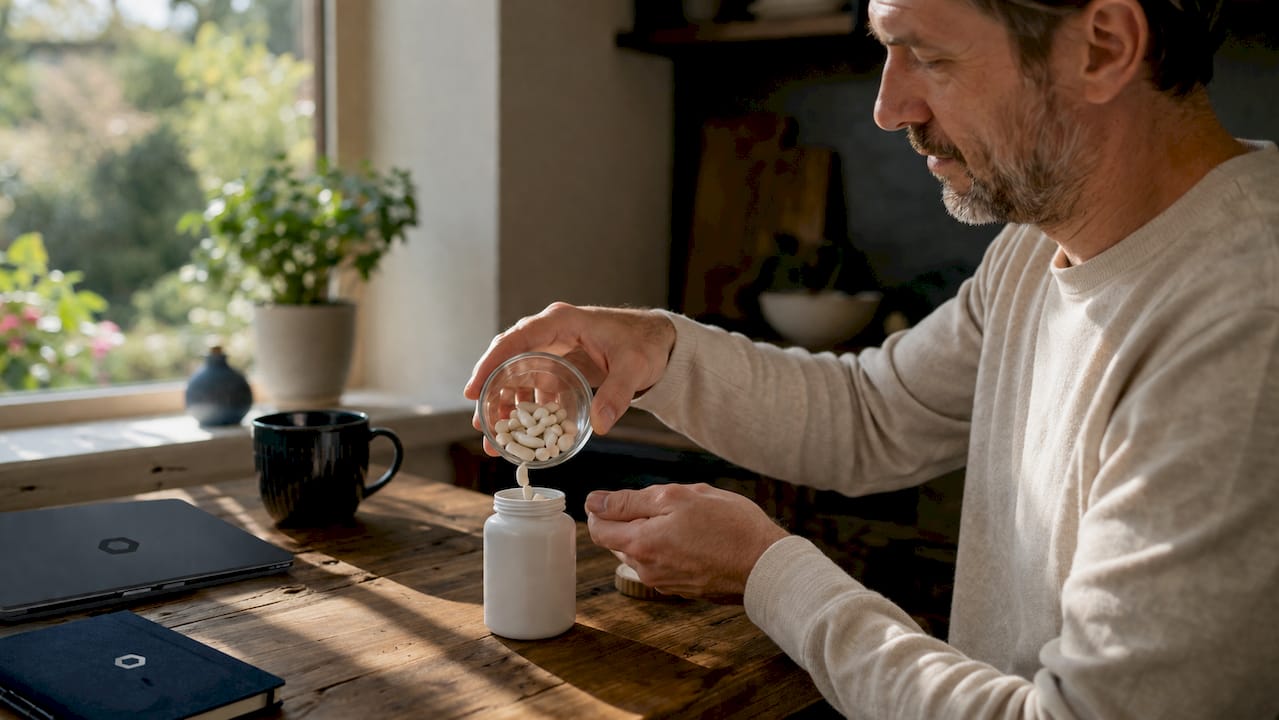
The strongest evidence points to three Tier 1 natural sleep aids: magnesium, L-theanine, and plant-based melatonin. These are not folk remedies. Each has clinical trial data supporting both efficacy and safety for regular use.
-
Magnesium glycinate or citrate: Magnesium at 200–400 mg at bedtime supports broad sleep architecture with well-studied benefits and low side effects. Glycinate is gentler on the stomach; citrate can be mildly laxative at upper doses. Magnesium works by activating GABA receptors, the same receptors that tell your nervous system it is safe to power down.
-
L-theanine: This amino acid, found naturally in green tea, promotes calm, focused relaxation rather than forced sedation. That distinction matters. You fall asleep because your mind quiets, not because you have been chemically knocked out. There is no hangover effect the next morning.
-
Plant-based melatonin: Low doses of 0.3–1 mg of plant-derived or fermentation-sourced melatonin improve sleep onset more effectively than the high-dose synthetic versions common in drugstores. Less is genuinely more here.
Pro Tip: Choose magnesium glycinate over oxide. Oxide has poor bioavailability and is mostly used as a laxative. Glycinate absorbs well and reaches the nervous system where it actually helps.
These three supplements work best when you treat them as support for your body’s own sleep chemistry, not as replacements for it. Checkedoutwellness builds its transdermal sleep patches around this exact principle, delivering magnesium alongside cofactors like B6, B12, and GABA to support the tryptophan-to-serotonin-to-melatonin conversion your body already knows how to do.
2. What natural supplements have moderate evidence for sleep?
Tier 2 natural sleep aids include chamomile, lavender aromatherapy, and ashwagandha. Their research base is solid but narrower than the Tier 1 options. They work best for mild sleep disturbances or as complements to stronger supplements.
-
Chamomile extract: Chamomile binds to GABA-A receptors through its active compound apigenin. It is most effective as a concentrated extract rather than a weak tea bag steeped for two minutes. Clinical studies show modest but consistent improvements in sleep onset time.
-
Lavender aromatherapy: Chamomile and lavender have modest but consistent clinical benefits for sleep onset when using pure oils and proper application. Diffusing 2–3 drops of genuine lavender essential oil (Lavandula angustifolia) 30 minutes before bed is the studied method. Synthetic lavender fragrance does not replicate this effect.
-
Ashwagandha (Withania somnifera): Ashwagandha at 300 mg per day over 8 weeks significantly improves sleep duration and reduces sleep latency in people with insomnia. Its primary mechanism is cortisol reduction. When your stress hormone drops, sleep becomes physically easier.
These supplements pair well with tension relief practices like progressive muscle relaxation or breathwork. The calming effect compounds when you address both body chemistry and physical tension at the same time.
3. Which sleep supplements are considered folk remedies?
Tier 3 plant-based sleep remedies have a long history of traditional use but inconsistent results in clinical trials. That does not make them useless. It means you should approach them with realistic expectations.
-
Valerian root: Valerian and passionflower show inconsistent efficacy in trials but carry low risk and have genuine traditional use as folk remedies. Typical doses range from 300–600 mg of valerian root extract taken 30–60 minutes before bed. Some people respond well; others notice nothing.
-
Passionflower: Passionflower works through mild GABA modulation, similar to chamomile but with a weaker signal in the research. It is often combined with valerian in herbal sleep formulas. The combination may outperform either ingredient alone, though large-scale trials are still limited.
-
Crocus sativus (saffron): Saffron is an emerging option with early positive data. Valerian officinalis and Crocus sativus are both linked to improved sleep outcomes in preliminary research. Saffron’s active compounds appear to influence serotonin pathways, which indirectly supports melatonin production.
The honest truth about Tier 3 supplements is that placebo sensitivity plays a real role in their outcomes. A calming bedtime ritual that includes these herbs may work partly because of the ritual itself. That is not a failure. It is how the nervous system responds to consistent, safe cues.
4. What synthetic additives should you avoid in natural sleep products?
Hidden synthetic additives in natural-branded sleep products can trigger nervous system responses that directly oppose relaxation. A product labeled “natural” or “herbal” can still contain ingredients that undermine the very effect you are paying for.
The most common offenders to watch for on labels:
-
Synthetic fragrances: Listed as “fragrance” or “parfum” on labels, these are often complex chemical mixtures that can stimulate rather than calm the nervous system.
-
Artificial dyes: FD&C colorings like Red 40 or Blue 1 serve no therapeutic purpose and have been linked to hyperactivity responses in sensitive individuals.
-
Chemical sweeteners: Sucralose, aspartame, and acesulfame potassium are common in flavored sleep gummies and powders. They are unnecessary and potentially disruptive to gut microbiome balance, which affects serotonin production.
-
Synthetic fillers and binders: Magnesium stearate (in excess), titanium dioxide, and polyethylene glycol appear in capsules and tablets. Some are benign at low levels; others are worth avoiding entirely.
Avoiding synthetic additives is not paranoia. It is label literacy. The goal is a product that works with your biology, not one that fights it from the inside. Always read the “Other Ingredients” section of any supplement label, not just the active ingredients panel.
Pro Tip: If a sleep supplement has more than 5–6 inactive ingredients, that is a signal worth investigating. Clean-label products typically list fewer fillers because they invest in quality sourcing instead.
5. How to choose the best natural sleep aid for your situation
Matching the right supplement to your specific sleep problem is more effective than picking the most popular option. Sleep issues are not one-size-fits-all, and neither are plant-based sleep remedies.
| Sleep Issue |
Best Supplement Type |
Evidence Tier |
Key Benefit |
Watch Out For |
| Difficulty falling asleep |
L-theanine, low-dose melatonin |
Tier 1 |
Reduces sleep onset time |
High-dose synthetic melatonin |
| Waking during the night |
Magnesium glycinate |
Tier 1 |
Supports deep sleep architecture |
Oxide form (low absorption) |
| Stress-driven poor sleep |
Ashwagandha |
Tier 2 |
Lowers cortisol levels |
Underdosing below 300 mg |
| Mild anxiety before bed |
Chamomile extract, lavender |
Tier 2 |
Calms nervous system gently |
Synthetic fragrance versions |
| General sleep support |
Valerian, passionflower |
Tier 3 |
Traditional calming effect |
Expecting consistent results |
Combining supplements from different tiers can work well. Magnesium glycinate plus L-theanine is one of the most studied and well-tolerated pairings for people who want deeper, uninterrupted sleep without sedation. Ashwagandha adds cortisol regulation on top of that foundation.
Budget matters too. Magnesium glycinate and L-theanine are among the most affordable Tier 1 options per dose. Ashwagandha costs slightly more but delivers measurable results within 6–8 weeks of consistent use. Tier 3 herbs are inexpensive and low-risk, making them reasonable additions for people who want to experiment carefully.
Pro Tip: Start with one supplement at a time for two weeks before adding another. This tells you what is actually working. Stacking five new supplements at once leaves you with no useful information.
Key takeaways
The most effective non synthetic sleep supplement types are those matched to your specific sleep issue, sourced without synthetic additives, and used consistently at evidence-supported doses.
| Point |
Details |
| Tier 1 supplements lead on evidence |
Magnesium glycinate, L-theanine, and plant-based melatonin have the strongest clinical support. |
| Ashwagandha targets stress-driven sleep loss |
300 mg daily for 8 weeks reduces cortisol and measurably improves sleep duration. |
| Synthetic additives undermine natural products |
Fragrances, dyes, and chemical sweeteners in “natural” labels can stimulate rather than calm. |
| Match supplement to sleep problem |
Falling asleep, staying asleep, and stress-driven waking each respond to different supplement types. |
| Clean labels signal quality |
Fewer inactive ingredients typically indicate better sourcing and higher product integrity. |
What I have learned about natural sleep supplements after years of watching people get this wrong
I have watched a lot of well-intentioned people buy a bottle of valerian root, take it for three nights, feel nothing, and conclude that “natural sleep aids don’t work.” That conclusion is almost always wrong. What failed was the match, not the category.
The shift I keep seeing in the wellness space is real and worth paying attention to. People are moving away from synthetic pharmaceutical sleep aids not because they are anti-science, but because they have experienced the hangover, the dependency creep, and the feeling of waking up more tired than when they went to bed. That experience is pushing them toward clean-label, toxin-free options. The market is responding, but not always honestly. A product with “herbal” on the front label and six synthetic fillers in the inactive ingredients list is not what this audience is looking for.
The mistake I see most often is treating sleep supplements as a single-ingredient fix. Sleep is a system. Cortisol dysregulation, magnesium deficiency, and a racing mind are three different problems that often show up together. Addressing all three, with ashwagandha, magnesium glycinate, and L-theanine respectively, produces results that no single supplement can match alone. The synergy is real, and it is backed by how these compounds interact with GABA receptors, the HPA axis, and the tryptophan-to-serotonin-to-melatonin pathway.
My honest advice: read every label twice, start with Tier 1, and give any supplement at least four weeks before judging it. Sleep is not a problem you fix in three nights. It is a system you rebuild over time.
— Geeta
What Checkedoutwellness offers for natural sleep support
Checkedoutwellness was built specifically for people who have already decided that synthetic additives and pharmaceutical dependency are not the answer. The natural sleep patch delivers magnesium, GABA, B6, and B12 transdermally, bypassing the digestive system entirely for more direct absorption. There are no synthetic fillers, no artificial dyes, and no melatonin dependency to worry about.

The full product line at Checkedoutwellness also includes a contoured blackout sleep mask designed to eliminate light disruption without pressure on the eyes. Every product is manufactured under ISO 22716 GMP pharmaceutical standards in South Korea. If you want to see the science behind the formulas, the science page breaks down exactly how each ingredient supports your body’s own sleep chemistry.
FAQ
What are the safest non synthetic sleep supplements?
Magnesium glycinate, L-theanine, and low-dose plant-based melatonin are the safest options with the strongest clinical evidence. They support natural sleep onset without dependency or next-day sedation.
How long does it take for natural sleep aids to work?
Magnesium and L-theanine can show effects within the first week. Ashwagandha typically requires 6–8 weeks of consistent daily use to produce measurable improvements in sleep duration and cortisol levels.
Can you combine multiple herbal sleep supplements?
Yes, combining Tier 1 supplements like magnesium glycinate and L-theanine is well-tolerated and studied. Add one supplement at a time over two-week intervals to identify what is contributing to improvement.
Why should you avoid synthetic melatonin?
Synthetic melatonin at typical over-the-counter doses (3–10 mg) far exceeds what the body naturally produces. Low-dose plant-derived melatonin at 0.3–1 mg improves sleep onset with fewer side effects and less risk of disrupting your body’s own production.
Are non-GMO sleep products more effective?
Non-GMO certification does not directly determine efficacy, but it often correlates with cleaner sourcing and fewer synthetic processing agents. The more meaningful label to check is the full inactive ingredients list.
Recommended

Non Synthetic Sleep Supplement Types: A 2026 Guide
Non synthetic sleep supplements are natural or plant-based products that promote restful sleep without relying on synthetic chemicals, pharmaceutical sedatives, or artificial additives. The industry now recognizes a clear tiering system for these products, with magnesium, L-theanine, and Withania somnifera (ashwagandha) sitting at the top of the evidence-backed natural sleep aids category. If you have been waking at 3 AM, lying rigid with a racing mind, or dreading another groggy morning after a pharmaceutical sleep aid, these natural options offer a different path. The body keeps score quietly, and what you put into it at bedtime matters more than most people realize.
1. Which non synthetic sleep supplement types have the strongest evidence?
The strongest evidence points to three Tier 1 natural sleep aids: magnesium, L-theanine, and plant-based melatonin. These are not folk remedies. Each has clinical trial data supporting both efficacy and safety for regular use.
Pro Tip: Choose magnesium glycinate over oxide. Oxide has poor bioavailability and is mostly used as a laxative. Glycinate absorbs well and reaches the nervous system where it actually helps.
These three supplements work best when you treat them as support for your body’s own sleep chemistry, not as replacements for it. Checkedoutwellness builds its transdermal sleep patches around this exact principle, delivering magnesium alongside cofactors like B6, B12, and GABA to support the tryptophan-to-serotonin-to-melatonin conversion your body already knows how to do.
2. What natural supplements have moderate evidence for sleep?
Tier 2 natural sleep aids include chamomile, lavender aromatherapy, and ashwagandha. Their research base is solid but narrower than the Tier 1 options. They work best for mild sleep disturbances or as complements to stronger supplements.
These supplements pair well with tension relief practices like progressive muscle relaxation or breathwork. The calming effect compounds when you address both body chemistry and physical tension at the same time.
3. Which sleep supplements are considered folk remedies?
Tier 3 plant-based sleep remedies have a long history of traditional use but inconsistent results in clinical trials. That does not make them useless. It means you should approach them with realistic expectations.
The honest truth about Tier 3 supplements is that placebo sensitivity plays a real role in their outcomes. A calming bedtime ritual that includes these herbs may work partly because of the ritual itself. That is not a failure. It is how the nervous system responds to consistent, safe cues.
4. What synthetic additives should you avoid in natural sleep products?
Hidden synthetic additives in natural-branded sleep products can trigger nervous system responses that directly oppose relaxation. A product labeled “natural” or “herbal” can still contain ingredients that undermine the very effect you are paying for.
The most common offenders to watch for on labels:
Avoiding synthetic additives is not paranoia. It is label literacy. The goal is a product that works with your biology, not one that fights it from the inside. Always read the “Other Ingredients” section of any supplement label, not just the active ingredients panel.
Pro Tip: If a sleep supplement has more than 5–6 inactive ingredients, that is a signal worth investigating. Clean-label products typically list fewer fillers because they invest in quality sourcing instead.
5. How to choose the best natural sleep aid for your situation
Matching the right supplement to your specific sleep problem is more effective than picking the most popular option. Sleep issues are not one-size-fits-all, and neither are plant-based sleep remedies.
Combining supplements from different tiers can work well. Magnesium glycinate plus L-theanine is one of the most studied and well-tolerated pairings for people who want deeper, uninterrupted sleep without sedation. Ashwagandha adds cortisol regulation on top of that foundation.
Budget matters too. Magnesium glycinate and L-theanine are among the most affordable Tier 1 options per dose. Ashwagandha costs slightly more but delivers measurable results within 6–8 weeks of consistent use. Tier 3 herbs are inexpensive and low-risk, making them reasonable additions for people who want to experiment carefully.
Pro Tip: Start with one supplement at a time for two weeks before adding another. This tells you what is actually working. Stacking five new supplements at once leaves you with no useful information.
Key takeaways
The most effective non synthetic sleep supplement types are those matched to your specific sleep issue, sourced without synthetic additives, and used consistently at evidence-supported doses.
What I have learned about natural sleep supplements after years of watching people get this wrong
I have watched a lot of well-intentioned people buy a bottle of valerian root, take it for three nights, feel nothing, and conclude that “natural sleep aids don’t work.” That conclusion is almost always wrong. What failed was the match, not the category.
The shift I keep seeing in the wellness space is real and worth paying attention to. People are moving away from synthetic pharmaceutical sleep aids not because they are anti-science, but because they have experienced the hangover, the dependency creep, and the feeling of waking up more tired than when they went to bed. That experience is pushing them toward clean-label, toxin-free options. The market is responding, but not always honestly. A product with “herbal” on the front label and six synthetic fillers in the inactive ingredients list is not what this audience is looking for.
The mistake I see most often is treating sleep supplements as a single-ingredient fix. Sleep is a system. Cortisol dysregulation, magnesium deficiency, and a racing mind are three different problems that often show up together. Addressing all three, with ashwagandha, magnesium glycinate, and L-theanine respectively, produces results that no single supplement can match alone. The synergy is real, and it is backed by how these compounds interact with GABA receptors, the HPA axis, and the tryptophan-to-serotonin-to-melatonin pathway.
My honest advice: read every label twice, start with Tier 1, and give any supplement at least four weeks before judging it. Sleep is not a problem you fix in three nights. It is a system you rebuild over time.
What Checkedoutwellness offers for natural sleep support
Checkedoutwellness was built specifically for people who have already decided that synthetic additives and pharmaceutical dependency are not the answer. The natural sleep patch delivers magnesium, GABA, B6, and B12 transdermally, bypassing the digestive system entirely for more direct absorption. There are no synthetic fillers, no artificial dyes, and no melatonin dependency to worry about.
The full product line at Checkedoutwellness also includes a contoured blackout sleep mask designed to eliminate light disruption without pressure on the eyes. Every product is manufactured under ISO 22716 GMP pharmaceutical standards in South Korea. If you want to see the science behind the formulas, the science page breaks down exactly how each ingredient supports your body’s own sleep chemistry.
FAQ
What are the safest non synthetic sleep supplements?
Magnesium glycinate, L-theanine, and low-dose plant-based melatonin are the safest options with the strongest clinical evidence. They support natural sleep onset without dependency or next-day sedation.
How long does it take for natural sleep aids to work?
Magnesium and L-theanine can show effects within the first week. Ashwagandha typically requires 6–8 weeks of consistent daily use to produce measurable improvements in sleep duration and cortisol levels.
Can you combine multiple herbal sleep supplements?
Yes, combining Tier 1 supplements like magnesium glycinate and L-theanine is well-tolerated and studied. Add one supplement at a time over two-week intervals to identify what is contributing to improvement.
Why should you avoid synthetic melatonin?
Synthetic melatonin at typical over-the-counter doses (3–10 mg) far exceeds what the body naturally produces. Low-dose plant-derived melatonin at 0.3–1 mg improves sleep onset with fewer side effects and less risk of disrupting your body’s own production.
Are non-GMO sleep products more effective?
Non-GMO certification does not directly determine efficacy, but it often correlates with cleaner sourcing and fewer synthetic processing agents. The more meaningful label to check is the full inactive ingredients list.
Recommended