You reach for a sleep supplement hoping for a quiet mind and a full night of recovery, but the product in your hand may be working against you. The sleep aid market is flooded with options that look credible on the label but hide risky ingredients beneath marketing language. Some melatonin products contain up to 417% more than the stated dose, or none at all, and that kind of variability is just the beginning of the problem. This guide will walk you through exactly what to look for, what to avoid, and how to choose products that genuinely support your sleep without putting your health at risk.
Table of Contents
Key Takeaways
| Point |
Details |
| Read the label closely |
Even natural sleep aids can hide risky or undisclosed ingredients, so always check. |
| Avoid antihistamines for sleep |
Diphenhydramine and doxylamine can increase serious health risks when used long-term. |
| Watch for stimulant contamination |
Hidden caffeine, B vitamins, and certain herbs can actually disrupt your sleep cycles. |
| Demand third-party testing |
Choose sleep products with certifications and clear, transparent ingredient lists. |
How to spot risky ingredients in sleep products
Now that you’ve seen how prevalent ingredient problems are, let’s arm you with a practical way to evaluate any sleep aid you might encounter. Most people scan for a familiar ingredient name and move on. That habit leaves the door wide open for serious harm.
The first layer of protection is third-party verification. Look for certifications from USP (United States Pharmacopeia) or NSF International on the packaging. These bodies independently test products to confirm that what’s on the label is actually in the bottle, and at the right amount. Without that seal, you’re trusting a manufacturer to self-police, which isn’t always reliable.
The second thing to demand is a Certificate of Analysis (COA). A COA is a document from an independent lab confirming the exact composition of a product. Legitimate brands publish these openly or share them on request. If a company hesitates, that hesitation says something important.
Hidden or unlisted substances are a real threat. FDA warnings on contaminated products confirm that undeclared prescription drugs and banned substances in sleep products have led to hospitalizations. These aren’t fringe cases. They show up in wellness-branded packaging, often alongside language like “stress relief” or “deep sleep formula.”
Here’s a quick checklist to apply before you ever open a bottle:
- Look for USP, NSF, or ISO certification marks
- Request or download the Certificate of Analysis
- Count the ingredients. More than 10 should raise questions
- Check for proprietary blends, which can hide individual doses
- Search the brand name plus “FDA warning” before buying
Pro Tip: When you’re comparing two products, favor the one with the shorter, simpler ingredient list. Fewer ingredients means fewer unknowns and less risk of undisclosed interactions. Products that aim to naturally improve sleep quality tend to lean on well-studied cofactors rather than stacking obscure botanicals.
“Transparency is not a marketing feature. It’s a minimum standard. Any brand that cannot or will not show you third-party testing data for a product you’re putting in your body is not a brand worth trusting.” Sleep supplements are intended for short-term support, not indefinite daily use. The moment you start relying on a pill to fall asleep every night, the product has become the problem.
The most problematic ingredients found in sleep aids
Understanding what to look for in terms of verification is only the first step. Now let’s break down the specific ingredients in many sleep aids that require extra caution.
Diphenhydramine and doxylamine
These are the active ingredients in most over-the-counter sleep aids like Benadryl and Unisom. They work by blocking histamine receptors, which causes drowsiness. The problem is that antihistamines like diphenhydramine increase the risk of dementia with long-term use, along with falls, next-day confusion, and dependency. They don’t produce restorative sleep. They sedate you, which is a meaningfully different experience.
Phenibut
Phenibut is a synthetic compound that acts on GABA receptors in the brain. It’s not approved as a dietary supplement in the United States, yet it regularly appears in sleep and relaxation products, sometimes undisclosed. Users build tolerance quickly and withdrawal can be severe. Finding phenibut in a “natural sleep blend” is a red flag that should end the purchase immediately.
Melatonin itself isn’t inherently harmful, but dosing matters enormously. Most products contain far more than your body needs. Dosing variability data shows that the actual melatonin content in gummies can be wildly inconsistent batch to batch. Some products have been found to contain serotonin as a contaminant, which is a pharmacologically active compound that can interact with antidepressants and cause serious reactions. You can explore more melatonin safety facts to understand the nuances before adding it to your sleep stack.
Hidden stimulants in “calming” blends
This one surprises most people. Stimulants such as caffeine, B vitamins, rhodiola, and ginseng can paradoxically disrupt sleep when taken in the evening. They often appear in “nighttime recovery” or “stress support” blends because they’re marketed as adaptogenic or energizing during the day. At night, they work against you. Guarana is concentrated caffeine. Green tea extract contains caffeine. Even high-dose B12 has stimulating properties that can delay sleep onset in sensitive individuals.
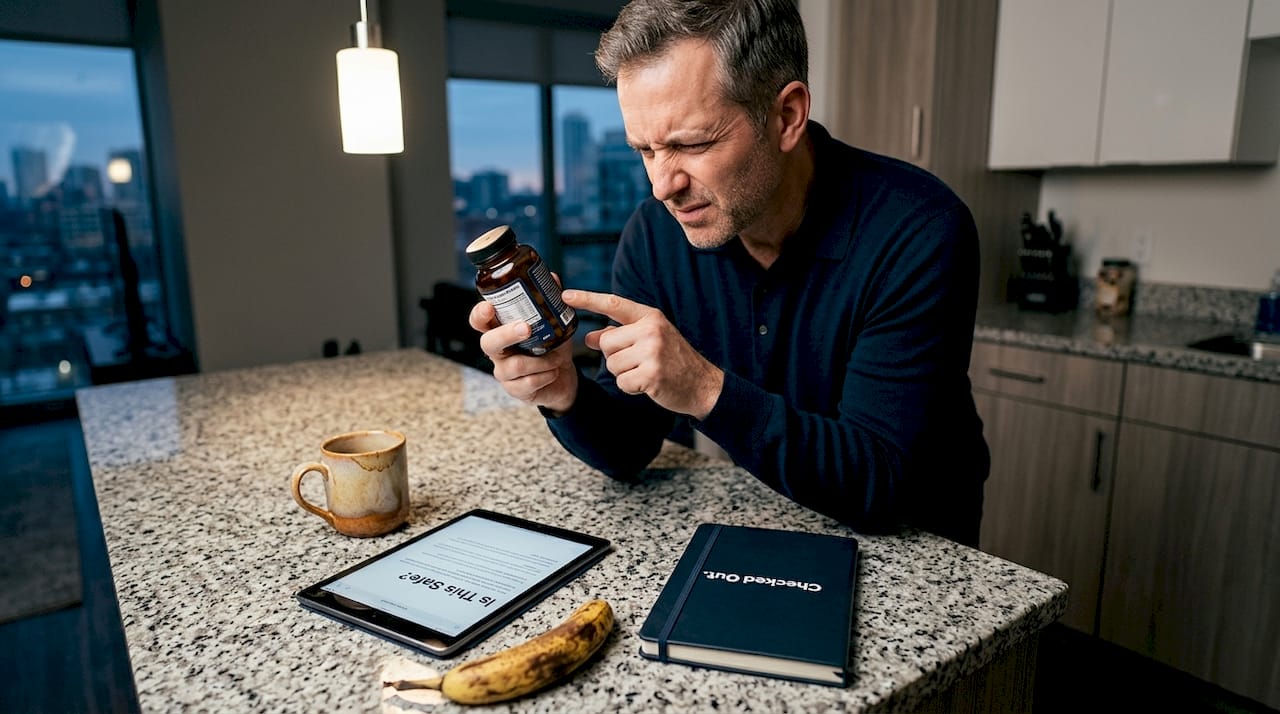
Pro Tip: When you see a “proprietary blend” on the label with a single combined milligram count, you have no way of knowing whether the active ingredients are present in therapeutic or trace amounts. This is one of the most common ways brands obscure underdosing or ingredient swaps.
| Ingredient |
Risk level |
Key concern |
| Diphenhydramine |
High |
Dementia risk, dependency, poor sleep quality |
| Doxylamine |
High |
Sedation, next-day impairment, anticholinergic burden |
| Phenibut |
Very high |
Not approved, rapid tolerance, severe withdrawal |
| High-dose melatonin |
Moderate |
Dosing inconsistency, hormonal disruption |
| Guarana / green tea |
Moderate |
Hidden caffeine, delays sleep onset |
| Rhodiola / ginseng |
Moderate |
Stimulating effect at night |
| Serotonin contaminants |
High |
Drug interactions, cardiovascular effects |
| Proprietary blends |
Variable |
Ingredient masking, no dose transparency |
Comparison of risks: Synthetic, untested, and natural ingredients
After highlighting what to avoid, it’s vital to stack potential options side by side so you can make informed choices with real safety in mind.
Not all ingredients carry the same risk profile. A framework that separates synthetic, unregulated, and truly natural options helps you move faster through a label without second-guessing every compound.
Counterfeit or unregulated melatonin products may contain contaminants like serotonin or CBD instead of what’s listed, making even familiar names unreliable without third-party testing.
| Category |
Examples |
Dependency risk |
Accuracy |
Regulation |
| Synthetic OTC |
Diphenhydramine, doxylamine |
High |
Consistent |
FDA regulated |
| Unregulated supplements |
Phenibut, unlabeled melatonin |
Very high |
Unreliable |
Minimal oversight |
| Natural cofactors |
Magnesium, B6, GABA, L-theanine |
Very low |
Reliable (with COA) |
NSF/USP certifiable |
| Contaminated products |
Counterfeit melatonin, spiked blends |
Variable |
Dangerously variable |
None |
Here’s a stepwise approach for reading any sleep product label:
- Read the full ingredient list, not just the front panel claims
- Cross-check every ingredient against known red flag lists (the FDA database is a good starting point)
- Look for certification marks from a recognized third party
- Search for the COA before buying, not after
- Note whether the product discloses individual ingredient doses or hides them in a blend
- If a product has more than one sedating mechanism (antihistamine plus melatonin plus GABA), question whether that stacking is necessary or risky
- Evaluate the long-term use case. Most sleep aids are designed for temporary use. If you’re planning to use something nightly for months, that should be backed by more evidence, not less
The distinction between short-term and long-term use is important. Some ingredients that are safe for a few nights become genuinely risky after weeks of daily use. Antihistamines build tolerance within just a few days. Melatonin at high doses may suppress your body’s own production over time. If you’re working on sustainable, effective sleep routines rather than patching a bad night here and there, your ingredient standards should be even higher.
Special cases: Children, older adults, and biohackers
Some segments of the population must be doubly cautious. Here’s what health-aware parents, aging adults, and high-performance seekers need to know.
Children
The risk picture for children is especially alarming. Children face higher overdose risk from inaccurate dosing in gummies, and preliminary data suggests long-term melatonin use may be linked to cardiac concerns in pediatric populations. Gummies are particularly problematic because they’re flavored, candy-like, and easy to overconsume. A child who grabs a few extra “sleep gummies” can unknowingly take a dose many times higher than intended.
Older adults
The data here is sobering. 88% of US melatonin gummies are inaccurately labeled, and older adults who also happen to be taking other medications face compounding risks from contamination or mislabeling. The dementia risk from PM antihistamines is particularly relevant for aging adults. Regular use of diphenhydramine-based sleep aids over 7 or more years is associated with a 54% increase in dementia risk. That’s not a reason for panic. It is a reason to avoid them entirely if other options exist.
If you’re stacking multiple sleep interventions, the risk profile changes. Combining melatonin with GABA, L-theanine, magnesium, and adaptogens simultaneously without testing each variable makes it nearly impossible to know what’s working and what’s causing side effects. Stimulant residue from pre-workout formulas, nicotine and sleep problems from evening habits, and poorly timed supplements can all layer on top of each other in ways that make your sleep data confusing and your recovery worse.
Key do’s and don’ts for high-risk groups:
-
Do get pediatric dosing guidance from a physician before giving any supplement to a child
-
Do check melatonin sleep guidance before deciding on dose and duration
-
Don’t assume gummy format equals safe format. It often means inconsistent dosing
-
Don’t combine multiple sedating mechanisms without understanding what each one does individually
-
Do prioritize cofactor-based approaches that support your body’s own melatonin production rather than replacing it
-
Don’t ignore accumulating tolerance as a warning sign that a product is doing the work your brain should be doing
A smarter approach to picking sleep aids
With all the warnings considered, here’s a practical take most consumers and biohackers miss when vetting their own sleep stack.
Being ingredient-aware is a solid starting point, but awareness alone won’t protect you if you approach supplement choices with excessive fear or excessive optimism. Both extremes produce bad decisions. The paranoid consumer reads too many Reddit threads and avoids everything. The optimistic buyer trusts the label without looking deeper. Neither approach serves you well.
The framework that actually works looks like this: demand a COA before you buy anything, stick to products that use natural excipients and disclosed individual doses, and introduce one new variable at a time. This isn’t caution for caution’s sake. It’s genuine scientific practice applied to your personal biology.
The natural-means-safe misconception is worth challenging directly. Valerian root can interact with sedative medications. High-dose ashwagandha affects thyroid function in some users. Passionflower has real sedative properties that may not be appropriate for everyone. “Natural” is a description of origin, not a safety certificate. What matters is the dose, the source, the purity, and the context of your individual health status.
“The most powerful sleep protocol I’ve ever used wasn’t a supplement. It was consistency, darkness, temperature, and one well-tested cofactor that helped my body do what it was already trying to do.”
The biohacker instinct to optimize is admirable, but sleep responds better to removing interference than to adding more inputs. Each ingredient you add is another variable in an already complex system. Less is often more, provided that what you’re using is genuinely high quality.
See our science-focused philosophy for a deeper look at how we approach ingredient selection, and why we believe the body’s own melatonin production pathway is worth supporting rather than bypassing.
Pro Tip: Keep a sleep journal for at least two weeks when trying any new product. Track sleep onset time, wake frequency, morning mood, and energy by midday. Your subjective perception of “sleeping better” doesn’t always match the data, and the data will tell you whether a product is genuinely helping or just sedating you.
Natural, ingredient-conscious sleep solutions from Checked Out
If you want to take the next step with clearer confidence, these options are purposely formulated around the safety priorities we’ve discussed throughout this article.

At Checked Out Wellness, every product decision starts with one question: does this support the body’s natural sleep process, or does it substitute for it? Our melatonin-free sleep patch delivers magnesium, B6, B12, and GABA transdermally, giving your body the cofactors it needs for tryptophan-to-serotonin-to-melatonin conversion without flooding your system with synthetic hormones. There are no proprietary blends. No antihistamines. No sedatives. Every ingredient is disclosed and tested to ISO 22716 GMP pharmaceutical standards. Pair it with our 3D sleep mask for full blackout conditions, and you’ve addressed two of the most impactful levers in sleep science without a single habit-forming compound. Shop our natural sleep patches to explore the full range and find the combination that fits your recovery goals.
Frequently asked questions
What are the most dangerous ingredients in over-the-counter sleep aids?
Commonly risky ingredients include diphenhydramine, doxylamine, undisclosed sedatives, and unregulated melatonin. Antihistamines like diphenhydramine increase dementia risk with regular use and create dependency patterns within days.
Are melatonin gummies safe for kids?
Melatonin gummies often have inaccurate dosing and contamination risks that make them unsuitable for children without physician guidance. Children face higher overdose risk from the mislabeled doses common in gummy formulations.
How can I verify if a sleep product is safe?
Look for third-party certifications like USP or NSF, request a Certificate of Analysis from the manufacturer, and avoid any product that lists ingredients inside a proprietary blend without disclosing individual amounts.
Is “natural” always safer in sleep supplements?
Natural ingredients can still cause side effects, build tolerance, or interact with medications, so origin alone doesn’t establish safety. Dose, purity, and your individual health context matter far more than the word “natural” on a label.
What hidden stimulants should I watch for in sleep products?
Watch for guarana, green tea extract, high-dose B vitamins, rhodiola, and ginseng, all of which can interfere with sleep onset. Stimulants like rhodiola and ginseng have paradoxically disruptive effects when consumed in the evening hours.
Recommended

Top ingredients to avoid in sleep products for safer rest
You reach for a sleep supplement hoping for a quiet mind and a full night of recovery, but the product in your hand may be working against you. The sleep aid market is flooded with options that look credible on the label but hide risky ingredients beneath marketing language. Some melatonin products contain up to 417% more than the stated dose, or none at all, and that kind of variability is just the beginning of the problem. This guide will walk you through exactly what to look for, what to avoid, and how to choose products that genuinely support your sleep without putting your health at risk.
Table of Contents
Key Takeaways
How to spot risky ingredients in sleep products
Now that you’ve seen how prevalent ingredient problems are, let’s arm you with a practical way to evaluate any sleep aid you might encounter. Most people scan for a familiar ingredient name and move on. That habit leaves the door wide open for serious harm.
The first layer of protection is third-party verification. Look for certifications from USP (United States Pharmacopeia) or NSF International on the packaging. These bodies independently test products to confirm that what’s on the label is actually in the bottle, and at the right amount. Without that seal, you’re trusting a manufacturer to self-police, which isn’t always reliable.
The second thing to demand is a Certificate of Analysis (COA). A COA is a document from an independent lab confirming the exact composition of a product. Legitimate brands publish these openly or share them on request. If a company hesitates, that hesitation says something important.
Hidden or unlisted substances are a real threat. FDA warnings on contaminated products confirm that undeclared prescription drugs and banned substances in sleep products have led to hospitalizations. These aren’t fringe cases. They show up in wellness-branded packaging, often alongside language like “stress relief” or “deep sleep formula.”
Here’s a quick checklist to apply before you ever open a bottle:
Pro Tip: When you’re comparing two products, favor the one with the shorter, simpler ingredient list. Fewer ingredients means fewer unknowns and less risk of undisclosed interactions. Products that aim to naturally improve sleep quality tend to lean on well-studied cofactors rather than stacking obscure botanicals.
The most problematic ingredients found in sleep aids
Understanding what to look for in terms of verification is only the first step. Now let’s break down the specific ingredients in many sleep aids that require extra caution.
Diphenhydramine and doxylamine
These are the active ingredients in most over-the-counter sleep aids like Benadryl and Unisom. They work by blocking histamine receptors, which causes drowsiness. The problem is that antihistamines like diphenhydramine increase the risk of dementia with long-term use, along with falls, next-day confusion, and dependency. They don’t produce restorative sleep. They sedate you, which is a meaningfully different experience.
Phenibut
Phenibut is a synthetic compound that acts on GABA receptors in the brain. It’s not approved as a dietary supplement in the United States, yet it regularly appears in sleep and relaxation products, sometimes undisclosed. Users build tolerance quickly and withdrawal can be severe. Finding phenibut in a “natural sleep blend” is a red flag that should end the purchase immediately.
Melatonin in high doses and contaminated forms
Melatonin itself isn’t inherently harmful, but dosing matters enormously. Most products contain far more than your body needs. Dosing variability data shows that the actual melatonin content in gummies can be wildly inconsistent batch to batch. Some products have been found to contain serotonin as a contaminant, which is a pharmacologically active compound that can interact with antidepressants and cause serious reactions. You can explore more melatonin safety facts to understand the nuances before adding it to your sleep stack.
Hidden stimulants in “calming” blends
This one surprises most people. Stimulants such as caffeine, B vitamins, rhodiola, and ginseng can paradoxically disrupt sleep when taken in the evening. They often appear in “nighttime recovery” or “stress support” blends because they’re marketed as adaptogenic or energizing during the day. At night, they work against you. Guarana is concentrated caffeine. Green tea extract contains caffeine. Even high-dose B12 has stimulating properties that can delay sleep onset in sensitive individuals.
Pro Tip: When you see a “proprietary blend” on the label with a single combined milligram count, you have no way of knowing whether the active ingredients are present in therapeutic or trace amounts. This is one of the most common ways brands obscure underdosing or ingredient swaps.
Comparison of risks: Synthetic, untested, and natural ingredients
After highlighting what to avoid, it’s vital to stack potential options side by side so you can make informed choices with real safety in mind.
Not all ingredients carry the same risk profile. A framework that separates synthetic, unregulated, and truly natural options helps you move faster through a label without second-guessing every compound.
Counterfeit or unregulated melatonin products may contain contaminants like serotonin or CBD instead of what’s listed, making even familiar names unreliable without third-party testing.
Here’s a stepwise approach for reading any sleep product label:
The distinction between short-term and long-term use is important. Some ingredients that are safe for a few nights become genuinely risky after weeks of daily use. Antihistamines build tolerance within just a few days. Melatonin at high doses may suppress your body’s own production over time. If you’re working on sustainable, effective sleep routines rather than patching a bad night here and there, your ingredient standards should be even higher.
Special cases: Children, older adults, and biohackers
Some segments of the population must be doubly cautious. Here’s what health-aware parents, aging adults, and high-performance seekers need to know.
Children
The risk picture for children is especially alarming. Children face higher overdose risk from inaccurate dosing in gummies, and preliminary data suggests long-term melatonin use may be linked to cardiac concerns in pediatric populations. Gummies are particularly problematic because they’re flavored, candy-like, and easy to overconsume. A child who grabs a few extra “sleep gummies” can unknowingly take a dose many times higher than intended.
Older adults
The data here is sobering. 88% of US melatonin gummies are inaccurately labeled, and older adults who also happen to be taking other medications face compounding risks from contamination or mislabeling. The dementia risk from PM antihistamines is particularly relevant for aging adults. Regular use of diphenhydramine-based sleep aids over 7 or more years is associated with a 54% increase in dementia risk. That’s not a reason for panic. It is a reason to avoid them entirely if other options exist.
Biohackers and high performers
If you’re stacking multiple sleep interventions, the risk profile changes. Combining melatonin with GABA, L-theanine, magnesium, and adaptogens simultaneously without testing each variable makes it nearly impossible to know what’s working and what’s causing side effects. Stimulant residue from pre-workout formulas, nicotine and sleep problems from evening habits, and poorly timed supplements can all layer on top of each other in ways that make your sleep data confusing and your recovery worse.
Key do’s and don’ts for high-risk groups:
A smarter approach to picking sleep aids
With all the warnings considered, here’s a practical take most consumers and biohackers miss when vetting their own sleep stack.
Being ingredient-aware is a solid starting point, but awareness alone won’t protect you if you approach supplement choices with excessive fear or excessive optimism. Both extremes produce bad decisions. The paranoid consumer reads too many Reddit threads and avoids everything. The optimistic buyer trusts the label without looking deeper. Neither approach serves you well.
The framework that actually works looks like this: demand a COA before you buy anything, stick to products that use natural excipients and disclosed individual doses, and introduce one new variable at a time. This isn’t caution for caution’s sake. It’s genuine scientific practice applied to your personal biology.
The natural-means-safe misconception is worth challenging directly. Valerian root can interact with sedative medications. High-dose ashwagandha affects thyroid function in some users. Passionflower has real sedative properties that may not be appropriate for everyone. “Natural” is a description of origin, not a safety certificate. What matters is the dose, the source, the purity, and the context of your individual health status.
The biohacker instinct to optimize is admirable, but sleep responds better to removing interference than to adding more inputs. Each ingredient you add is another variable in an already complex system. Less is often more, provided that what you’re using is genuinely high quality.
See our science-focused philosophy for a deeper look at how we approach ingredient selection, and why we believe the body’s own melatonin production pathway is worth supporting rather than bypassing.
Pro Tip: Keep a sleep journal for at least two weeks when trying any new product. Track sleep onset time, wake frequency, morning mood, and energy by midday. Your subjective perception of “sleeping better” doesn’t always match the data, and the data will tell you whether a product is genuinely helping or just sedating you.
Natural, ingredient-conscious sleep solutions from Checked Out
If you want to take the next step with clearer confidence, these options are purposely formulated around the safety priorities we’ve discussed throughout this article.
At Checked Out Wellness, every product decision starts with one question: does this support the body’s natural sleep process, or does it substitute for it? Our melatonin-free sleep patch delivers magnesium, B6, B12, and GABA transdermally, giving your body the cofactors it needs for tryptophan-to-serotonin-to-melatonin conversion without flooding your system with synthetic hormones. There are no proprietary blends. No antihistamines. No sedatives. Every ingredient is disclosed and tested to ISO 22716 GMP pharmaceutical standards. Pair it with our 3D sleep mask for full blackout conditions, and you’ve addressed two of the most impactful levers in sleep science without a single habit-forming compound. Shop our natural sleep patches to explore the full range and find the combination that fits your recovery goals.
Frequently asked questions
What are the most dangerous ingredients in over-the-counter sleep aids?
Commonly risky ingredients include diphenhydramine, doxylamine, undisclosed sedatives, and unregulated melatonin. Antihistamines like diphenhydramine increase dementia risk with regular use and create dependency patterns within days.
Are melatonin gummies safe for kids?
Melatonin gummies often have inaccurate dosing and contamination risks that make them unsuitable for children without physician guidance. Children face higher overdose risk from the mislabeled doses common in gummy formulations.
How can I verify if a sleep product is safe?
Look for third-party certifications like USP or NSF, request a Certificate of Analysis from the manufacturer, and avoid any product that lists ingredients inside a proprietary blend without disclosing individual amounts.
Is “natural” always safer in sleep supplements?
Natural ingredients can still cause side effects, build tolerance, or interact with medications, so origin alone doesn’t establish safety. Dose, purity, and your individual health context matter far more than the word “natural” on a label.
What hidden stimulants should I watch for in sleep products?
Watch for guarana, green tea extract, high-dose B vitamins, rhodiola, and ginseng, all of which can interfere with sleep onset. Stimulants like rhodiola and ginseng have paradoxically disruptive effects when consumed in the evening hours.
Recommended