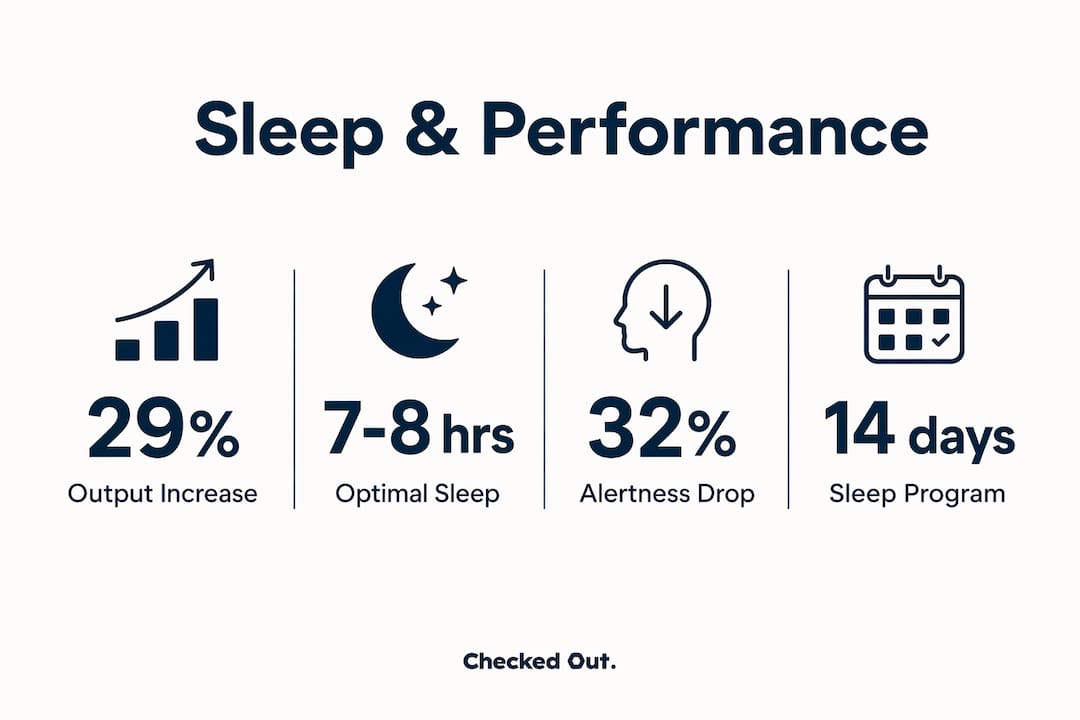
Sleep is a direct performance multiplier, not a passive recovery state. Workers averaging 7–8 hours of sleep produce 29% more output than those sleeping under 6 hours. The role of sleep in performance spans every domain you care about: athletic recovery, cognitive sharpness, and sustained workplace productivity. Poor sleep costs the U.S. economy an estimated $411 billion annually in lost output. That number reflects real people making slower decisions, committing more errors, and recovering less fully from physical effort. If you take your nutrition and training seriously, sleep deserves the same attention.
Sleep is the body’s primary repair window. During deep sleep, the pituitary gland releases growth hormone, which drives muscle protein synthesis and tissue repair. Without adequate sleep, that repair cycle gets cut short, and you carry accumulated damage into your next training session.
The consequences of poor sleep on athletic performance are measurable and immediate. Sleep deprivation impairs speed, reaction time, and accuracy, while increasing injury risk through neuromuscular response decline. Losing just 1–2 hours per night produces measurable drops in sports performance parameters. For athletes, that is not a minor inconvenience. It is the difference between a personal best and a pulled hamstring.
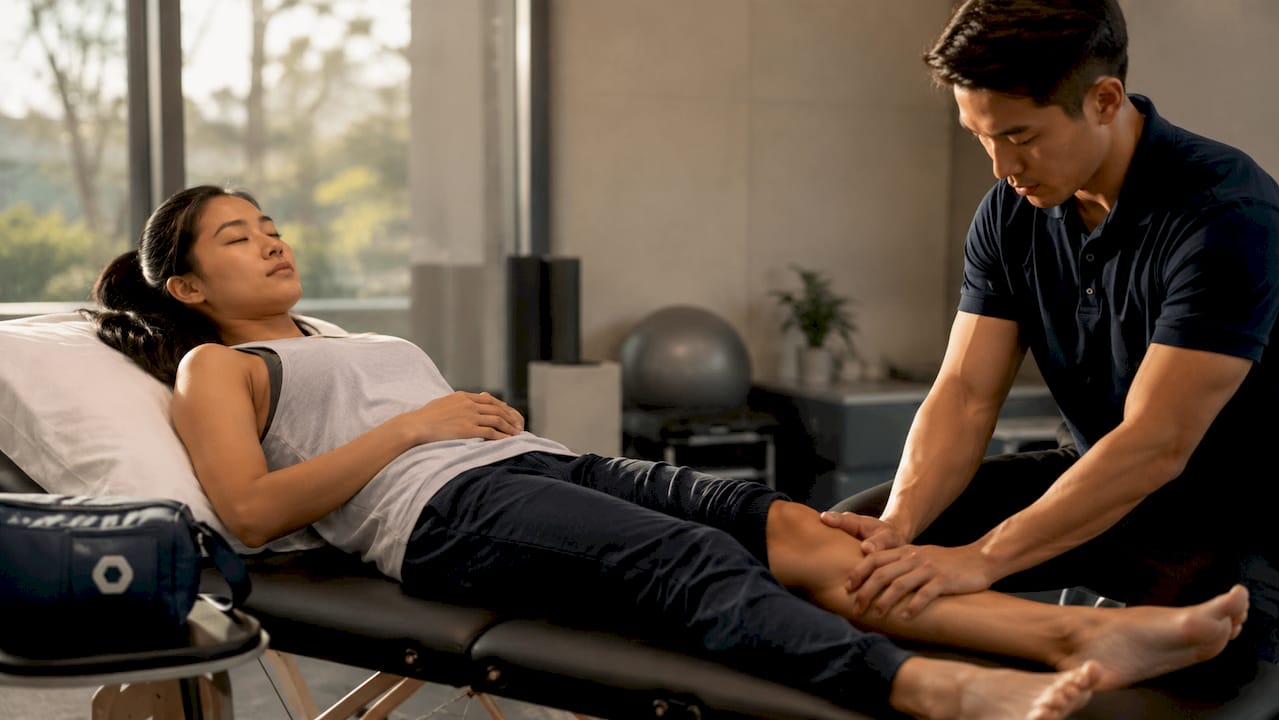
Sleep hygiene interventions produce real results in athletic settings. A 14-day sleep hygiene program in collegiate athletes significantly reduced sleep latency and increased total sleep duration. SHIP adherence explained 74.99% of variance in performance outcomes. That figure tells you something important: how consistently athletes followed sleep hygiene protocols predicted their aerobic performance more reliably than most training variables.
Female athletes face a distinct set of challenges. Hormonal and psychosocial stressors create unique sleep disruptions that generic sleep advice does not address. Personalized interventions for female athletes reduce injury risk and support long-term health in ways that one-size-fits-all programs cannot.
Key sleep behaviors that support athletic recovery:
-
Consistent sleep and wake times anchor your circadian rhythm and reduce sleep latency
-
Pre-training sleep extension (adding 30–60 minutes in high-load training weeks) supports neuromuscular recovery
-
Avoiding screens 60 minutes before bed reduces cortisol and supports melatonin production
-
Cooling the bedroom to 65–68°F improves sleep depth and continuity
-
Limiting caffeine after 2 p.m. prevents adenosine disruption during the first sleep cycles
Pro Tip: If you train in the evening, a 10-minute cool shower before bed drops your core temperature faster and accelerates sleep onset. This is especially useful for athletes whose cortisol stays elevated after late workouts.
Not all sleep stages contribute equally to performance. REM sleep duration positively correlates with next-day workplace task performance. Deep NREM sleep, while critical for physical restoration, does not show the same direct link to cognitive task success. This distinction matters if you are trying to connect your sleep habits to your output at work.
REM sleep is where the brain consolidates procedural memory, emotional regulation, and creative problem solving. Cutting it short through alcohol, late-night screens, or fragmented sleep does not just leave you tired. It leaves you slower, less accurate, and more reactive under pressure.
The productivity math is stark. Cutting just 1.5 hours of sleep for a single night reduces alertness by 32% and impairs both motor and decision-making skills. Sleep-deprived workers operate at 13% lower efficiency than their rested baseline. Multiply that across a team or a week, and the losses compound fast.
Presenteeism is the hidden cost most organizations miss. Cognitively impaired employees who show up to work generate errors and slow throughput in ways that absenteeism data never captures. A person who calls in sick is counted. A person who arrives exhausted and makes three costly mistakes is not.
| Sleep variable |
Effect on cognitive performance |
| REM sleep duration |
Positively correlates with next-day task performance |
| Sleep under 6 hours |
29% reduction in output; 45 lost workdays per year equivalent |
| 1.5-hour sleep cut |
32% drop in alertness; 13% lower efficiency |
| Bedroom temperature above 68°F |
Measurably lower next-day focus scores |
| Fragmented sleep |
Impairs decision-making and emotional regulation |
Pro Tip: Track your REM duration using a wearable for two weeks alongside your daily output. Most people are shocked to see how directly their REM percentage predicts their best and worst work days.
Seven to eight hours is the cognitive performance peak. Workers in that range produce significantly more output than those sleeping under 6 hours, and research does not support the idea that more sleep beyond 8 hours adds further benefit for most adults. The sweet spot is real, and it is narrower than most high performers want to admit.
Sleep hygiene is not just about duration. The quality and continuity of sleep determine how much restorative work actually happens within those hours. A fragmented 8 hours can deliver less REM and deep sleep than a solid 7. Environment, routine, and behavioral habits all shape the architecture of your sleep.
Evidence-based sleep hygiene behaviors
- Set a fixed wake time seven days a week, even on weekends
- Keep your bedroom at 65–68°F. Temperature at this range is linked to 23% higher focus scores the following day
- Eliminate light exposure in the bedroom, including standby LEDs and streetlight bleed
- Avoid alcohol within 3 hours of sleep. Alcohol suppresses REM and fragments the second half of the night
- Build a 20-minute wind-down routine: dim lights, lower stimulation, and avoid work-related content
Common pitfalls that silently erode sleep quality
- Sleeping in on weekends shifts your circadian rhythm and creates social jet lag
- Exercising within 2 hours of bed keeps core temperature elevated and delays sleep onset
- Using your bed for work or screens trains your brain to associate the space with alertness
- Relying on sleep medication long-term suppresses REM and reduces sleep quality over time
For female athletes and high-performing women, personalized sleep interventions that account for hormonal cycles produce better outcomes than standard protocols. Tracking sleep quality across the menstrual cycle and adjusting training load accordingly is one of the most underused performance tools available.
What practical strategies improve sleep and boost recovery?
The fastest wins in sleep quality come from environmental changes, not supplements. Your bedroom is either working for you or against you. Most people have no idea how much ambient light, temperature, and noise are costing them in sleep depth.
Start with these environmental adjustments:
-
Temperature: Set your thermostat to 65–68°F before bed. Your core temperature needs to drop to initiate sleep. A cool room accelerates that process.
-
Light: Use blackout curtains or a contoured sleep mask. Even low-level light exposure during sleep suppresses melatonin and fragments REM cycles.
-
Noise: Use a white noise machine or earplugs if your environment is unpredictable. Sudden sounds cause micro-arousals that interrupt sleep stages without fully waking you.
-
Mouth breathing: Nasal breathing during sleep improves oxygen efficiency and reduces cortisol. Mouth tape supports nasal breathing for people who shift to mouth breathing during the night.
Behavioral strategies compound the environmental ones. A consistent pre-sleep routine signals your nervous system that the day is over. That signal matters because cortisol dysregulation is one of the primary reasons high performers struggle to fall asleep despite being exhausted. The body keeps score quietly, and a racing mind at 11 p.m. is often the result of a day with no clear off-ramp.
Pro Tip: If you wake between 2 and 4 a.m. regularly, that is often a cortisol or blood sugar signal, not a sleep disorder. A small protein-based snack before bed and a magnesium supplement can stabilize both. Checkedoutwellness transdermal patches deliver magnesium and GABA transdermally, bypassing the digestive system for faster uptake.
Tracking sleep metrics closes the feedback loop. Use a wearable to monitor REM percentage, sleep latency, and total sleep time. Connect those numbers to your sleep quality improvement habits over time. Patterns become visible within two weeks, and you will know exactly which changes are working.
Key Takeaways
Sleep is the single most measurable performance variable available to athletes and knowledge workers, and optimizing it requires targeting both sleep duration and sleep stage quality.
| Point |
Details |
| REM sleep drives cognitive output |
REM duration predicts next-day task performance more reliably than total sleep time alone. |
| 7–8 hours is the output peak |
Workers in this range produce 29% more than those sleeping under 6 hours. |
| Environment shapes sleep quality |
A bedroom at 65–68°F is linked to 23% higher next-day focus scores. |
| Sleep hygiene works for athletes |
A 14-day protocol reduced cortisol and explained 74.99% of variance in athletic performance. |
| Presenteeism hides the real cost |
Cognitively impaired workers generate errors that absenteeism data never captures. |
Sleep debt is not a badge of honor
I have worked with enough high performers to recognize the pattern. They wear their 5-hour nights like proof of dedication. They believe they have adapted. They have not.
Sleep deprivation reduces self-awareness of cognitive decline. The brain regions responsible for self-monitoring are among the first to degrade under sleep loss. That means the people most impaired are often the least able to recognize it. I find that genuinely unsettling, because it means the confidence you feel after a short night is not a signal that you are fine. It is a symptom.
What I have seen work, consistently, is treating sleep with the same rigor people apply to nutrition. Not as a luxury or a reward, but as a non-negotiable input. The small shifts matter more than people expect. A cooler room, a fixed wake time, nasal breathing at night. These are not dramatic interventions. But they compound. Within two weeks, most people notice sharper focus, faster recovery, and a quieter nervous system.
The invisible productivity losses from presenteeism are real. Showing up exhausted and making three slow, error-prone decisions costs more than staying home. The body keeps score even when you do not.
Treat sleep as the performance investment it is. The returns are not subtle.
— Geeta
What Checkedoutwellness offers for sleep and recovery
If you are ready to act on what the research shows, Checkedoutwellness makes it practical. The brand’s natural sleep patches deliver magnesium, B6, B12, and GABA transdermally, supporting your body’s own melatonin production without synthetic additives or dependency risk. Every product is manufactured under ISO 22716 GMP pharmaceutical standards in South Korea.

The Sleep Duo bundle pairs a sleep patch with mouth tape to support nasal breathing and deeper overnight recovery. Add the contoured blackout sleep mask to eliminate light exposure completely. These tools align directly with the environmental and behavioral strategies covered above, and they integrate into any existing sleep routine without disruption.
FAQ
Sleep supports muscle repair, hormonal balance, and neuromuscular response. Losing just 1–2 hours per night produces measurable drops in speed, reaction time, and accuracy, while increasing injury risk.
Yes. REM sleep duration positively correlates with next-day workplace task performance, making it the most directly relevant sleep stage for knowledge workers and decision-makers.
Seven to eight hours is the documented cognitive performance peak. Workers in that range produce 29% more output than those sleeping under 6 hours, with no evidence that sleeping beyond 8 hours adds further benefit for most adults.
What bedroom temperature is best for sleep quality?
A bedroom temperature of 65–68°F is linked to 23% higher focus scores the following day compared to warmer room temperatures. Cooling the room before bed also accelerates sleep onset by lowering core body temperature.
What is presenteeism and why does it matter for sleep?
Presenteeism means showing up to work while cognitively impaired. Employees affected by poor sleep generate errors and slow throughput in ways that standard absenteeism tracking never captures, making it a larger hidden cost than missed workdays.
Recommended

The Role of Sleep in Performance: 2026 Guide
Sleep is a direct performance multiplier, not a passive recovery state. Workers averaging 7–8 hours of sleep produce 29% more output than those sleeping under 6 hours. The role of sleep in performance spans every domain you care about: athletic recovery, cognitive sharpness, and sustained workplace productivity. Poor sleep costs the U.S. economy an estimated $411 billion annually in lost output. That number reflects real people making slower decisions, committing more errors, and recovering less fully from physical effort. If you take your nutrition and training seriously, sleep deserves the same attention.
How does sleep impact athletic performance and recovery?
Sleep is the body’s primary repair window. During deep sleep, the pituitary gland releases growth hormone, which drives muscle protein synthesis and tissue repair. Without adequate sleep, that repair cycle gets cut short, and you carry accumulated damage into your next training session.
The consequences of poor sleep on athletic performance are measurable and immediate. Sleep deprivation impairs speed, reaction time, and accuracy, while increasing injury risk through neuromuscular response decline. Losing just 1–2 hours per night produces measurable drops in sports performance parameters. For athletes, that is not a minor inconvenience. It is the difference between a personal best and a pulled hamstring.
Sleep hygiene interventions produce real results in athletic settings. A 14-day sleep hygiene program in collegiate athletes significantly reduced sleep latency and increased total sleep duration. SHIP adherence explained 74.99% of variance in performance outcomes. That figure tells you something important: how consistently athletes followed sleep hygiene protocols predicted their aerobic performance more reliably than most training variables.
Female athletes face a distinct set of challenges. Hormonal and psychosocial stressors create unique sleep disruptions that generic sleep advice does not address. Personalized interventions for female athletes reduce injury risk and support long-term health in ways that one-size-fits-all programs cannot.
Key sleep behaviors that support athletic recovery:
Pro Tip: If you train in the evening, a 10-minute cool shower before bed drops your core temperature faster and accelerates sleep onset. This is especially useful for athletes whose cortisol stays elevated after late workouts.
What is the relationship between sleep quality and cognitive performance?
Not all sleep stages contribute equally to performance. REM sleep duration positively correlates with next-day workplace task performance. Deep NREM sleep, while critical for physical restoration, does not show the same direct link to cognitive task success. This distinction matters if you are trying to connect your sleep habits to your output at work.
REM sleep is where the brain consolidates procedural memory, emotional regulation, and creative problem solving. Cutting it short through alcohol, late-night screens, or fragmented sleep does not just leave you tired. It leaves you slower, less accurate, and more reactive under pressure.
The productivity math is stark. Cutting just 1.5 hours of sleep for a single night reduces alertness by 32% and impairs both motor and decision-making skills. Sleep-deprived workers operate at 13% lower efficiency than their rested baseline. Multiply that across a team or a week, and the losses compound fast.
Presenteeism is the hidden cost most organizations miss. Cognitively impaired employees who show up to work generate errors and slow throughput in ways that absenteeism data never captures. A person who calls in sick is counted. A person who arrives exhausted and makes three costly mistakes is not.
Pro Tip: Track your REM duration using a wearable for two weeks alongside your daily output. Most people are shocked to see how directly their REM percentage predicts their best and worst work days.
How many hours of sleep actually optimize performance?
Seven to eight hours is the cognitive performance peak. Workers in that range produce significantly more output than those sleeping under 6 hours, and research does not support the idea that more sleep beyond 8 hours adds further benefit for most adults. The sweet spot is real, and it is narrower than most high performers want to admit.
Sleep hygiene is not just about duration. The quality and continuity of sleep determine how much restorative work actually happens within those hours. A fragmented 8 hours can deliver less REM and deep sleep than a solid 7. Environment, routine, and behavioral habits all shape the architecture of your sleep.
Evidence-based sleep hygiene behaviors
Common pitfalls that silently erode sleep quality
For female athletes and high-performing women, personalized sleep interventions that account for hormonal cycles produce better outcomes than standard protocols. Tracking sleep quality across the menstrual cycle and adjusting training load accordingly is one of the most underused performance tools available.
What practical strategies improve sleep and boost recovery?
The fastest wins in sleep quality come from environmental changes, not supplements. Your bedroom is either working for you or against you. Most people have no idea how much ambient light, temperature, and noise are costing them in sleep depth.
Start with these environmental adjustments:
Behavioral strategies compound the environmental ones. A consistent pre-sleep routine signals your nervous system that the day is over. That signal matters because cortisol dysregulation is one of the primary reasons high performers struggle to fall asleep despite being exhausted. The body keeps score quietly, and a racing mind at 11 p.m. is often the result of a day with no clear off-ramp.
Pro Tip: If you wake between 2 and 4 a.m. regularly, that is often a cortisol or blood sugar signal, not a sleep disorder. A small protein-based snack before bed and a magnesium supplement can stabilize both. Checkedoutwellness transdermal patches deliver magnesium and GABA transdermally, bypassing the digestive system for faster uptake.
Tracking sleep metrics closes the feedback loop. Use a wearable to monitor REM percentage, sleep latency, and total sleep time. Connect those numbers to your sleep quality improvement habits over time. Patterns become visible within two weeks, and you will know exactly which changes are working.
Key Takeaways
Sleep is the single most measurable performance variable available to athletes and knowledge workers, and optimizing it requires targeting both sleep duration and sleep stage quality.
Sleep debt is not a badge of honor
I have worked with enough high performers to recognize the pattern. They wear their 5-hour nights like proof of dedication. They believe they have adapted. They have not.
Sleep deprivation reduces self-awareness of cognitive decline. The brain regions responsible for self-monitoring are among the first to degrade under sleep loss. That means the people most impaired are often the least able to recognize it. I find that genuinely unsettling, because it means the confidence you feel after a short night is not a signal that you are fine. It is a symptom.
What I have seen work, consistently, is treating sleep with the same rigor people apply to nutrition. Not as a luxury or a reward, but as a non-negotiable input. The small shifts matter more than people expect. A cooler room, a fixed wake time, nasal breathing at night. These are not dramatic interventions. But they compound. Within two weeks, most people notice sharper focus, faster recovery, and a quieter nervous system.
The invisible productivity losses from presenteeism are real. Showing up exhausted and making three slow, error-prone decisions costs more than staying home. The body keeps score even when you do not.
Treat sleep as the performance investment it is. The returns are not subtle.
What Checkedoutwellness offers for sleep and recovery
If you are ready to act on what the research shows, Checkedoutwellness makes it practical. The brand’s natural sleep patches deliver magnesium, B6, B12, and GABA transdermally, supporting your body’s own melatonin production without synthetic additives or dependency risk. Every product is manufactured under ISO 22716 GMP pharmaceutical standards in South Korea.
The Sleep Duo bundle pairs a sleep patch with mouth tape to support nasal breathing and deeper overnight recovery. Add the contoured blackout sleep mask to eliminate light exposure completely. These tools align directly with the environmental and behavioral strategies covered above, and they integrate into any existing sleep routine without disruption.
FAQ
How does sleep affect athletic performance?
Sleep supports muscle repair, hormonal balance, and neuromuscular response. Losing just 1–2 hours per night produces measurable drops in speed, reaction time, and accuracy, while increasing injury risk.
Does REM sleep improve cognitive performance?
Yes. REM sleep duration positively correlates with next-day workplace task performance, making it the most directly relevant sleep stage for knowledge workers and decision-makers.
How many hours of sleep do high performers need?
Seven to eight hours is the documented cognitive performance peak. Workers in that range produce 29% more output than those sleeping under 6 hours, with no evidence that sleeping beyond 8 hours adds further benefit for most adults.
What bedroom temperature is best for sleep quality?
A bedroom temperature of 65–68°F is linked to 23% higher focus scores the following day compared to warmer room temperatures. Cooling the room before bed also accelerates sleep onset by lowering core body temperature.
What is presenteeism and why does it matter for sleep?
Presenteeism means showing up to work while cognitively impaired. Employees affected by poor sleep generate errors and slow throughput in ways that standard absenteeism tracking never captures, making it a larger hidden cost than missed workdays.
Recommended