A sleep chronotype is your body’s intrinsic biological tendency to feel alert, sleepy, and energized at specific times during a 24-hour cycle. This is not a preference you develop. It is wired into your genetics and circadian rhythm from birth. To explain sleep chronotypes clearly: they are the biological reason some people thrive at 5:00 AM and others do their best thinking at midnight. Researchers classify most people into four animal archetypes: Lion, Bear, Wolf, and Dolphin. Chronotypes affect not only sleep but also meal timing, hormone fluctuations, body temperature, and daily productivity. Understanding yours is the first step toward working with your body instead of against it.
What are the main types of sleep chronotypes?
Sleep chronotypes fall into four broad categories, each representing a distinct pattern of sleep timing and daily energy. These archetypes simplify what is actually a continuous biological spectrum, but they give you a practical starting point for self-understanding.
| Chronotype |
Population |
Sleep Timing |
Peak Energy |
| Lion |
~15% |
Early to bed, early to rise |
Morning |
| Bear |
~50% |
Follows the sun |
Mid-morning to early afternoon |
| Wolf |
~25% |
Late to bed, late to rise |
Late afternoon and evening |
| Dolphin |
~10% |
Irregular, light sleep |
Variable, often midday |
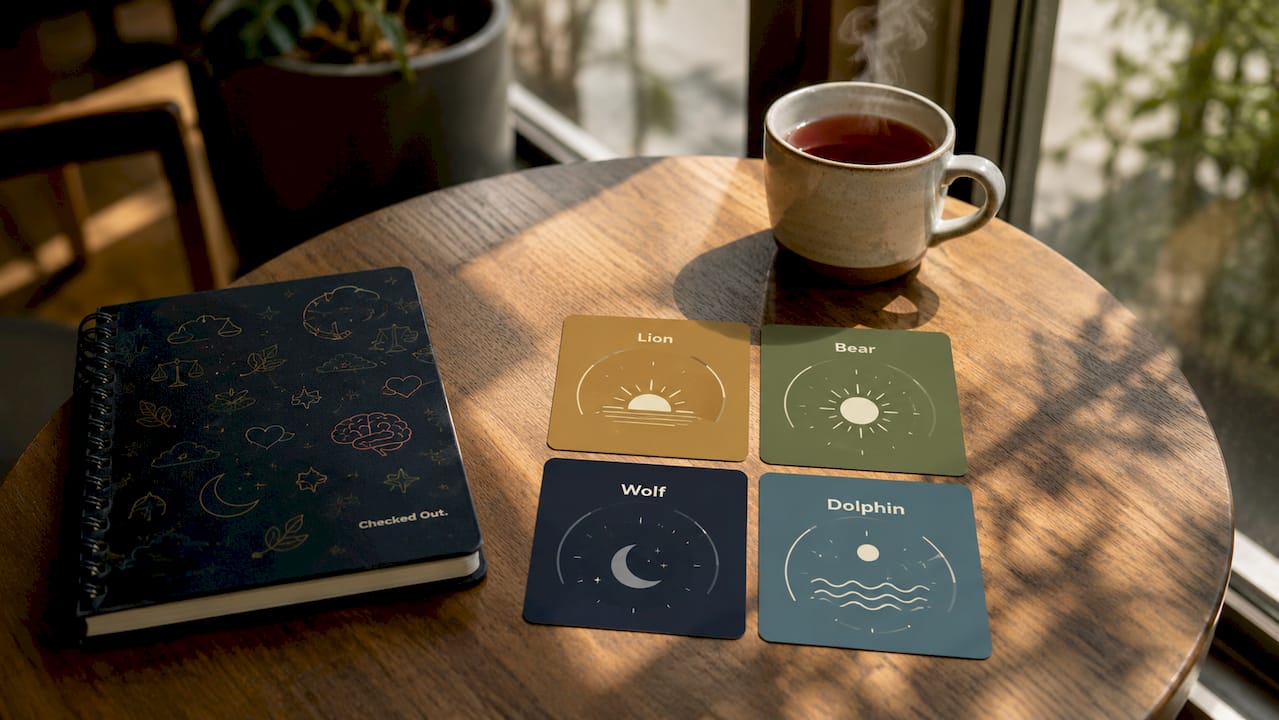
Lions are the classic early risers. They wake naturally before 6:00 AM, feel sharpest in the morning, and fade quickly after dinner. Lions tend to be disciplined and goal-oriented, which fits their productive morning window well.
Bears make up the largest group. Their sleep and wake times track closely with sunrise and sunset. They feel a natural midday dip and recover energy in the early afternoon. Most standard 9-to-5 work schedules were essentially built around the Bear chronotype.
Wolves are the night owls. They struggle to fall asleep before midnight and rarely feel fully awake before 10:00 AM. Their peak productivity arrives in the late afternoon and evening, which puts them at a structural disadvantage in most traditional work environments.

Dolphins are the outliers. They sleep lightly, wake easily at small disturbances, and often feel that no schedule truly fits them. If you have ever described yourself as a poor sleeper regardless of when you go to bed, you may be a Dolphin. Practical tips for light sleepers can make a real difference for this group.
How do genetics and circadian rhythms shape your chronotype?
Your chronotype is not a lifestyle choice. Genetics account for roughly 50% of your chronotype, with specific gene variants playing a direct role. That number means your biology has as much say in your sleep timing as all your habits combined.
Two genes stand out in the research. The PER3 gene influences the length of your internal circadian clock cycle. The CRY1 gene affects light sensitivity and how your body interprets environmental time cues. Variants in these genes shift your internal clock earlier or later, which is why morning and evening types exist across every culture and time zone.
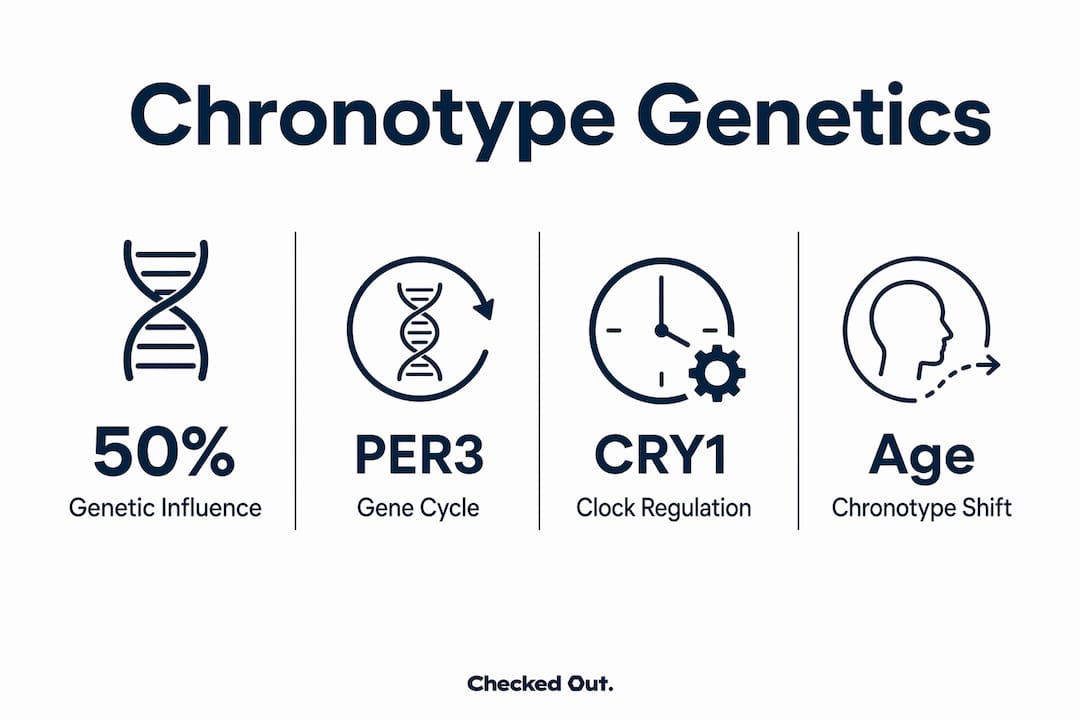
Your circadian rhythm operates on a roughly 24-hour internal clock. It regulates cortisol release, core body temperature, and melatonin production. Morning types experience a faster rise and fall of sleep pressure, which is the biological drive to sleep. This means Lions feel sleepy earlier and wake naturally at dawn, while Wolves build sleep pressure slowly and feel genuinely alert well into the night.
Chronotype also shifts with age. Children lean toward morning types. Teenagers shift strongly toward evening types during puberty, driven by hormonal changes. Adults gradually shift earlier again as they age. This explains why your teenage self could stay up until 2:00 AM effortlessly, and why that same behavior feels punishing in your forties.
Scientific tools exist to measure chronotype with accuracy. The Munich Chronotype Questionnaire (MCTQ) and the Horne-Östberg questionnaire both assess sleep timing on free days, when social obligations are removed, to reveal your true biological preference.
Pro Tip: Take a sleep chronotype quiz or the MCTQ on a week when you have no alarm set. Your natural wake time on free days is the most reliable signal of your true chronotype.
What happens when your schedule conflicts with your chronotype?
When your natural sleep timing clashes with your work or social obligations, the result is called social jetlag. It feels exactly like crossing time zones, except you never left home. An estimated 70% of adults experience at least one hour of social jetlag. That figure reveals how widespread the mismatch between biology and modern schedules truly is.
“Social jetlag is not just tiredness. It is a chronic physiological mismatch that accumulates over time, quietly eroding sleep quality, mood, and metabolic health. A Wolf forced to wake at 7:00 AM for work every day is living in the wrong time zone, five days a week.”
The health consequences are not minor. Chronic social jetlag is linked to increased risks for metabolic syndrome, cardiovascular disease, and cognitive impairment. The body keeps score quietly, even when you adapt on the surface.
Common symptoms of chronotype misalignment include:
- Persistent morning grogginess that does not improve with more sleep
- Afternoon energy crashes that feel unmanageable
- Difficulty concentrating during your scheduled work hours
- Mood swings and irritability that worsen through the week
- Relying heavily on caffeine to function before your natural wake window
The Wolf with a 7:00 AM job is the most obvious example. But Lions suffer too when evening social obligations push their bedtime past 10:00 PM. Even a single hour of consistent misalignment compounds over weeks. Understanding sleep quality’s role in health makes it clear why this matters beyond simple fatigue.
How to identify your chronotype and align your daily routine
Identifying your chronotype starts with honest observation. The most accurate signal is your natural sleep and wake time on days with no alarm, no obligations, and no social pressure. Track this for two weeks and a pattern will emerge.
For a more structured approach, follow these steps:
-
Track your free-day sleep. Record when you fall asleep and wake naturally on weekends or vacation days. Ignore alarm-driven weekdays for this exercise.
-
Take a validated questionnaire. The Munich Chronotype Questionnaire is the gold standard. It calculates your sleep midpoint on free days, which gives a precise chronotype score.
-
Notice your peak focus window. Pay attention to when you feel sharpest without caffeine. That two-hour window is your cognitive peak and a reliable chronotype signal.
-
Observe your hunger and temperature patterns. Chronotypes affect meal timing and body temperature throughout the day. Evening types often have no appetite in the morning; morning types feel hungry immediately after waking.
-
Align your most demanding tasks with your peak window. Once you know your chronotype, schedule deep work, creative projects, and critical decisions during your natural high-energy period.
Once you know your type, practical adjustments can reduce social jetlag even when your schedule is fixed. Light exposure management is the most effective tool. Morning light suppresses melatonin and advances your clock earlier. Evening light delays it. Wolves who need to wake early benefit from bright light exposure within 30 minutes of waking. Lions who need to stay up later should avoid bright screens after 8:00 PM.
Consistent sleep and wake times, even on weekends, anchor your circadian rhythm and reduce the weekly reset that makes Monday mornings brutal. Meal timing also matters. Eating your largest meal during your natural energy peak supports metabolic alignment with your chronotype.
Pro Tip: Pairing chronotype awareness with daily focus strategies creates a compounding effect. When your work schedule matches your biology, cognitive output improves without extra effort.
One realistic expectation: you cannot fundamentally change your chronotype. Chronotype itself is not easily shifted by willpower or habit alone. What you can change is how well your environment and schedule accommodate it.
Key Takeaways
Your chronotype is a fixed biological trait, and aligning your daily schedule with it is the most direct path to better sleep quality and sustained energy.
| Point |
Details |
| Chronotype is genetic |
Roughly 50% of your chronotype comes from genetics, including PER3 and CRY1 gene variants. |
| Four main archetypes exist |
Lions, Bears, Wolves, and Dolphins each represent distinct sleep timing and energy patterns. |
| Social jetlag is widespread |
An estimated 70% of adults experience at least one hour of social jetlag, raising health risks. |
| Validated tools beat guesswork |
The Munich Chronotype Questionnaire measures your true chronotype more accurately than self-assessment alone. |
| Mitigation is possible |
Light exposure timing and consistent sleep schedules reduce social jetlag even when your work hours are fixed. |
What I’ve learned from living against my chronotype
I spent years treating my late-night alertness as a flaw to fix. I set 6:00 AM alarms, drank coffee before I was ready, and blamed my lack of discipline when I still felt foggy by 9:00 AM. What I did not understand then was that my body was not broken. It was simply running on a different clock.
The shift came when I stopped trying to become a Lion and started working with my Wolf tendencies instead. I moved my most demanding work to the late morning and early afternoon, protected my natural sleep window, and stopped scheduling important decisions for first thing in the morning. The difference was not subtle. Focus sharpened. Sleep felt restorative rather than just obligatory.
What I see most often in people who struggle with sleep is not a sleep disorder. It is a schedule disorder. They are living in the wrong time zone for their biology, five days a week, and wondering why they feel exhausted. Respecting your chronotype does not mean rearranging your entire life. It means making small, deliberate adjustments that let your biology work for you instead of against you. Pair that awareness with proven sleep improvement strategies and the results compound quickly.
The most important thing I can tell you: do not wait until burnout forces the conversation. Your chronotype is not going to change. Your relationship with it can.
— Geeta
How Checkedoutwellness supports sleep aligned with your biology
Knowing your chronotype is only half the equation. The other half is giving your body the right conditions to actually sleep well within that window.

Checkedoutwellness designs drug-free sleep products for people who take their recovery as seriously as their performance. The natural sleep patch delivers magnesium, GABA, B6, and B12 transdermally to support your body’s own melatonin production, without synthetic hormones or dependency. The contoured blackout sleep mask eliminates light disturbance, which is especially useful for Dolphins and anyone managing social jetlag. All products are manufactured under ISO 22716 GMP pharmaceutical standards in South Korea. Whether you are a Wolf managing an early schedule or a Lion protecting your 9:00 PM wind-down, Checkedoutwellness has tools built for your biology.
FAQ
What does “sleep chronotype” mean?
A sleep chronotype is your body’s natural biological tendency to sleep and wake at specific times, driven by genetics and your circadian rhythm. It determines when you feel most alert and when you feel sleepy throughout the day.
How do I find out my sleep chronotype?
Track your natural sleep and wake times on days without an alarm for at least two weeks, then compare your pattern to the four archetypes. For greater accuracy, take the Munich Chronotype Questionnaire, which uses your sleep midpoint on free days to classify your type.
Can I change my chronotype?
Chronotype is largely genetic and not easily changed through habit alone. You can shift your sleep timing slightly with consistent light exposure and schedule adjustments, but your core biological preference remains stable throughout adulthood.
What is social jetlag and why does it matter?
Social jetlag occurs when your natural sleep timing conflicts with your work or social schedule, forcing you to sleep and wake outside your biological window. It is linked to poor sleep quality, mood disruption, and long-term risks for metabolic and cardiovascular health.
Which chronotype is the most common?
Bears make up roughly 50% of the population and represent the most common chronotype. Their sleep timing aligns closely with natural daylight hours, which is why most standard work and school schedules favor them.
Recommended

Sleep Chronotypes Explained: Find Your Natural Pattern
A sleep chronotype is your body’s intrinsic biological tendency to feel alert, sleepy, and energized at specific times during a 24-hour cycle. This is not a preference you develop. It is wired into your genetics and circadian rhythm from birth. To explain sleep chronotypes clearly: they are the biological reason some people thrive at 5:00 AM and others do their best thinking at midnight. Researchers classify most people into four animal archetypes: Lion, Bear, Wolf, and Dolphin. Chronotypes affect not only sleep but also meal timing, hormone fluctuations, body temperature, and daily productivity. Understanding yours is the first step toward working with your body instead of against it.
What are the main types of sleep chronotypes?
Sleep chronotypes fall into four broad categories, each representing a distinct pattern of sleep timing and daily energy. These archetypes simplify what is actually a continuous biological spectrum, but they give you a practical starting point for self-understanding.
Lions are the classic early risers. They wake naturally before 6:00 AM, feel sharpest in the morning, and fade quickly after dinner. Lions tend to be disciplined and goal-oriented, which fits their productive morning window well.
Bears make up the largest group. Their sleep and wake times track closely with sunrise and sunset. They feel a natural midday dip and recover energy in the early afternoon. Most standard 9-to-5 work schedules were essentially built around the Bear chronotype.
Wolves are the night owls. They struggle to fall asleep before midnight and rarely feel fully awake before 10:00 AM. Their peak productivity arrives in the late afternoon and evening, which puts them at a structural disadvantage in most traditional work environments.
Dolphins are the outliers. They sleep lightly, wake easily at small disturbances, and often feel that no schedule truly fits them. If you have ever described yourself as a poor sleeper regardless of when you go to bed, you may be a Dolphin. Practical tips for light sleepers can make a real difference for this group.
How do genetics and circadian rhythms shape your chronotype?
Your chronotype is not a lifestyle choice. Genetics account for roughly 50% of your chronotype, with specific gene variants playing a direct role. That number means your biology has as much say in your sleep timing as all your habits combined.
Two genes stand out in the research. The PER3 gene influences the length of your internal circadian clock cycle. The CRY1 gene affects light sensitivity and how your body interprets environmental time cues. Variants in these genes shift your internal clock earlier or later, which is why morning and evening types exist across every culture and time zone.
Your circadian rhythm operates on a roughly 24-hour internal clock. It regulates cortisol release, core body temperature, and melatonin production. Morning types experience a faster rise and fall of sleep pressure, which is the biological drive to sleep. This means Lions feel sleepy earlier and wake naturally at dawn, while Wolves build sleep pressure slowly and feel genuinely alert well into the night.
Chronotype also shifts with age. Children lean toward morning types. Teenagers shift strongly toward evening types during puberty, driven by hormonal changes. Adults gradually shift earlier again as they age. This explains why your teenage self could stay up until 2:00 AM effortlessly, and why that same behavior feels punishing in your forties.
Scientific tools exist to measure chronotype with accuracy. The Munich Chronotype Questionnaire (MCTQ) and the Horne-Östberg questionnaire both assess sleep timing on free days, when social obligations are removed, to reveal your true biological preference.
Pro Tip: Take a sleep chronotype quiz or the MCTQ on a week when you have no alarm set. Your natural wake time on free days is the most reliable signal of your true chronotype.
What happens when your schedule conflicts with your chronotype?
When your natural sleep timing clashes with your work or social obligations, the result is called social jetlag. It feels exactly like crossing time zones, except you never left home. An estimated 70% of adults experience at least one hour of social jetlag. That figure reveals how widespread the mismatch between biology and modern schedules truly is.
The health consequences are not minor. Chronic social jetlag is linked to increased risks for metabolic syndrome, cardiovascular disease, and cognitive impairment. The body keeps score quietly, even when you adapt on the surface.
Common symptoms of chronotype misalignment include:
The Wolf with a 7:00 AM job is the most obvious example. But Lions suffer too when evening social obligations push their bedtime past 10:00 PM. Even a single hour of consistent misalignment compounds over weeks. Understanding sleep quality’s role in health makes it clear why this matters beyond simple fatigue.
How to identify your chronotype and align your daily routine
Identifying your chronotype starts with honest observation. The most accurate signal is your natural sleep and wake time on days with no alarm, no obligations, and no social pressure. Track this for two weeks and a pattern will emerge.
For a more structured approach, follow these steps:
Once you know your type, practical adjustments can reduce social jetlag even when your schedule is fixed. Light exposure management is the most effective tool. Morning light suppresses melatonin and advances your clock earlier. Evening light delays it. Wolves who need to wake early benefit from bright light exposure within 30 minutes of waking. Lions who need to stay up later should avoid bright screens after 8:00 PM.
Consistent sleep and wake times, even on weekends, anchor your circadian rhythm and reduce the weekly reset that makes Monday mornings brutal. Meal timing also matters. Eating your largest meal during your natural energy peak supports metabolic alignment with your chronotype.
Pro Tip: Pairing chronotype awareness with daily focus strategies creates a compounding effect. When your work schedule matches your biology, cognitive output improves without extra effort.
One realistic expectation: you cannot fundamentally change your chronotype. Chronotype itself is not easily shifted by willpower or habit alone. What you can change is how well your environment and schedule accommodate it.
Key Takeaways
Your chronotype is a fixed biological trait, and aligning your daily schedule with it is the most direct path to better sleep quality and sustained energy.
What I’ve learned from living against my chronotype
I spent years treating my late-night alertness as a flaw to fix. I set 6:00 AM alarms, drank coffee before I was ready, and blamed my lack of discipline when I still felt foggy by 9:00 AM. What I did not understand then was that my body was not broken. It was simply running on a different clock.
The shift came when I stopped trying to become a Lion and started working with my Wolf tendencies instead. I moved my most demanding work to the late morning and early afternoon, protected my natural sleep window, and stopped scheduling important decisions for first thing in the morning. The difference was not subtle. Focus sharpened. Sleep felt restorative rather than just obligatory.
What I see most often in people who struggle with sleep is not a sleep disorder. It is a schedule disorder. They are living in the wrong time zone for their biology, five days a week, and wondering why they feel exhausted. Respecting your chronotype does not mean rearranging your entire life. It means making small, deliberate adjustments that let your biology work for you instead of against you. Pair that awareness with proven sleep improvement strategies and the results compound quickly.
The most important thing I can tell you: do not wait until burnout forces the conversation. Your chronotype is not going to change. Your relationship with it can.
How Checkedoutwellness supports sleep aligned with your biology
Knowing your chronotype is only half the equation. The other half is giving your body the right conditions to actually sleep well within that window.
Checkedoutwellness designs drug-free sleep products for people who take their recovery as seriously as their performance. The natural sleep patch delivers magnesium, GABA, B6, and B12 transdermally to support your body’s own melatonin production, without synthetic hormones or dependency. The contoured blackout sleep mask eliminates light disturbance, which is especially useful for Dolphins and anyone managing social jetlag. All products are manufactured under ISO 22716 GMP pharmaceutical standards in South Korea. Whether you are a Wolf managing an early schedule or a Lion protecting your 9:00 PM wind-down, Checkedoutwellness has tools built for your biology.
FAQ
What does “sleep chronotype” mean?
A sleep chronotype is your body’s natural biological tendency to sleep and wake at specific times, driven by genetics and your circadian rhythm. It determines when you feel most alert and when you feel sleepy throughout the day.
How do I find out my sleep chronotype?
Track your natural sleep and wake times on days without an alarm for at least two weeks, then compare your pattern to the four archetypes. For greater accuracy, take the Munich Chronotype Questionnaire, which uses your sleep midpoint on free days to classify your type.
Can I change my chronotype?
Chronotype is largely genetic and not easily changed through habit alone. You can shift your sleep timing slightly with consistent light exposure and schedule adjustments, but your core biological preference remains stable throughout adulthood.
What is social jetlag and why does it matter?
Social jetlag occurs when your natural sleep timing conflicts with your work or social schedule, forcing you to sleep and wake outside your biological window. It is linked to poor sleep quality, mood disruption, and long-term risks for metabolic and cardiovascular health.
Which chronotype is the most common?
Bears make up roughly 50% of the population and represent the most common chronotype. Their sleep timing aligns closely with natural daylight hours, which is why most standard work and school schedules favor them.
Recommended