Vitamin B6 is one of the most underappreciated nutrients in sleep health, and the science behind it is more nuanced than most people realize. Its role in sleep quality centers on a single, elegant biochemical chain: B6 acts as a coenzyme that converts tryptophan into serotonin, which the body then uses to synthesize melatonin, the hormone that governs your sleep-wake cycle. Without adequate B6, that chain breaks down quietly, and your sleep pays the price. Daily dietary intake of vitamin B6 correlates significantly with reduced insomnia scores and improved sleep quality. Here is what you need to understand before reaching for a supplement.
The core ways B6 shapes your sleep:
-
Melatonin synthesis: B6 enables the tryptophan-to-serotonin-to-melatonin conversion your body depends on each night
-
Neurotransmitter support: It assists in producing GABA, the calming neurotransmitter that helps you fall and stay asleep
- ⚖️ Deficiency correction: B6’s greatest sleep benefits come from restoring adequacy, not from megadosing
-
Age and gender variability: Older adults and males show the strongest associations between B6 levels and sleep quality improvements
-
RDA guidance: Adults generally require adequate daily intake of vitamin B6 within recommended ranges; exceeding these levels does not linearly improve sleep
Table of Contents
How vitamin B6 supports sleep through melatonin and neurotransmitter production
The body cannot manufacture melatonin from scratch. It needs raw materials, and B6 is the coenzyme that makes the critical conversion steps possible. Specifically, pyridoxal 5′-phosphate (PLP), the active form of B6, facilitates the hydroxylation of tryptophan into 5-hydroxytryptophan (5-HTP) and then its decarboxylation into serotonin. Serotonin is the direct precursor to melatonin. No B6, no melatonin production at scale.
Beyond melatonin, PLP participates in GABA synthesis, the inhibitory neurotransmitter that quiets neural activity and supports sleep initiation. It also plays a role in producing dopamine and norepinephrine, neurotransmitters that regulate mood and arousal. When B6 levels are adequate, these systems hum along. When they are not, the nervous system loses a key regulator of its own calm.
Dietary sources and nutrient interactions that matter:
-
Poultry and fish: Chicken, turkey, tuna, and salmon are among the richest food sources of B6
-
Bananas and starchy vegetables: Accessible, everyday sources that support consistent intake
-
Fortified grains: Useful for people with limited animal protein intake
-
Magnesium synergy: Magnesium supports B6 absorption and shares overlapping roles in melatonin production, making the two nutrients more effective together
-
B12 and folate partnership: Higher combined intake of B6, B12, and folate shows synergistic neuroprotective effects on sleep-related cognitive outcomes in older adults
Pro Tip: If you are eating a varied diet with lean proteins and leafy greens, you are likely getting meaningful B6 from food alone. Supplements make the most sense when dietary intake is consistently low.
What clinical research actually says about B6 and sleep
The evidence is promising but not unconditional. An aggregation of 36 studies with 126,041 participants found strong evidence that B6 may support sleep onset, with roughly 55% of studies showing positive effects on falling asleep faster. That is a meaningful signal, not a guarantee.
Supplementation outcomes vary considerably by population. A cross-sectional study found that serum PLP concentration is nonlinearly and negatively associated with daytime sleepiness, particularly in males and adults aged 40–59. In older adults over 60, higher PLP levels were linked to fewer difficulties falling asleep. Women showed different patterns, with B6 correlating with insomnia scores but not always with overall sleep quality ratings.
Key clinical findings summarized:
-
Combination therapy works: A pilot study using melatonin, B6, California poppy, passionflower, and lemon balm showed a 1.9-point improvement in sleep quality scores on a 10-point scale over two weeks, with 97.5% compliance and no serious adverse events
-
Deficiency is the key variable: B6 supplementation is most effective when correcting a deficiency; for people with adequate intake, additional doses rarely improve sleep latency
-
Age matters: Middle-aged and older adults show the clearest B6-sleep associations in population studies
- ⚧️ Gender differences are real: Males show stronger associations between PLP levels and daytime sleepiness than females
-
RDA alignment: Adults generally need daily vitamin B6 intake within established Dietary Reference Intake ranges for optimal health outcomes
Risks of over-supplementing B6 and what it does to your sleep
More is not better here, and the research is clear on that. A randomized, double-blind, placebo-controlled study found that 240 mg of B6 before bed significantly increased dream content recall but did not improve total sleep time, reduce wakefulness, or affect other objective sleep measures. Vivid dreams are not the same as restorative sleep.
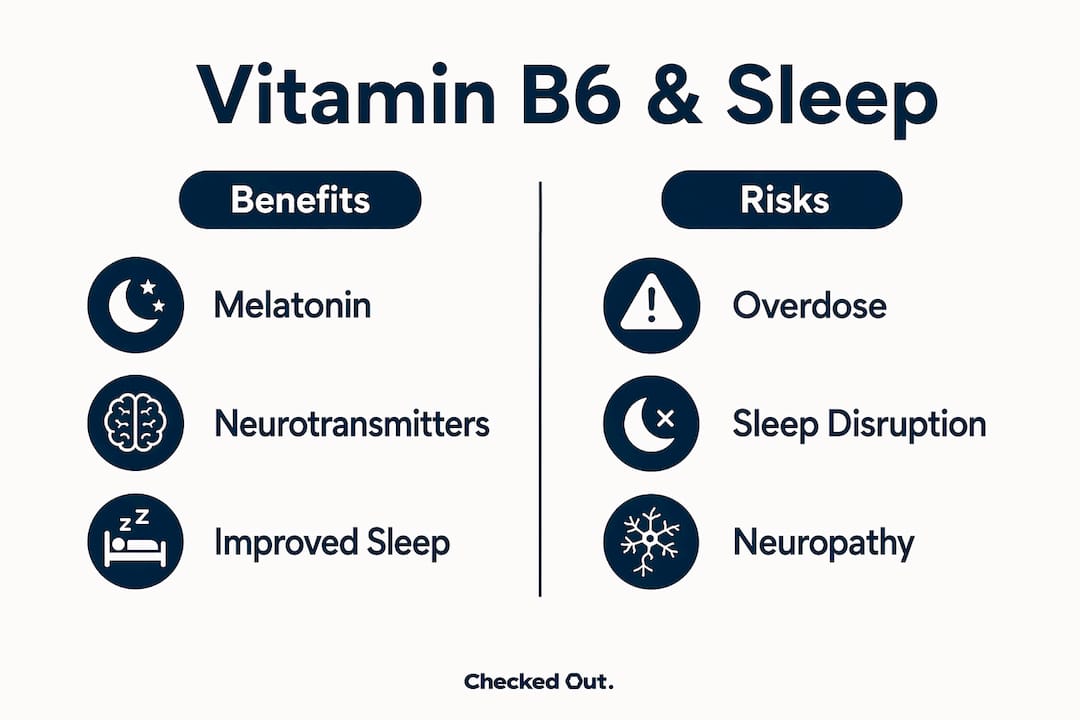
The risks compound when people take broad B-complex supplements without attention to timing or dose. In the same study, participants taking a B-complex preparation reported significantly lower sleep quality and higher morning tiredness compared to the placebo group. Certain B vitamins have stimulating properties, and taking them at night can work against the very rest you are trying to protect.
What to watch for and how to stay safe:
-
Vivid dreams ≠ better sleep: High-dose B6 increases dream recall without improving sleep architecture
- ⚠️ B-complex timing: Taking broad B-complex supplements at night may increase alertness and disrupt sleep maintenance
-
Nocturnal awakenings: Multivitamin users reported more nighttime awakenings and more time awake after sleep onset compared to non-users in an observational study
-
Megadosing backfires: High doses do not equate to better sleep outcomes; they often produce the opposite
- ✅ Safe practice: Take B6 with meals earlier in the day, stay within RDA ranges unless a clinician advises otherwise, and treat supplementation as deficiency correction, not enhancement
Holistic sleep support beyond B6: what Checkedoutwellness recommends
B6 does not work in isolation. The body’s sleep chemistry is a network, and supporting it well means addressing multiple nodes at once. Checkedoutwellness is built on exactly this principle: rather than isolating one nutrient, the approach layers cofactors that work together to support your body’s own melatonin production without synthetic hormones or dependency.
The science behind this approach draws on the same pathways discussed throughout this article. Magnesium supports B6 absorption and calms the nervous system independently. B12 regulates circadian rhythm signaling. GABA directly quiets neural arousal. When these nutrients are delivered together, the effect on sleep quality tends to be more consistent than any single ingredient alone. You can read more about B vitamins and sleep recovery in Checkedoutwellness’s own research-backed content.
What a holistic sleep support approach includes:
-
Magnesium: Calms the nervous system and supports B6 metabolism; explore the evidence on magnesium for sleep
-
B12: Supports circadian rhythm regulation alongside B6
-
GABA: Directly supports sleep initiation by reducing neural excitability
- ✈️ Traveler-specific support: Checkedoutwellness products are designed for disrupted sleep patterns, including jet lag and shift work
-
Subscription bundles: Consistent delivery of cofactors over time, because sleep health is not a one-night fix
-
Manufacturing standard: Products are made in South Korea under ISO 22716 GMP pharmaceutical standards, with transparent, cruelty-free ingredients
Checkedoutwellness offers a smarter path to natural sleep
If you have read this far, you already know that B6 alone is not a sleep solution. It is one piece of a larger biochemical picture, and getting that picture right requires more than a single supplement. Checkedoutwellness was built for people who understand that distinction.

The brand’s transdermal sleep patches deliver B6, B12, magnesium, GABA, and other cofactors directly through the skin, bypassing the digestive variability that affects oral supplements. No synthetic melatonin. No dependency. Just the raw materials your body needs to produce its own. For high performers, travelers, and anyone who has tried the standard sleep advice and still wakes up exhausted, this is a different kind of solution. Visit Checkedoutwellness to find the right product for your sleep pattern and start supporting your nights the way you support everything else in your health routine.
Key Takeaways
Vitamin B6 supports sleep quality primarily by enabling melatonin and GABA synthesis, with its greatest benefits seen in correcting deficiency rather than supplementing beyond adequate intake.
| Point |
Details |
| B6 enables melatonin production |
B6 converts tryptophan to serotonin, the direct precursor to melatonin, your sleep hormone. |
| Deficiency correction drives results |
B6 supplementation is most effective when addressing low intake; high doses rarely improve sleep in those already adequate. |
| Age and gender shape outcomes |
Males and adults aged 40–59 show the strongest links between PLP levels and reduced daytime sleepiness. |
| Over-supplementation can backfire |
240 mg of B6 before bed increases dream recall without improving total sleep time or reducing wakefulness. |
| Checkedoutwellness combines key cofactors |
Transdermal patches deliver B6, B12, magnesium, and GABA together to support natural melatonin production without synthetic hormones. |
Recommended

How B6 Shapes Your Sleep Quality: What You Need to Know
Vitamin B6 is one of the most underappreciated nutrients in sleep health, and the science behind it is more nuanced than most people realize. Its role in sleep quality centers on a single, elegant biochemical chain: B6 acts as a coenzyme that converts tryptophan into serotonin, which the body then uses to synthesize melatonin, the hormone that governs your sleep-wake cycle. Without adequate B6, that chain breaks down quietly, and your sleep pays the price. Daily dietary intake of vitamin B6 correlates significantly with reduced insomnia scores and improved sleep quality. Here is what you need to understand before reaching for a supplement.
The core ways B6 shapes your sleep:
Table of Contents
How vitamin B6 supports sleep through melatonin and neurotransmitter production
The body cannot manufacture melatonin from scratch. It needs raw materials, and B6 is the coenzyme that makes the critical conversion steps possible. Specifically, pyridoxal 5′-phosphate (PLP), the active form of B6, facilitates the hydroxylation of tryptophan into 5-hydroxytryptophan (5-HTP) and then its decarboxylation into serotonin. Serotonin is the direct precursor to melatonin. No B6, no melatonin production at scale.
Beyond melatonin, PLP participates in GABA synthesis, the inhibitory neurotransmitter that quiets neural activity and supports sleep initiation. It also plays a role in producing dopamine and norepinephrine, neurotransmitters that regulate mood and arousal. When B6 levels are adequate, these systems hum along. When they are not, the nervous system loses a key regulator of its own calm.
Dietary sources and nutrient interactions that matter:
Pro Tip: If you are eating a varied diet with lean proteins and leafy greens, you are likely getting meaningful B6 from food alone. Supplements make the most sense when dietary intake is consistently low.
What clinical research actually says about B6 and sleep
The evidence is promising but not unconditional. An aggregation of 36 studies with 126,041 participants found strong evidence that B6 may support sleep onset, with roughly 55% of studies showing positive effects on falling asleep faster. That is a meaningful signal, not a guarantee.
Supplementation outcomes vary considerably by population. A cross-sectional study found that serum PLP concentration is nonlinearly and negatively associated with daytime sleepiness, particularly in males and adults aged 40–59. In older adults over 60, higher PLP levels were linked to fewer difficulties falling asleep. Women showed different patterns, with B6 correlating with insomnia scores but not always with overall sleep quality ratings.
Key clinical findings summarized:
Risks of over-supplementing B6 and what it does to your sleep
More is not better here, and the research is clear on that. A randomized, double-blind, placebo-controlled study found that 240 mg of B6 before bed significantly increased dream content recall but did not improve total sleep time, reduce wakefulness, or affect other objective sleep measures. Vivid dreams are not the same as restorative sleep.
The risks compound when people take broad B-complex supplements without attention to timing or dose. In the same study, participants taking a B-complex preparation reported significantly lower sleep quality and higher morning tiredness compared to the placebo group. Certain B vitamins have stimulating properties, and taking them at night can work against the very rest you are trying to protect.
What to watch for and how to stay safe:
Holistic sleep support beyond B6: what Checkedoutwellness recommends
B6 does not work in isolation. The body’s sleep chemistry is a network, and supporting it well means addressing multiple nodes at once. Checkedoutwellness is built on exactly this principle: rather than isolating one nutrient, the approach layers cofactors that work together to support your body’s own melatonin production without synthetic hormones or dependency.
The science behind this approach draws on the same pathways discussed throughout this article. Magnesium supports B6 absorption and calms the nervous system independently. B12 regulates circadian rhythm signaling. GABA directly quiets neural arousal. When these nutrients are delivered together, the effect on sleep quality tends to be more consistent than any single ingredient alone. You can read more about B vitamins and sleep recovery in Checkedoutwellness’s own research-backed content.
What a holistic sleep support approach includes:
Checkedoutwellness offers a smarter path to natural sleep
If you have read this far, you already know that B6 alone is not a sleep solution. It is one piece of a larger biochemical picture, and getting that picture right requires more than a single supplement. Checkedoutwellness was built for people who understand that distinction.
The brand’s transdermal sleep patches deliver B6, B12, magnesium, GABA, and other cofactors directly through the skin, bypassing the digestive variability that affects oral supplements. No synthetic melatonin. No dependency. Just the raw materials your body needs to produce its own. For high performers, travelers, and anyone who has tried the standard sleep advice and still wakes up exhausted, this is a different kind of solution. Visit Checkedoutwellness to find the right product for your sleep pattern and start supporting your nights the way you support everything else in your health routine.
Key Takeaways
Vitamin B6 supports sleep quality primarily by enabling melatonin and GABA synthesis, with its greatest benefits seen in correcting deficiency rather than supplementing beyond adequate intake.
Recommended