Vitamins B6 and B12 are essential cofactors in the biochemical pathways that produce serotonin, GABA, and melatonin, the neurotransmitters your body depends on for restorative sleep. Most people chasing better sleep focus on melatonin supplements or sleep hygiene habits, while overlooking the upstream nutrients that make melatonin production possible in the first place. Using B6 and B12 for sleep health means working with your body’s own chemistry rather than overriding it. The science behind these vitamins is more specific and more actionable than most general wellness content suggests, and understanding it changes how you approach supplementation entirely.
How do B6 and B12 regulate sleep at the biochemical level?
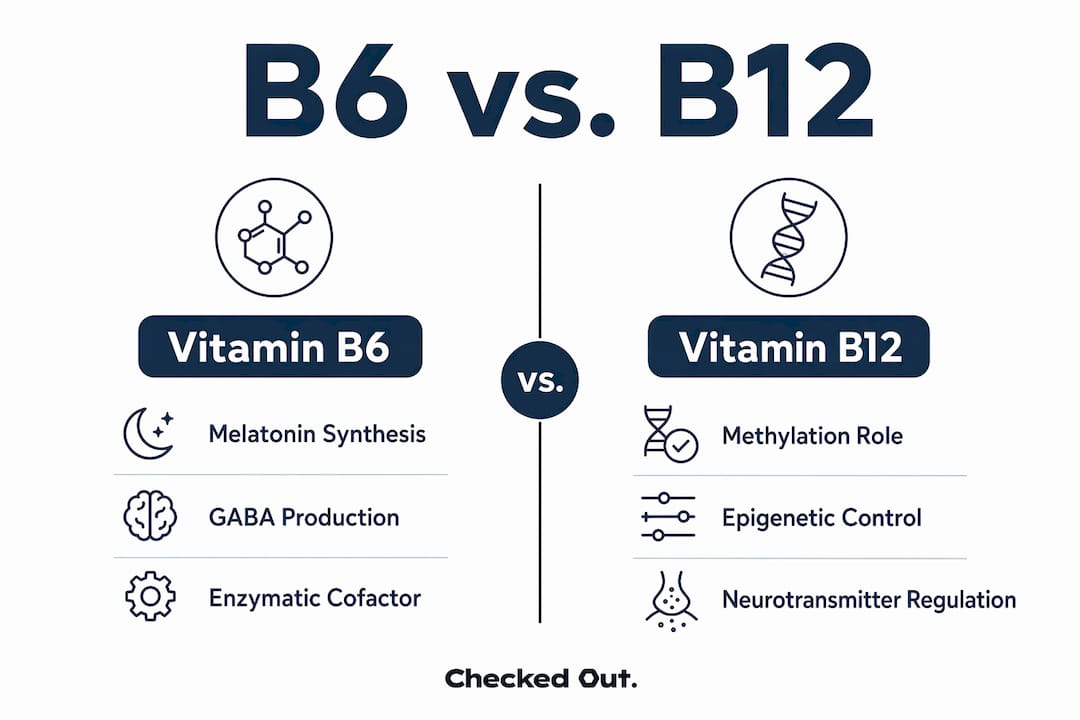
Vitamin B6, known clinically as pyridoxine, functions as a direct enzymatic cofactor in the tryptophan-to-serotonin-to-melatonin conversion pathway. Without adequate B6, your body cannot efficiently convert dietary tryptophan into serotonin, and serotonin is the precursor your pineal gland uses to synthesize melatonin at night. Low B6 availability plausibly reduces melatonin production capacity, which means poor sleep onset is not just a stress problem. It can be a nutrient problem.
Vitamin B12, known as cobalamin, operates through a different but equally critical mechanism. B12 participates in methylation reactions that regulate the expression of circadian clock genes, the molecular timekeepers that synchronize your sleep-wake cycle with the external environment. When methylation is impaired due to low B12, circadian gene expression becomes erratic. The result is a body clock that drifts, producing the kind of fragmented, non-restorative sleep that no amount of magnesium will fix on its own.

B6 also plays a direct role in synthesizing GABA, the brain’s primary inhibitory neurotransmitter. B6 and B12 act as cofactors for both serotonin and GABA synthesis, and deficiency in either increases neuronal excitability. A brain that cannot quiet itself at night is a brain that fights sleep. This is the mechanistic reality behind why these vitamins matter so much for sleep architecture, not just sleep onset.
Pro Tip: If you are already taking a melatonin supplement but still waking at 3 a.m., consider whether your B6 status is limiting your body’s own melatonin production before increasing your melatonin dose. You can read more about melatonin’s real role in sleep to understand where these vitamins fit in.
What does research say about B vitamin deficiency and sleep disorders?
The clinical evidence linking B vitamin deficiency to sleep disruption is more specific than most people realize. A case-control study found that patients with insomnia had significantly lower serum B12 levels (248 ± 62 pg/mL) compared to healthy controls (412 ± 87 pg/mL), alongside elevated methylmalonic acid (MMA). MMA is a metabolic marker that rises when B12 is functionally insufficient, even when serum B12 looks borderline normal. This distinction matters clinically because standard blood panels often miss functional deficiency.
“Unexplained insomnia may be an early sign of B12 deficiency, even before hematological abnormalities appear.” — Nocturnal manifestations of Vitamin B12 deficiency
This finding reframes how you should think about persistent insomnia. It is not always a behavioral or psychological problem. Sometimes the body is quietly signaling a nutritional gap long before a blood test catches it.
Research published in Frontiers in Nutrition in 2025 adds another dimension. The study found that higher dietary intake of B6 and B12 was associated with significantly lower odds of cognitive impairment in older adults, with adjusted odds ratios of 0.33 for B6 and 0.43 for B12 in the highest intake quartiles. That is not a small effect. It means people with the highest B vitamin intake had roughly half to one-third the cognitive impairment risk of those with the lowest intake.
The most striking finding from that same research involves the interaction between poor sleep and low B vitamin intake. The synergy index of 1.41 and an attributable proportion of 0.22 indicate a genuine biological synergy between these two risk factors. In plain terms: low B vitamins and poor sleep together create a cognitive risk that is greater than either factor alone. The body keeps score quietly, and the compounding effect shows up years later.
Key signs that B vitamin deficiency may be affecting your sleep:
- Difficulty falling asleep despite feeling tired, particularly if you follow good sleep hygiene
- Waking between 2 and 4 a.m. with an alert, racing mind
- Vivid or disturbing dreams that fragment sleep
- Daytime fatigue that does not improve with more sleep hours
- Tingling in the hands or feet alongside sleep complaints (a classic B12 deficiency sign)
How does timing and dosage of B6 and B12 affect sleep outcomes?
This is where most supplement advice goes wrong. B12 is energizing by nature. It supports mitochondrial function and nerve conduction, which is exactly what you want during the day and exactly what you do not want at 10 p.m. Taking B12 late in the day may increase alertness and reduce sleep quality, which is why timing is not a minor detail. It is the difference between a supplement that helps and one that quietly wrecks your sleep.
Here is a practical framework for timing and dosage:
-
Take B12 in the morning. Morning dosing of B12 is a simple, low-risk method to avoid sleep disruptions caused by vitamin-related alertness. Pair it with breakfast for better absorption.
-
Choose the right B12 form. Methylcobalamin is the bioactive form your body uses directly and is preferred for neurological support. Cyanocobalamin, a synthetic form available through suppliers like Peptides From China, is stable and widely researched, though it requires conversion in the body. For sleep-specific goals, methylcobalamin is the more direct choice.
-
Respect the dose ceiling. High-dose B12 supplementation above 1,000 mcg has been linked in case reports and small studies to delayed sleep onset by overstimulating nerve pathways and altering melatonin timing. More is not better here.
-
Start low and monitor. Begin with 250 to 500 mcg of B12 and 10 to 25 mg of B6 daily. Track your sleep quality for two weeks before adjusting.
-
Consult a healthcare provider if sleep complaints persist. Measuring MMA alongside serum B12 gives a more accurate picture of functional B12 status than serum levels alone.
Pro Tip: If you notice more vivid dreams or lighter sleep after starting a B complex supplement, try shifting your dose to earlier in the morning and reducing the B12 amount. This is a common, correctable response rather than a reason to stop supplementing entirely. The real role of supplements in sleep is supportive, not sedative.
B6 vs. B12 for sleep: how do they compare and why you need both?
B6 and B12 are often grouped together in B complex supplements, but their mechanisms are distinct enough to warrant understanding each separately before combining them.
| Feature |
Vitamin B6 (Pyridoxine) |
Vitamin B12 (Cobalamin) |
| Primary sleep mechanism |
Enzymatic cofactor in tryptophan → serotonin → melatonin conversion |
Methylation of circadian clock genes |
| Neurotransmitter support |
Serotonin, GABA, dopamine |
Indirectly supports serotonin via methylation |
| Deficiency sleep symptoms |
Poor sleep onset, reduced melatonin output |
Insomnia, circadian rhythm disruption, fragmented sleep |
| Timing sensitivity |
Lower; can be taken morning or evening |
High; morning dosing strongly preferred |
| Key deficiency marker |
Low plasma pyridoxal-5-phosphate (PLP) |
Low serum B12 + elevated MMA |
The case for combining both vitamins is grounded in their complementary roles. B6 handles the enzymatic front end of melatonin synthesis, while B12 regulates the circadian machinery that determines when melatonin is released. Deficiency in either can independently disrupt sleep. Deficiency in both creates a compounding problem that no single supplement will fully address.
B6 and B12 impact sleep chiefly by supporting neurotransmitter synthesis and epigenetic circadian control, not by acting as standalone sedatives. This distinction is worth holding onto. These are not sleep drugs. They are the raw materials your biology needs to produce sleep naturally. The role of B vitamins in sleep quality is upstream of everything else you might be doing for recovery.
It is also worth noting that supplementing B6 and B12 without deficiency may not significantly improve sleep. The effects are modulatory. If your levels are already adequate, adding more does not proportionally increase melatonin or GABA. This is why assessing your baseline before supplementing is not just a cautious recommendation. It is the difference between spending money wisely and spinning your wheels.
Key takeaways
B6 and B12 support sleep by enabling your body’s own neurotransmitter and melatonin production, and deficiency in either disrupts sleep architecture in ways that standard sleep hygiene cannot fix alone.
| Point |
Details |
| B6 drives melatonin synthesis |
B6 is the enzymatic cofactor converting tryptophan into serotonin and then melatonin. |
| B12 regulates your body clock |
B12 methylates circadian clock genes, keeping your sleep-wake cycle synchronized. |
| Deficiency causes real insomnia |
Insomnia patients show serum B12 levels nearly 40% lower than healthy controls. |
| Timing determines B12’s effect |
Take B12 in the morning; doses above 1,000 mcg or late-day intake can delay sleep onset. |
| Both vitamins work synergistically |
Low B vitamin intake combined with poor sleep multiplies cognitive impairment risk significantly. |
What I have learned from tracking B vitamins and sleep personally
By Geeta
I spent years treating sleep as a willpower problem. If I just disciplined myself into better habits, the sleep would follow. What I eventually understood is that the body does not respond to discipline when it is missing the raw materials to do its job. For me, that realization came after getting a full micronutrient panel done, not just a standard blood test. My B12 was technically within range, but my MMA was elevated. Functionally, I was deficient. And my sleep showed it.
What changed my perspective most was learning that unexplained insomnia can precede hematological B12 deficiency by months. The nervous system signals the shortage before the blood does. That is a humbling reminder that the body is always communicating. We just need to know what to listen for.
My honest advice: do not supplement blindly. Get your levels tested, including MMA if you can. If deficiency is confirmed, correct it with morning dosing of methylcobalamin and a moderate B6 intake. Then give it six to eight weeks before judging the results. Sleep does not transform overnight, but the body’s chemistry does shift when it finally has what it needs. Pair this with consistent sleep timing, darkness, and a cool room, and you are working with your biology rather than against it. That is the only approach I have seen actually hold up over time.
— Geeta
Sleep solutions that work with your body’s chemistry

Understanding the biochemistry of B6 and B12 for sleep health is one piece of the puzzle. The other piece is creating the physical conditions that let those nutrients do their job. At Checkedoutwellness, the natural sleep patches are formulated without synthetic melatonin and instead deliver cofactors including B6, B12, magnesium, and GABA transdermally, supporting your body’s own melatonin production while you sleep. Manufactured in South Korea under ISO 22716 GMP pharmaceutical standards, these patches are designed for high performers and wellness-focused individuals who want drug-free, dependency-free sleep support. Explore the full range of science-backed sleep tools at Checkedoutwellness and find the combination that fits your recovery goals.
FAQ
What does vitamin B6 do for sleep quality?
Vitamin B6 acts as a cofactor in converting tryptophan into serotonin and melatonin, the neurotransmitters that regulate sleep onset and depth. Low B6 reduces melatonin production capacity, which can increase sleep latency and reduce overall sleep quality.
Can B12 deficiency cause insomnia?
Yes. Clinical research shows insomnia patients have significantly lower serum B12 levels than healthy controls, alongside elevated MMA, a marker of functional deficiency. B12 deficiency disrupts circadian gene methylation, causing fragmented sleep and difficulty maintaining consistent sleep timing.
When is the best time to take B12 for sleep?
Morning is the recommended time to take B12 supplements. B12 supports energy and nerve function, and taking it late in the day or in high doses above 1,000 mcg can increase alertness and delay sleep onset.
Do I need both B6 and B12 for better sleep?
Both vitamins address different parts of the sleep regulation pathway. B6 handles enzymatic melatonin synthesis while B12 regulates circadian clock gene expression. Deficiency in either can independently disrupt sleep, and combined low intake multiplies the risk of cognitive impairment alongside poor sleep quality.
Will taking a B complex supplement improve my sleep?
Only if you have a deficiency. Research confirms that supplementing B6 and B12 in individuals with adequate levels produces modest, modulatory effects rather than significant sleep improvements. Testing your baseline levels, including MMA for B12, before supplementing gives you the most useful starting point.
Recommended

B6 and B12 for Sleep Health: What You Need to Know
Vitamins B6 and B12 are essential cofactors in the biochemical pathways that produce serotonin, GABA, and melatonin, the neurotransmitters your body depends on for restorative sleep. Most people chasing better sleep focus on melatonin supplements or sleep hygiene habits, while overlooking the upstream nutrients that make melatonin production possible in the first place. Using B6 and B12 for sleep health means working with your body’s own chemistry rather than overriding it. The science behind these vitamins is more specific and more actionable than most general wellness content suggests, and understanding it changes how you approach supplementation entirely.
How do B6 and B12 regulate sleep at the biochemical level?
Vitamin B6, known clinically as pyridoxine, functions as a direct enzymatic cofactor in the tryptophan-to-serotonin-to-melatonin conversion pathway. Without adequate B6, your body cannot efficiently convert dietary tryptophan into serotonin, and serotonin is the precursor your pineal gland uses to synthesize melatonin at night. Low B6 availability plausibly reduces melatonin production capacity, which means poor sleep onset is not just a stress problem. It can be a nutrient problem.
Vitamin B12, known as cobalamin, operates through a different but equally critical mechanism. B12 participates in methylation reactions that regulate the expression of circadian clock genes, the molecular timekeepers that synchronize your sleep-wake cycle with the external environment. When methylation is impaired due to low B12, circadian gene expression becomes erratic. The result is a body clock that drifts, producing the kind of fragmented, non-restorative sleep that no amount of magnesium will fix on its own.
B6 also plays a direct role in synthesizing GABA, the brain’s primary inhibitory neurotransmitter. B6 and B12 act as cofactors for both serotonin and GABA synthesis, and deficiency in either increases neuronal excitability. A brain that cannot quiet itself at night is a brain that fights sleep. This is the mechanistic reality behind why these vitamins matter so much for sleep architecture, not just sleep onset.
Pro Tip: If you are already taking a melatonin supplement but still waking at 3 a.m., consider whether your B6 status is limiting your body’s own melatonin production before increasing your melatonin dose. You can read more about melatonin’s real role in sleep to understand where these vitamins fit in.
What does research say about B vitamin deficiency and sleep disorders?
The clinical evidence linking B vitamin deficiency to sleep disruption is more specific than most people realize. A case-control study found that patients with insomnia had significantly lower serum B12 levels (248 ± 62 pg/mL) compared to healthy controls (412 ± 87 pg/mL), alongside elevated methylmalonic acid (MMA). MMA is a metabolic marker that rises when B12 is functionally insufficient, even when serum B12 looks borderline normal. This distinction matters clinically because standard blood panels often miss functional deficiency.
This finding reframes how you should think about persistent insomnia. It is not always a behavioral or psychological problem. Sometimes the body is quietly signaling a nutritional gap long before a blood test catches it.
Research published in Frontiers in Nutrition in 2025 adds another dimension. The study found that higher dietary intake of B6 and B12 was associated with significantly lower odds of cognitive impairment in older adults, with adjusted odds ratios of 0.33 for B6 and 0.43 for B12 in the highest intake quartiles. That is not a small effect. It means people with the highest B vitamin intake had roughly half to one-third the cognitive impairment risk of those with the lowest intake.
The most striking finding from that same research involves the interaction between poor sleep and low B vitamin intake. The synergy index of 1.41 and an attributable proportion of 0.22 indicate a genuine biological synergy between these two risk factors. In plain terms: low B vitamins and poor sleep together create a cognitive risk that is greater than either factor alone. The body keeps score quietly, and the compounding effect shows up years later.
Key signs that B vitamin deficiency may be affecting your sleep:
How does timing and dosage of B6 and B12 affect sleep outcomes?
This is where most supplement advice goes wrong. B12 is energizing by nature. It supports mitochondrial function and nerve conduction, which is exactly what you want during the day and exactly what you do not want at 10 p.m. Taking B12 late in the day may increase alertness and reduce sleep quality, which is why timing is not a minor detail. It is the difference between a supplement that helps and one that quietly wrecks your sleep.
Here is a practical framework for timing and dosage:
Pro Tip: If you notice more vivid dreams or lighter sleep after starting a B complex supplement, try shifting your dose to earlier in the morning and reducing the B12 amount. This is a common, correctable response rather than a reason to stop supplementing entirely. The real role of supplements in sleep is supportive, not sedative.
B6 vs. B12 for sleep: how do they compare and why you need both?
B6 and B12 are often grouped together in B complex supplements, but their mechanisms are distinct enough to warrant understanding each separately before combining them.
The case for combining both vitamins is grounded in their complementary roles. B6 handles the enzymatic front end of melatonin synthesis, while B12 regulates the circadian machinery that determines when melatonin is released. Deficiency in either can independently disrupt sleep. Deficiency in both creates a compounding problem that no single supplement will fully address.
B6 and B12 impact sleep chiefly by supporting neurotransmitter synthesis and epigenetic circadian control, not by acting as standalone sedatives. This distinction is worth holding onto. These are not sleep drugs. They are the raw materials your biology needs to produce sleep naturally. The role of B vitamins in sleep quality is upstream of everything else you might be doing for recovery.
It is also worth noting that supplementing B6 and B12 without deficiency may not significantly improve sleep. The effects are modulatory. If your levels are already adequate, adding more does not proportionally increase melatonin or GABA. This is why assessing your baseline before supplementing is not just a cautious recommendation. It is the difference between spending money wisely and spinning your wheels.
Key takeaways
B6 and B12 support sleep by enabling your body’s own neurotransmitter and melatonin production, and deficiency in either disrupts sleep architecture in ways that standard sleep hygiene cannot fix alone.
What I have learned from tracking B vitamins and sleep personally
By Geeta
I spent years treating sleep as a willpower problem. If I just disciplined myself into better habits, the sleep would follow. What I eventually understood is that the body does not respond to discipline when it is missing the raw materials to do its job. For me, that realization came after getting a full micronutrient panel done, not just a standard blood test. My B12 was technically within range, but my MMA was elevated. Functionally, I was deficient. And my sleep showed it.
What changed my perspective most was learning that unexplained insomnia can precede hematological B12 deficiency by months. The nervous system signals the shortage before the blood does. That is a humbling reminder that the body is always communicating. We just need to know what to listen for.
My honest advice: do not supplement blindly. Get your levels tested, including MMA if you can. If deficiency is confirmed, correct it with morning dosing of methylcobalamin and a moderate B6 intake. Then give it six to eight weeks before judging the results. Sleep does not transform overnight, but the body’s chemistry does shift when it finally has what it needs. Pair this with consistent sleep timing, darkness, and a cool room, and you are working with your biology rather than against it. That is the only approach I have seen actually hold up over time.
Sleep solutions that work with your body’s chemistry
Understanding the biochemistry of B6 and B12 for sleep health is one piece of the puzzle. The other piece is creating the physical conditions that let those nutrients do their job. At Checkedoutwellness, the natural sleep patches are formulated without synthetic melatonin and instead deliver cofactors including B6, B12, magnesium, and GABA transdermally, supporting your body’s own melatonin production while you sleep. Manufactured in South Korea under ISO 22716 GMP pharmaceutical standards, these patches are designed for high performers and wellness-focused individuals who want drug-free, dependency-free sleep support. Explore the full range of science-backed sleep tools at Checkedoutwellness and find the combination that fits your recovery goals.
FAQ
What does vitamin B6 do for sleep quality?
Vitamin B6 acts as a cofactor in converting tryptophan into serotonin and melatonin, the neurotransmitters that regulate sleep onset and depth. Low B6 reduces melatonin production capacity, which can increase sleep latency and reduce overall sleep quality.
Can B12 deficiency cause insomnia?
Yes. Clinical research shows insomnia patients have significantly lower serum B12 levels than healthy controls, alongside elevated MMA, a marker of functional deficiency. B12 deficiency disrupts circadian gene methylation, causing fragmented sleep and difficulty maintaining consistent sleep timing.
When is the best time to take B12 for sleep?
Morning is the recommended time to take B12 supplements. B12 supports energy and nerve function, and taking it late in the day or in high doses above 1,000 mcg can increase alertness and delay sleep onset.
Do I need both B6 and B12 for better sleep?
Both vitamins address different parts of the sleep regulation pathway. B6 handles enzymatic melatonin synthesis while B12 regulates circadian clock gene expression. Deficiency in either can independently disrupt sleep, and combined low intake multiplies the risk of cognitive impairment alongside poor sleep quality.
Will taking a B complex supplement improve my sleep?
Only if you have a deficiency. Research confirms that supplementing B6 and B12 in individuals with adequate levels produces modest, modulatory effects rather than significant sleep improvements. Testing your baseline levels, including MMA for B12, before supplementing gives you the most useful starting point.
Recommended