You’ve done everything right. You exercise, eat well, limit your screen time, and still you lie there at 11 PM, watching the ceiling. The frustration of broken sleep despite genuinely healthy habits is one of the quietest forms of suffering modern high performers deal with. Your body keeps score quietly, and night after night of fragmented, shallow sleep accumulates into cognitive fog, emotional fraying, and physical underperformance. This guide walks you through a layered, science-backed framework for natural sleep recovery, from understanding how your sleep cycles actually work, to preparing your environment, managing daily habits, and applying clinical behavioral tools — all without a single pill.
Table of Contents
Key Takeaways
| Point |
Details |
| Sleep cycles matter most |
Quality sleep requires supporting natural 90-minute cycles, not just more hours in bed. |
| Environment is pivotal |
A cool, dark, quiet bedroom sets the stage for deep, restorative sleep. |
| Routines beat quick fixes |
Consistent schedules and wind-down habits drive lasting sleep recovery without drugs. |
| Behavioral change yields results |
Clinical methods like CBT-I outperform pills for chronic insomnia and support overnight recovery. |
| Adapt for your needs |
Special cases require personalized sleep strategies, especially for shiftworkers and health conditions. |
Understanding sleep architecture and recovery
Now that you’ve seen what’s possible, let’s start with the basics: how your sleep really works and why natural rhythms matter.
Most people think sleep is a passive process. It isn’t. Your brain cycles through 4 to 6 distinct stages across roughly 90-minute blocks each night, with early cycles dominated by deep NREM (non-rapid eye movement) sleep and later cycles weighted toward REM (rapid eye movement). Each stage has a job, and disrupting any one of them costs you more than you might realize.
Here’s a simple breakdown of what each stage actually does:
-
N1 (light sleep): Your body transitions from wakefulness. Muscle activity slows, and you’re easily awakened. This stage is brief, typically two to five minutes.
-
N2 (light-to-moderate sleep): Heart rate drops, body temperature falls, and sleep spindles (bursts of brain activity) begin consolidating new memories. This is the most time-dense stage across the whole night.
-
N3 (deep/slow-wave sleep): Your body releases growth hormone, repairs muscle tissue, consolidates immune function, and clears metabolic waste from the brain. This is physical recovery at its most fundamental.
-
REM sleep: Emotional memory processing, creativity, and cognitive integration happen here. REM is where you dream, and where your brain quite literally reorganizes itself.
| Sleep stage |
Primary function |
Dominates |
| N1 |
Sleep onset, transition |
Beginning of each cycle |
| N2 |
Memory consolidation, temperature regulation |
Throughout the night |
| N3 (deep sleep) |
Physical repair, immune support, brain detox |
Early cycles (first half of night) |
| REM |
Cognitive processing, emotional regulation |
Late cycles (second half of night) |
The insight here is important. Quality beats quantity, every time. Six hours with intact deep sleep and REM cycles outperforms eight hours of shallow, alcohol or medication-disrupted sleep. When you understand how your body’s internal architecture works, you stop reaching for solutions that suppress these cycles and start working with them. That’s the foundation of the science behind non-addictive solutions we believe in. Supporting your body’s own rhythm, rather than overriding it, is also the key argument for lasting rest without melatonin.
Preparing your sleep environment: Temperature, light, and quiet
With sleep’s architecture explained, let’s create the perfect environment for natural recovery.
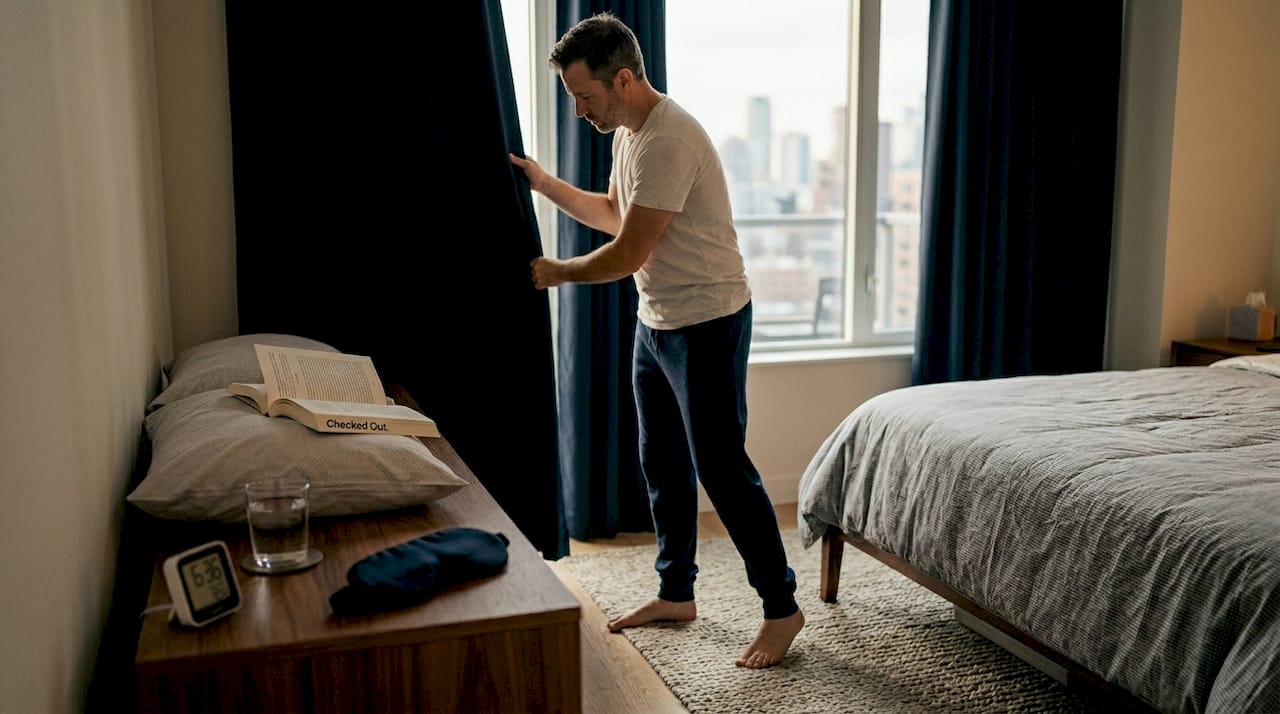
Your bedroom is either your greatest ally or your most persistent obstacle. The research is blunt: the wrong temperature, too much light, and ambient noise all fragment your sleep architecture before you even close your eyes.
Temperature: Optimal bedroom temperature is 65 to 68°F to support the 1 to 2°F drop in core body temperature your body needs to initiate and sustain deep sleep. Taking a warm bath 60 to 90 minutes before bed actually assists this process because the heat draws blood to the skin’s surface, causing rapid heat loss when you step out and accelerating that core temperature decline.
Darkness and light: Light suppresses melatonin production via the retina’s photoreceptors. Even dim ambient light at night can delay sleep onset and reduce REM duration. Morning light, on the other hand, is one of your most powerful biological anchors. A consistent wake time combined with morning light exposure and daily movement sets your circadian rhythm more reliably than almost any supplement.
| Bedroom factor |
Ideal setting |
Common issue |
| Temperature |
65–68°F (18–20°C) |
Too warm (above 70°F) |
| Light |
Complete darkness |
LED standby lights, streetlights |
| Noise |
Under 30 decibels |
Traffic, partner snoring |
| Bedding |
Breathable, natural fabrics |
Synthetic materials trapping heat |
| Electronics |
None in the room |
Phone charging beside the bed |
Pro Tip: If total darkness isn’t achievable through curtains alone, a well-fitted contoured mask eliminates light completely without pressure on your eyes. Our contoured blackout sleep mask is designed specifically for this, with a 3D structure that keeps fabric off your eyelids so REM movement stays unrestricted.
Building effective sleep routines around these environmental anchors gives your nervous system the predictability it needs to transition smoothly into deep sleep. For a broader look at the fundamentals, our guide on natural sleep quality steps covers both the science and the practical setup in detail.
Timing nutrition, movement, and stimulants for sleep recovery
Having set the stage environmentally, your daily nutrition and activity set your body up for deep sleep recovery.
The choices you make from noon onward have a measurable impact on your sleep that night. This isn’t about restriction. It’s about timing.
-
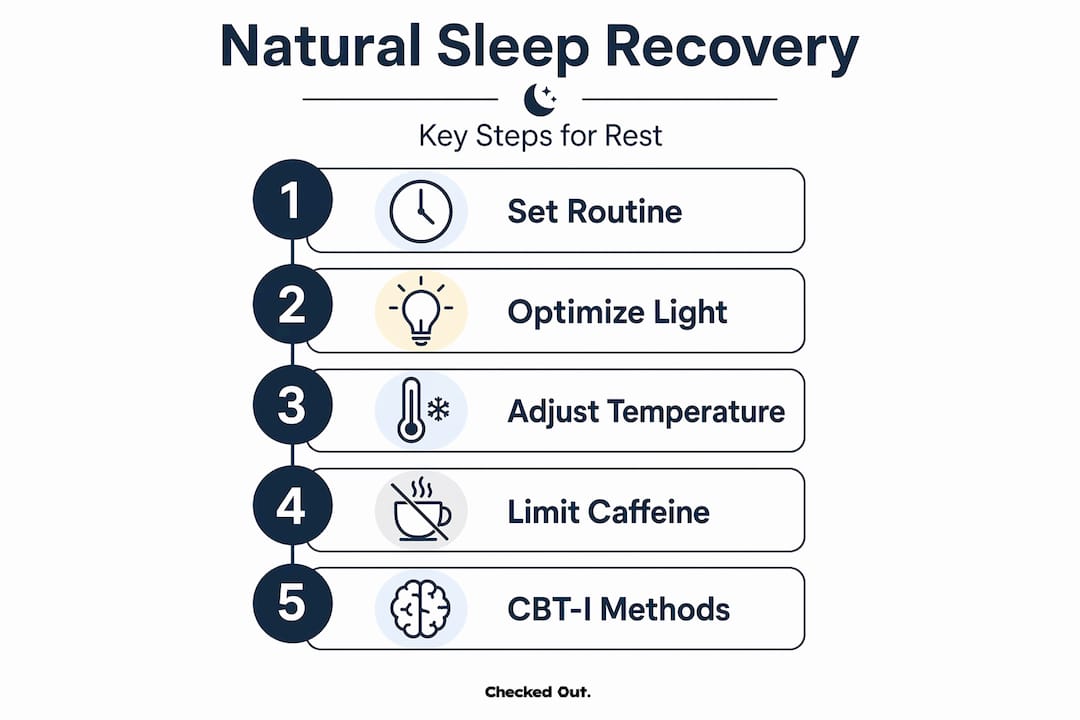
Cut caffeine by early afternoon. Caffeine’s half-life is 5 to 7 hours, meaning a 2 PM coffee still has roughly half its stimulant load in your bloodstream at 8 PM. To preserve deep sleep, the cutoff should be 10 to 12 hours before your target bedtime. For most people that means no caffeine after noon.
-
Time your largest meal at least three hours before bed. Digestion is thermogenic (it raises your core temperature) and activates your sympathetic nervous system, both of which work against sleep initiation. A lighter evening meal high in tryptophan-containing foods like turkey, eggs, or pumpkin seeds supports the tryptophan-to-serotonin-to-melatonin conversion pathway naturally.
-
Exercise earlier in the day. Vigorous daily movement increases slow-wave sleep and overall sleep depth significantly. However, intense exercise within two to three hours of bed elevates core temperature and cortisol, which can delay sleep onset.
-
Create a wind-down window. The 45 to 60 minutes before bed should be consistently low-stimulus. Dim lights, no work email, and a calming ritual like stretching or reading signal the nervous system that the performance phase of the day is over.
-
Limit alcohol entirely. Alcohol may help you fall asleep but it actively suppresses REM sleep and triggers early-morning arousals. It’s one of the most common hidden disruptors in otherwise healthy sleepers.
Pro Tip: A short 10 to 20 minute nap before 2 PM can reduce sleep pressure enough to prevent the afternoon cortisol crash without stealing from your nighttime deep sleep quota. Any longer, or any later, and it will.
Pairing these habits with the right cofactors matters too. Our guide on supplements for sleep covers the evidence behind key nutrients, and if you’re curious about what the research actually says about synthetic melatonin, our melatonin science and safety breakdown is worth reading. For those who want to go deeper on one of the most important cofactors for sleep, the case for magnesium for sleep is compelling.
Applying behavioral sleep strategies: Sleep hygiene and CBT-I methods
With your schedule and habits set, next-level results come from simple behaviors proven in clinical sleep recovery.
If your sleep issues are chronic, meaning they’ve persisted for more than three months, lifestyle changes alone may not be sufficient. This is where Cognitive Behavioral Therapy for Insomnia, known as CBT-I, comes in. It is recognized as the first-line treatment for chronic insomnia, outperforming medications not just in the short term but in sustained outcomes months and years later.
CBT-I is built on five components:
-
Stimulus control: The bed is reserved strictly for sleep and sex. If you’re awake for more than 20 minutes, you leave the room and return only when sleepy. This rebuilds the mental association between bed and sleep.
-
Sleep restriction: Time in bed is limited to your actual sleep time plus 30 minutes. This temporarily increases sleep pressure and consolidates fragmented sleep into a denser, more restorative block.
-
Cognitive therapy: Unhelpful thoughts like “I’ll never sleep” or “I need eight hours or I’m useless” are identified and reframed. Catastrophizing around sleep is self-perpetuating, and breaking that cycle is often the hinge point in recovery.
-
Sleep hygiene: All the environmental and behavioral foundations covered above.
-
Relaxation techniques: Progressive muscle relaxation, diaphragmatic breathing, and body scan meditations lower physiological arousal before bed.
Important safety note: Sleep restriction, while clinically effective, should be supervised by a trained provider if you have bipolar disorder, epilepsy, a history of seizures, or severe untreated sleep apnea. Aggressive restriction without proper monitoring can trigger mood episodes or seizure activity in vulnerable individuals.
It’s also worth being direct about one thing: sleep hygiene alone is insufficient for chronic insomnia. The research is clear. You need the behavioral components, particularly stimulus control and sleep restriction, to see durable change. Hygiene is foundational but not curative on its own. Our sleep science insights page goes deeper on the evidence base, and you can explore tailored sleep techniques to see what fits your situation.
Special cases: Sleep optimization for shiftworkers, athletes, and health conditions
These strategies work for most, but if your lifestyle or health presents added challenges, here’s how to personalize your plan.
The core principles of sleep recovery apply broadly, but some circumstances require adaptation. Pushing standard advice without modification can backfire.
-
Shiftworkers: Rotating or night shifts fragment sleep in ways that standard sleep restriction can worsen without guidance. Strategic napping, blackout sleeping during daylight hours, melatonin timing (when used correctly), and light therapy anchors become essential tools. A uniform sleep schedule simply isn’t possible, so the goal shifts to maximizing quality within available windows.
-
Athletes in heavy training blocks: High training loads increase the need for deep slow-wave sleep, yet cortisol dysregulation from overtraining can paradoxically suppress it. Prioritizing recovery nutrition, managing training load, and using behavioral wind-down routines become especially critical. Interesting research suggests that sleep rebound after restriction is associated with reduced mortality risk in older adults, underscoring how the body’s drive to recover lost sleep is a protective mechanism worth supporting.
-
Individuals with bipolar disorder or epilepsy: Sleep restriction is contraindicated without specialist supervision. Sleep deprivation is a known trigger for manic episodes and seizure activity. Behavioral interventions must be adapted with psychiatric or neurological support.
-
Those recovering from burnout: Post-burnout sleep is often characterized by hypersomnia (excessive sleep) followed by periods of insomnia. The body is recalibrating. Patience, adjusting for unique sleep challenges, and a slower return to behavioral interventions is more effective than pushing hard CBT-I protocols immediately.
The thread that connects all these cases is the same: personalization. There is no universal sleep prescription. What works for a 28-year-old endurance athlete will not work for a 52-year-old shiftworking nurse. Honor your context and build from there.
Why sustainable sleep recovery requires more than ‘sleep hygiene’
Stepping back, here’s what the evidence and years of practical experience reveal about natural sleep recovery for modern life.
We’ve watched the sleep wellness conversation circle the same advice for years. “Don’t use your phone before bed.” “Keep a consistent schedule.” “Avoid caffeine.” It’s not wrong, exactly. It’s just profoundly incomplete. The gap between generic sleep hygiene advice and what actually moves the needle for chronic sleep issues is significant, and we think most guides are doing readers a disservice by presenting hygiene as the ceiling rather than the floor.
The evidence is plain: sleep hygiene alone is insufficient for chronic insomnia. The real work lies in behavioral architecture change. That means dismantling the conditioned arousal you’ve built up around your bed. It means tolerating short-term sleep restriction to rebuild genuine sleep pressure. It means confronting the anxious narrative you carry into the bedroom every night and replacing it with something quieter.
We’ve also seen firsthand how context shapes sleep. A biohacker in a controlled environment who sleeps at the same time every night, eats clean, and meditates before bed still struggles when stress hormones are elevated from a brutal quarter at work. Sleep is downstream of everything. It doesn’t exist in isolation from your nervous system’s state.
Our position, grounded in both the science and practical experience, is this: treat sleep recovery like you treat training. Progressive, deliberate, layered, and individualized. Start with your environment, layer in your behavioral patterns, and then refine based on what your body actually tells you. Use the behavioral sleep science as your framework, not rigid rules.
Pro Tip: If you’ve tried hygiene changes for more than two weeks without meaningful improvement, skip straight to stimulus control and a structured wind-down routine before trying anything else. These two interventions account for the majority of behavioral sleep improvement in the clinical literature.
Drug-free sleep solutions: Next steps from Checked Out Wellness
For those ready to upgrade their sleep with evidence-backed solutions, here’s how to take your plan even further.
Everything in this guide points in one direction: support your body’s own sleep architecture rather than override it. That’s exactly what we built Checked Out Wellness around.

Our melatonin-free sleep patch delivers magnesium, B6, B12, GABA, and other evidence-backed cofactors transdermally overnight, working with your body’s natural melatonin production pathway rather than flooding it with synthetic hormones. Manufactured in South Korea to ISO 22716 GMP pharmaceutical standards and entirely drug-free. Paired with our contoured blackout mask for complete light elimination, it’s a simple, non-addictive system you can build into any sleep routine. If you want the full science before committing, our natural sleep aids science page lays it all out transparently.
Frequently asked questions
What is the most effective natural remedy for chronic insomnia?
CBT-I is the gold standard, combining stimulus control and sleep restriction to deliver more durable long-term relief than medications. It works by rebuilding healthy sleep behaviors and dismantling conditioned arousal around bedtime.
How does temperature affect sleep recovery?
Your bedroom should stay between 65 and 68°F to trigger the natural drop in core body temperature that initiates and sustains deep sleep. Even a few degrees too warm can suppress slow-wave sleep significantly.
What’s the caffeine cutoff for healthy sleep?
Given caffeine’s 5 to 7 hour half-life, stopping intake 10 to 12 hours before bed gives your body enough time to clear it so it doesn’t blunt deep sleep. For a 10 PM bedtime, that means nothing caffeinated after 10 AM.
Should shiftworkers use sleep restriction?
Sleep restriction for shiftworkers requires tailored strategies because fragmented sleep patterns make standard protocols counterproductive without professional guidance. Strategic napping and light therapy anchors are typically more appropriate starting points.
Is sleep hygiene alone enough for lasting recovery?
On its own, sleep hygiene rarely resolves chronic insomnia. Combining it with behavioral methods like CBT-I, particularly stimulus control and sleep restriction, is what produces genuine, lasting change in sleep architecture.
Recommended

Natural sleep recovery guide: Drug-free solutions for rest
You’ve done everything right. You exercise, eat well, limit your screen time, and still you lie there at 11 PM, watching the ceiling. The frustration of broken sleep despite genuinely healthy habits is one of the quietest forms of suffering modern high performers deal with. Your body keeps score quietly, and night after night of fragmented, shallow sleep accumulates into cognitive fog, emotional fraying, and physical underperformance. This guide walks you through a layered, science-backed framework for natural sleep recovery, from understanding how your sleep cycles actually work, to preparing your environment, managing daily habits, and applying clinical behavioral tools — all without a single pill.
Table of Contents
Key Takeaways
Understanding sleep architecture and recovery
Now that you’ve seen what’s possible, let’s start with the basics: how your sleep really works and why natural rhythms matter.
Most people think sleep is a passive process. It isn’t. Your brain cycles through 4 to 6 distinct stages across roughly 90-minute blocks each night, with early cycles dominated by deep NREM (non-rapid eye movement) sleep and later cycles weighted toward REM (rapid eye movement). Each stage has a job, and disrupting any one of them costs you more than you might realize.
Here’s a simple breakdown of what each stage actually does:
The insight here is important. Quality beats quantity, every time. Six hours with intact deep sleep and REM cycles outperforms eight hours of shallow, alcohol or medication-disrupted sleep. When you understand how your body’s internal architecture works, you stop reaching for solutions that suppress these cycles and start working with them. That’s the foundation of the science behind non-addictive solutions we believe in. Supporting your body’s own rhythm, rather than overriding it, is also the key argument for lasting rest without melatonin.
Preparing your sleep environment: Temperature, light, and quiet
With sleep’s architecture explained, let’s create the perfect environment for natural recovery.
Your bedroom is either your greatest ally or your most persistent obstacle. The research is blunt: the wrong temperature, too much light, and ambient noise all fragment your sleep architecture before you even close your eyes.
Temperature: Optimal bedroom temperature is 65 to 68°F to support the 1 to 2°F drop in core body temperature your body needs to initiate and sustain deep sleep. Taking a warm bath 60 to 90 minutes before bed actually assists this process because the heat draws blood to the skin’s surface, causing rapid heat loss when you step out and accelerating that core temperature decline.
Darkness and light: Light suppresses melatonin production via the retina’s photoreceptors. Even dim ambient light at night can delay sleep onset and reduce REM duration. Morning light, on the other hand, is one of your most powerful biological anchors. A consistent wake time combined with morning light exposure and daily movement sets your circadian rhythm more reliably than almost any supplement.
Pro Tip: If total darkness isn’t achievable through curtains alone, a well-fitted contoured mask eliminates light completely without pressure on your eyes. Our contoured blackout sleep mask is designed specifically for this, with a 3D structure that keeps fabric off your eyelids so REM movement stays unrestricted.
Building effective sleep routines around these environmental anchors gives your nervous system the predictability it needs to transition smoothly into deep sleep. For a broader look at the fundamentals, our guide on natural sleep quality steps covers both the science and the practical setup in detail.
Timing nutrition, movement, and stimulants for sleep recovery
Having set the stage environmentally, your daily nutrition and activity set your body up for deep sleep recovery.
The choices you make from noon onward have a measurable impact on your sleep that night. This isn’t about restriction. It’s about timing.
Pro Tip: A short 10 to 20 minute nap before 2 PM can reduce sleep pressure enough to prevent the afternoon cortisol crash without stealing from your nighttime deep sleep quota. Any longer, or any later, and it will.
Pairing these habits with the right cofactors matters too. Our guide on supplements for sleep covers the evidence behind key nutrients, and if you’re curious about what the research actually says about synthetic melatonin, our melatonin science and safety breakdown is worth reading. For those who want to go deeper on one of the most important cofactors for sleep, the case for magnesium for sleep is compelling.
Applying behavioral sleep strategies: Sleep hygiene and CBT-I methods
With your schedule and habits set, next-level results come from simple behaviors proven in clinical sleep recovery.
If your sleep issues are chronic, meaning they’ve persisted for more than three months, lifestyle changes alone may not be sufficient. This is where Cognitive Behavioral Therapy for Insomnia, known as CBT-I, comes in. It is recognized as the first-line treatment for chronic insomnia, outperforming medications not just in the short term but in sustained outcomes months and years later.
CBT-I is built on five components:
It’s also worth being direct about one thing: sleep hygiene alone is insufficient for chronic insomnia. The research is clear. You need the behavioral components, particularly stimulus control and sleep restriction, to see durable change. Hygiene is foundational but not curative on its own. Our sleep science insights page goes deeper on the evidence base, and you can explore tailored sleep techniques to see what fits your situation.
Special cases: Sleep optimization for shiftworkers, athletes, and health conditions
These strategies work for most, but if your lifestyle or health presents added challenges, here’s how to personalize your plan.
The core principles of sleep recovery apply broadly, but some circumstances require adaptation. Pushing standard advice without modification can backfire.
The thread that connects all these cases is the same: personalization. There is no universal sleep prescription. What works for a 28-year-old endurance athlete will not work for a 52-year-old shiftworking nurse. Honor your context and build from there.
Why sustainable sleep recovery requires more than ‘sleep hygiene’
Stepping back, here’s what the evidence and years of practical experience reveal about natural sleep recovery for modern life.
We’ve watched the sleep wellness conversation circle the same advice for years. “Don’t use your phone before bed.” “Keep a consistent schedule.” “Avoid caffeine.” It’s not wrong, exactly. It’s just profoundly incomplete. The gap between generic sleep hygiene advice and what actually moves the needle for chronic sleep issues is significant, and we think most guides are doing readers a disservice by presenting hygiene as the ceiling rather than the floor.
The evidence is plain: sleep hygiene alone is insufficient for chronic insomnia. The real work lies in behavioral architecture change. That means dismantling the conditioned arousal you’ve built up around your bed. It means tolerating short-term sleep restriction to rebuild genuine sleep pressure. It means confronting the anxious narrative you carry into the bedroom every night and replacing it with something quieter.
We’ve also seen firsthand how context shapes sleep. A biohacker in a controlled environment who sleeps at the same time every night, eats clean, and meditates before bed still struggles when stress hormones are elevated from a brutal quarter at work. Sleep is downstream of everything. It doesn’t exist in isolation from your nervous system’s state.
Our position, grounded in both the science and practical experience, is this: treat sleep recovery like you treat training. Progressive, deliberate, layered, and individualized. Start with your environment, layer in your behavioral patterns, and then refine based on what your body actually tells you. Use the behavioral sleep science as your framework, not rigid rules.
Pro Tip: If you’ve tried hygiene changes for more than two weeks without meaningful improvement, skip straight to stimulus control and a structured wind-down routine before trying anything else. These two interventions account for the majority of behavioral sleep improvement in the clinical literature.
Drug-free sleep solutions: Next steps from Checked Out Wellness
For those ready to upgrade their sleep with evidence-backed solutions, here’s how to take your plan even further.
Everything in this guide points in one direction: support your body’s own sleep architecture rather than override it. That’s exactly what we built Checked Out Wellness around.
Our melatonin-free sleep patch delivers magnesium, B6, B12, GABA, and other evidence-backed cofactors transdermally overnight, working with your body’s natural melatonin production pathway rather than flooding it with synthetic hormones. Manufactured in South Korea to ISO 22716 GMP pharmaceutical standards and entirely drug-free. Paired with our contoured blackout mask for complete light elimination, it’s a simple, non-addictive system you can build into any sleep routine. If you want the full science before committing, our natural sleep aids science page lays it all out transparently.
Frequently asked questions
What is the most effective natural remedy for chronic insomnia?
CBT-I is the gold standard, combining stimulus control and sleep restriction to deliver more durable long-term relief than medications. It works by rebuilding healthy sleep behaviors and dismantling conditioned arousal around bedtime.
How does temperature affect sleep recovery?
Your bedroom should stay between 65 and 68°F to trigger the natural drop in core body temperature that initiates and sustains deep sleep. Even a few degrees too warm can suppress slow-wave sleep significantly.
What’s the caffeine cutoff for healthy sleep?
Given caffeine’s 5 to 7 hour half-life, stopping intake 10 to 12 hours before bed gives your body enough time to clear it so it doesn’t blunt deep sleep. For a 10 PM bedtime, that means nothing caffeinated after 10 AM.
Should shiftworkers use sleep restriction?
Sleep restriction for shiftworkers requires tailored strategies because fragmented sleep patterns make standard protocols counterproductive without professional guidance. Strategic napping and light therapy anchors are typically more appropriate starting points.
Is sleep hygiene alone enough for lasting recovery?
On its own, sleep hygiene rarely resolves chronic insomnia. Combining it with behavioral methods like CBT-I, particularly stimulus control and sleep restriction, is what produces genuine, lasting change in sleep architecture.
Recommended