Fixing disrupted sleep comes down to a handful of evidence-based changes: a locked-in sleep schedule, a bedroom built for rest, timed substance limits, and a wind-down routine your nervous system can trust. For persistent cases, Cognitive Behavioral Therapy for Insomnia (CBT-i) is the gold-standard, first-line treatment. The body keeps score quietly, and every night of fragmented sleep adds to that tally. Here is where to start:
- Set a fixed wake time every day, including weekends
- Limit caffeine to at least 6 hours before bed
- Avoid alcohol within 4 hours of bedtime
- Keep your bedroom cool, dark, and quiet
- Build a wind-down routine of appropriate length before sleep
- Get regular physical activity, earlier in the day
- Manage stress through relaxation practices, not willpower
1. How a consistent sleep schedule restores your circadian rhythm
A fixed daily wake time stabilizes your circadian rhythm and reduces sleep fragmentation over time. The circadian rhythm is your internal biological clock, and it runs on consistency. Shift your wake time by even 90 minutes on weekends and you essentially give yourself social jet lag every Monday.
- Wake at the same time every day, no exceptions
- Set a corresponding bedtime that allows an adequate sleep opportunity
- Avoid sleeping in after a rough night as it delays the next night’s sleep drive
- Limit time in bed to your actual sleep window to improve sleep efficiency
Pro Tip: Start your wind-down 60 minutes before your target bedtime. Your brain needs a gradual transition from alertness to rest, not a hard stop.
Daytime napping quietly undermines this process. Napping reduces sleep drive, the biological pressure that builds throughout the day and makes deep sleep possible at night. Skip the afternoon nap, protect that pressure, and your nights will reward you.
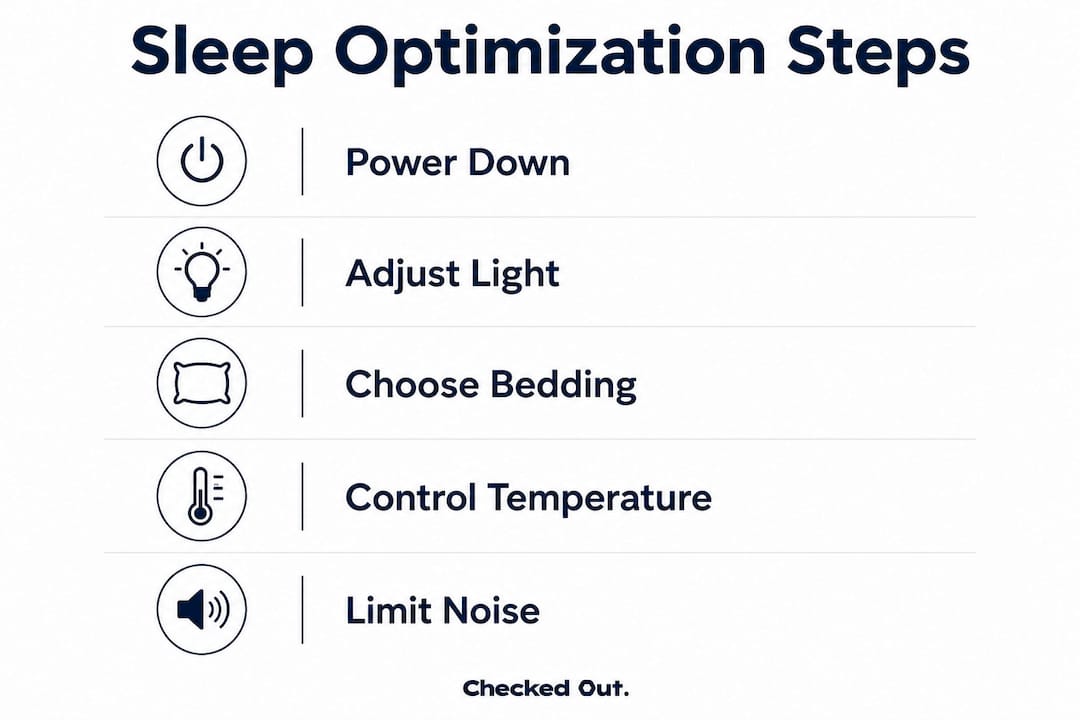
2. How to optimize your sleep environment for uninterrupted rest
Your bedroom should function like a cave: cool, dark, and quiet. That is not a metaphor. Darkness, cool temperature, and sound masking are the three environmental pillars that reduce nighttime awakenings and support deeper sleep cycles.
- Target a room temperature near 65°F (18°C)
- Use blackout curtains or a contoured sleep mask to block all light
- Add white noise or earplugs to mask disruptive sounds
- Reserve the bed for sleep only; no phones, laptops, or TV in bed
Pro Tip: Blue light from screens suppresses melatonin production. Power down all devices at least one hour before bed, or use blue-light-blocking glasses if you must stay on a screen.
Comfortable bedding matters more than most people acknowledge. A mattress or pillow that creates physical discomfort will fragment sleep just as reliably as noise or light. Audit your setup the same way you would audit your nutrition.

3. Dietary and lifestyle habits that affect sleep quality
What you consume and when you consume it shapes the architecture of your sleep. Caffeine taken six hours before bed measurably reduces sleep continuity, even when you feel like it has worn off. Adenosine, the brain chemical that builds sleep pressure, gets blocked by caffeine for hours after your last cup.
- Cut off caffeine by early afternoon, at least 6 hours before your target bedtime
- Avoid alcohol within 4 hours of sleep; it fragments later sleep stages even if it helps you fall asleep initially
- Skip heavy meals within 2 hours of bedtime to prevent reflux and discomfort
- Exercise regularly, but finish vigorous workouts at least 5–6 hours before bed
Regular physical activity genuinely improves sleep quality. Even 15 minutes of daily movement improves alertness during the day and deepens sleep at night. Late afternoon or early evening is the ideal window for most people.
4. Managing stress and building a wind-down routine that works
Mental arousal at bedtime is one of the most underestimated sleep disruptors. Your cortisol levels need time to drop before your body can shift into sleep mode. A structured pre-sleep routine reduces cognitive arousal and eases that transition.
- Practice deep breathing, progressive muscle relaxation, or gentle yoga
- Write down worries or tomorrow’s tasks in a journal before bed; it clears mental clutter
- Avoid stimulating content, news, or social media in the final hour before sleep
- Choose calming, enjoyable activities: reading, light music, a warm bath
Pro Tip: Use relaxation techniques to induce a state of calm, not to force sleep. Relaxation without forcing sleep produces better outcomes. Sleep arrives when the body feels safe, not when you demand it.
The goal is a predictable nightly signal. When your nervous system recognizes the same sequence of calming cues each evening, the transition to sleep becomes faster and more reliable.
5. When to seek professional help for disrupted sleep
Some sleep disruption does not respond to lifestyle changes alone. If fragmented sleep has persisted for months, or if it is affecting your mood, concentration, or daily function, a healthcare provider can help identify what is driving it.
Symptoms that warrant professional evaluation:
- Persistent nighttime awakenings despite consistent sleep hygiene
- Loud snoring, gasping, or witnessed pauses in breathing (possible sleep apnea)
- Uncomfortable leg sensations at night (possible restless leg syndrome)
- Daytime sleepiness, mood changes, or difficulty concentrating
CBT-i is a 6- to 8-week structured program that addresses the thoughts and behaviors driving chronic sleep disruption. It is the first-line recommendation from clinicians, not a last resort. Clinicians now favor CBT-i and lifestyle strategies over sleeping pills because pharmacological aids carry real risks of dependency and side effects. Benzodiazepines, for example, can cause dizziness, confusion, and muscle weakness, and are typically prescribed for only a few weeks at most.
6. Common misconceptions that keep you stuck in poor sleep
Trying harder to sleep is often the exact wrong move. The more you lie in bed willing yourself to fall asleep, the more your brain associates the bed with wakefulness and frustration.
- If you are awake for longer than recommended, leave the bedroom and do something quiet until you feel sleepy
- Do not use the bedroom for anything other than sleep; that association is protective
- Sleeping in to “catch up” after a bad night counteracts sleep drive and makes the next night harder
- Avoid long naps as a recovery strategy; they borrow from tonight’s sleep pressure
Clinical guidelines consistently prioritize lifestyle modifications and CBT-i over pharmacological aids for chronic sleep disruption. Sleeping pills are reserved for severe, short-term cases where other approaches have not worked.
The body’s sleep system is self-correcting when you stop fighting it. Trust the biology, remove the obstacles, and let sleep arrive on its own terms.
7. How medications and supplements affect your sleep patterns
Medications are a frequently overlooked cause of nighttime waking. Several common drug classes interfere with sleep architecture, including certain antidepressants, beta-blockers for blood pressure, corticosteroids, and over-the-counter cold and allergy remedies. If you recently started a new medication and your sleep worsened, ask your doctor whether the timing or formulation can be adjusted.
Supplements occupy a different category. Magnesium, B6, B12, and GABA are cofactors that support the body’s own melatonin production pathway, the tryptophan-to-serotonin-to-melatonin conversion. Supporting that pathway naturally differs from taking synthetic melatonin, which can blunt the body’s own production over time. Over-the-counter sleep aids containing antihistamines may induce drowsiness briefly, but they are not recommended beyond a week or two and can mask underlying causes that need proper evaluation.
8. Dietary factors beyond caffeine and alcohol that fragment sleep
Food timing and composition affect sleep in ways most people overlook. Eating a heavy meal within two hours of bedtime raises core body temperature and can trigger acid reflux, both of which disrupt sleep onset and continuity. Spicy foods are a particular culprit, as they elevate body temperature and can cause gastrointestinal discomfort that surfaces once you lie down.
Tryptophan-rich foods like turkey, eggs, and dairy support the serotonin-to-melatonin conversion and may gently support sleep quality when eaten earlier in the evening. Staying well hydrated throughout the day, while limiting fluids in the two hours before bed, reduces nighttime bathroom trips. A light, easily digested snack is fine if hunger would otherwise keep you awake, but a full meal this late works against you.
Key Takeaways
Fixing disrupted sleep requires consistent behavioral changes, a sleep-supportive environment, and CBT-i for cases that do not resolve with lifestyle adjustments alone.
| Point |
Details |
| Fix your wake time first |
A consistent daily wake time stabilizes circadian rhythm and reduces sleep fragmentation. |
| Caffeine and alcohol timing |
Avoid caffeine at least 6 hours before bed and alcohol within 4 hours of bedtime. |
| Build a sleep-ready bedroom |
Keep the room near 65°F, fully dark, and quiet to minimize nighttime awakenings. |
| CBT-i for persistent disruption |
This 6- to 8-week structured program is the first-line clinical treatment for chronic insomnia. |
| Stop fighting sleep |
Leaving the bed after 20–30 minutes awake protects the bed-sleep association and improves efficiency. |
Ready to support your sleep from the inside out?

Lifestyle changes build the foundation. What you put on your body at night can reinforce it. Checkedoutwellness designs drug-free sleep patches that deliver magnesium, B6, B12, and GABA transdermally, supporting your body’s own melatonin production without synthetic additives or dependency risk. Manufactured under ISO 22716 GMP pharmaceutical standards in South Korea, every product reflects the same commitment to transparency and science that drives this content. If you are ready to take your sleep recovery seriously, start there.
Recommended

How to Fix Disrupted Sleep: Proven Strategies for 2026
Fixing disrupted sleep comes down to a handful of evidence-based changes: a locked-in sleep schedule, a bedroom built for rest, timed substance limits, and a wind-down routine your nervous system can trust. For persistent cases, Cognitive Behavioral Therapy for Insomnia (CBT-i) is the gold-standard, first-line treatment. The body keeps score quietly, and every night of fragmented sleep adds to that tally. Here is where to start:
1. How a consistent sleep schedule restores your circadian rhythm
A fixed daily wake time stabilizes your circadian rhythm and reduces sleep fragmentation over time. The circadian rhythm is your internal biological clock, and it runs on consistency. Shift your wake time by even 90 minutes on weekends and you essentially give yourself social jet lag every Monday.
Pro Tip: Start your wind-down 60 minutes before your target bedtime. Your brain needs a gradual transition from alertness to rest, not a hard stop.
Daytime napping quietly undermines this process. Napping reduces sleep drive, the biological pressure that builds throughout the day and makes deep sleep possible at night. Skip the afternoon nap, protect that pressure, and your nights will reward you.
2. How to optimize your sleep environment for uninterrupted rest
Your bedroom should function like a cave: cool, dark, and quiet. That is not a metaphor. Darkness, cool temperature, and sound masking are the three environmental pillars that reduce nighttime awakenings and support deeper sleep cycles.
Pro Tip: Blue light from screens suppresses melatonin production. Power down all devices at least one hour before bed, or use blue-light-blocking glasses if you must stay on a screen.
Comfortable bedding matters more than most people acknowledge. A mattress or pillow that creates physical discomfort will fragment sleep just as reliably as noise or light. Audit your setup the same way you would audit your nutrition.
3. Dietary and lifestyle habits that affect sleep quality
What you consume and when you consume it shapes the architecture of your sleep. Caffeine taken six hours before bed measurably reduces sleep continuity, even when you feel like it has worn off. Adenosine, the brain chemical that builds sleep pressure, gets blocked by caffeine for hours after your last cup.
Regular physical activity genuinely improves sleep quality. Even 15 minutes of daily movement improves alertness during the day and deepens sleep at night. Late afternoon or early evening is the ideal window for most people.
4. Managing stress and building a wind-down routine that works
Mental arousal at bedtime is one of the most underestimated sleep disruptors. Your cortisol levels need time to drop before your body can shift into sleep mode. A structured pre-sleep routine reduces cognitive arousal and eases that transition.
Pro Tip: Use relaxation techniques to induce a state of calm, not to force sleep. Relaxation without forcing sleep produces better outcomes. Sleep arrives when the body feels safe, not when you demand it.
The goal is a predictable nightly signal. When your nervous system recognizes the same sequence of calming cues each evening, the transition to sleep becomes faster and more reliable.
5. When to seek professional help for disrupted sleep
Some sleep disruption does not respond to lifestyle changes alone. If fragmented sleep has persisted for months, or if it is affecting your mood, concentration, or daily function, a healthcare provider can help identify what is driving it.
Symptoms that warrant professional evaluation:
CBT-i is a 6- to 8-week structured program that addresses the thoughts and behaviors driving chronic sleep disruption. It is the first-line recommendation from clinicians, not a last resort. Clinicians now favor CBT-i and lifestyle strategies over sleeping pills because pharmacological aids carry real risks of dependency and side effects. Benzodiazepines, for example, can cause dizziness, confusion, and muscle weakness, and are typically prescribed for only a few weeks at most.
6. Common misconceptions that keep you stuck in poor sleep
Trying harder to sleep is often the exact wrong move. The more you lie in bed willing yourself to fall asleep, the more your brain associates the bed with wakefulness and frustration.
The body’s sleep system is self-correcting when you stop fighting it. Trust the biology, remove the obstacles, and let sleep arrive on its own terms.
7. How medications and supplements affect your sleep patterns
Medications are a frequently overlooked cause of nighttime waking. Several common drug classes interfere with sleep architecture, including certain antidepressants, beta-blockers for blood pressure, corticosteroids, and over-the-counter cold and allergy remedies. If you recently started a new medication and your sleep worsened, ask your doctor whether the timing or formulation can be adjusted.
Supplements occupy a different category. Magnesium, B6, B12, and GABA are cofactors that support the body’s own melatonin production pathway, the tryptophan-to-serotonin-to-melatonin conversion. Supporting that pathway naturally differs from taking synthetic melatonin, which can blunt the body’s own production over time. Over-the-counter sleep aids containing antihistamines may induce drowsiness briefly, but they are not recommended beyond a week or two and can mask underlying causes that need proper evaluation.
8. Dietary factors beyond caffeine and alcohol that fragment sleep
Food timing and composition affect sleep in ways most people overlook. Eating a heavy meal within two hours of bedtime raises core body temperature and can trigger acid reflux, both of which disrupt sleep onset and continuity. Spicy foods are a particular culprit, as they elevate body temperature and can cause gastrointestinal discomfort that surfaces once you lie down.
Tryptophan-rich foods like turkey, eggs, and dairy support the serotonin-to-melatonin conversion and may gently support sleep quality when eaten earlier in the evening. Staying well hydrated throughout the day, while limiting fluids in the two hours before bed, reduces nighttime bathroom trips. A light, easily digested snack is fine if hunger would otherwise keep you awake, but a full meal this late works against you.
Key Takeaways
Fixing disrupted sleep requires consistent behavioral changes, a sleep-supportive environment, and CBT-i for cases that do not resolve with lifestyle adjustments alone.
Ready to support your sleep from the inside out?
Lifestyle changes build the foundation. What you put on your body at night can reinforce it. Checkedoutwellness designs drug-free sleep patches that deliver magnesium, B6, B12, and GABA transdermally, supporting your body’s own melatonin production without synthetic additives or dependency risk. Manufactured under ISO 22716 GMP pharmaceutical standards in South Korea, every product reflects the same commitment to transparency and science that drives this content. If you are ready to take your sleep recovery seriously, start there.
Recommended