Sleep biohacking is the practice of deliberately manipulating biological and environmental factors to improve sleep quality and duration. Unlike generic sleep hygiene advice, it targets specific mechanisms: circadian rhythm alignment, slow wave sleep architecture, core body temperature, and neurochemical balance. N3 deep sleep makes up 20–25% of a healthy adult’s total sleep time, and it is the stage where growth hormone releases and immune repair happens. Miss it consistently, and the body keeps score quietly. The good news is that learning how to biohack sleep does not require expensive devices. The most powerful interventions are behavioral, and they are available to anyone willing to be consistent.
How to biohack sleep through light and circadian alignment
Your circadian rhythm is governed by the suprachiasmatic nucleus (SCN), a cluster of neurons in the hypothalamus that responds primarily to light. The SCN sets the timing of melatonin release, cortisol pulses, and core temperature shifts. Get the light signal wrong, and every downstream process suffers.
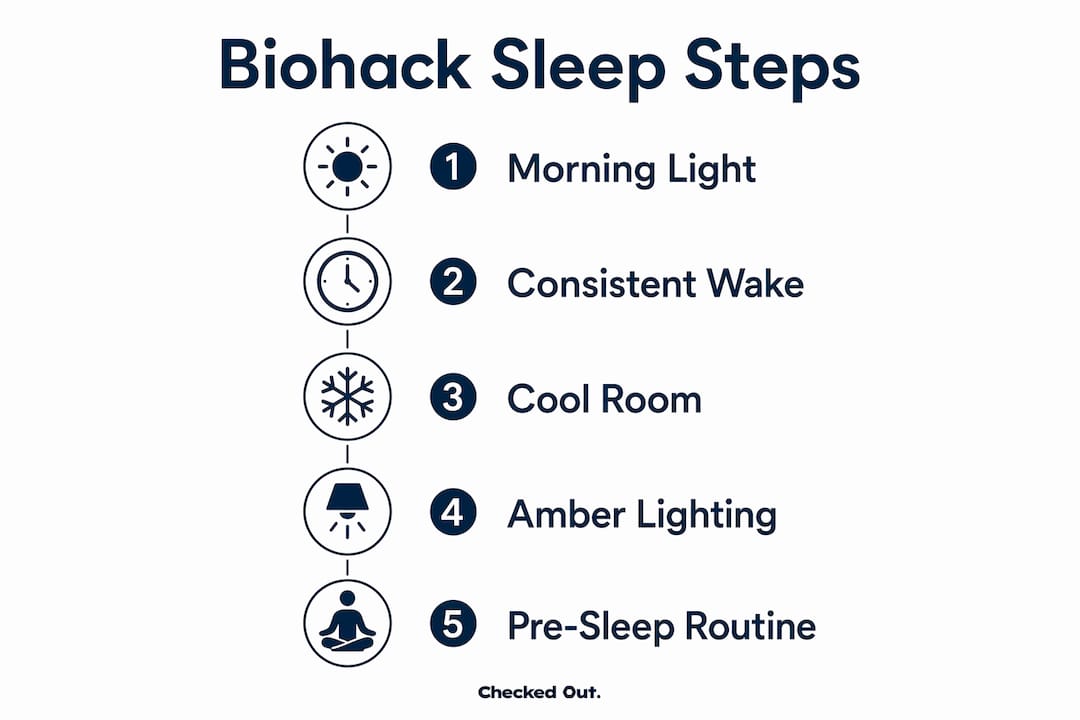
Morning sunlight within 30 minutes of waking is the single most effective circadian anchor available. Ten to twenty minutes of outdoor light exposure triggers a cortisol pulse that sharpens alertness and sets the clock for melatonin release roughly 14–16 hours later. This is not optional for people who struggle to fall asleep at a consistent time. It is the foundation everything else builds on.
Evening light management matters just as much. Blue-spectrum light from overhead LEDs and screens suppresses melatonin production and delays sleep onset. The fix is simpler than most people expect:
- Switch to warm, amber, or red-spectrum bulbs after sunset.
- Use floor-level lamps instead of overhead lighting in the final 90 minutes before bed.
- Apply blue-light blocking glasses if screen use is unavoidable after dark.
- Dim all light sources progressively as bedtime approaches.
Pro Tip: Place a single amber floor lamp in your bedroom and living room. Flip it on at the same time each evening. That one habit costs nothing and signals your nervous system that the day is ending.
The most effective sleep biohacks are behavioral and circadian, not high-tech gadgets. Morning light and consistent schedules outperform most supplement stacks in head-to-head comparisons.
What does bedroom temperature do for sleep quality?
Core body temperature must drop by roughly 1–2°F for sleep onset to occur. The bedroom environment either supports or fights that process. Optimal sleep temperature sits between 65–68°F. Temperatures above 68°F fragment sleep architecture. Temperatures below 60°F force the body to expend energy staying warm, which also disrupts rest.
Practical temperature control strategies include:
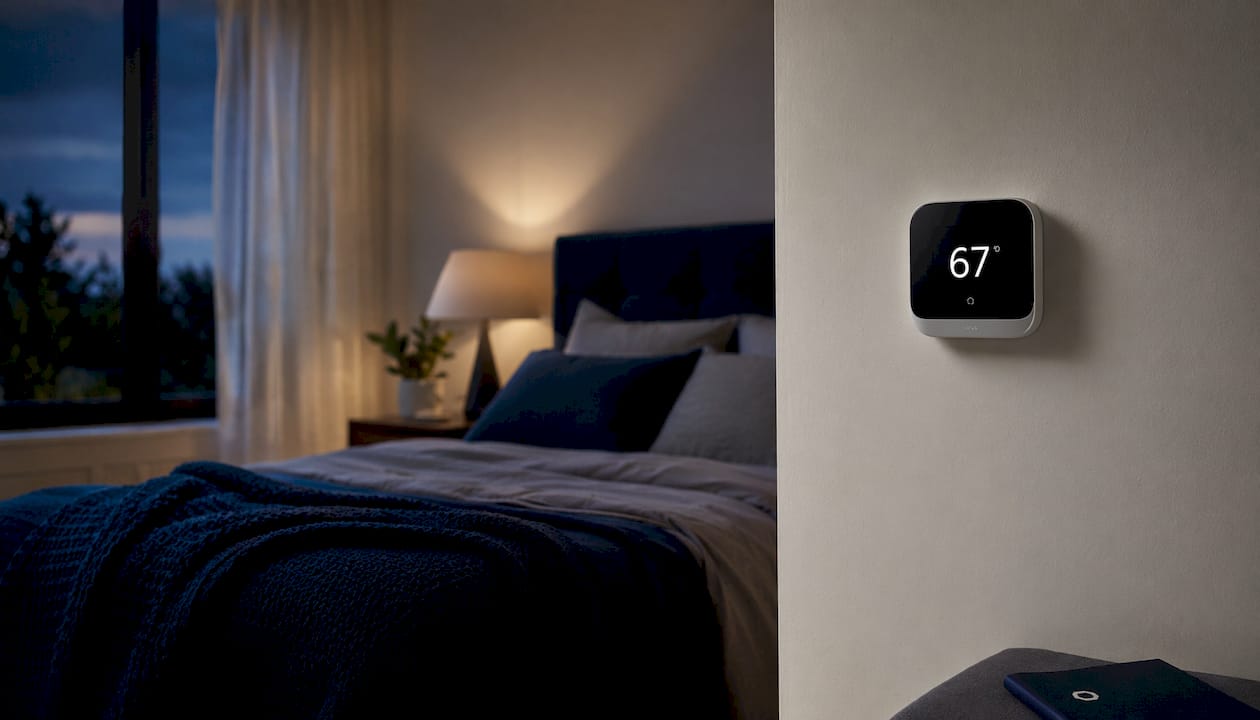
- Set the thermostat to 67°F before bed and leave it there. One adjustment, continuous benefit.
- Take a warm bath or shower 60–90 minutes before sleep. The subsequent skin cooling accelerates core temperature drop and speeds sleep onset.
- Use breathable, moisture-wicking bedding materials to reduce heat retention at the skin surface.
- Consider a cooling mattress pad if your baseline body temperature runs high or if you share a bed.
Complete darkness reinforces temperature’s effect on sleep depth. Even low-level light through eyelids signals the SCN to suppress melatonin. Blackout curtains or a contoured sleep mask eliminate this interference entirely.
Pro Tip: Set your thermostat once at 67°F and treat it like a non-negotiable. Consistency matters more than precision. The same cool signal every night trains your body to associate that environment with deep sleep.
The table below shows how environmental factors interact with sleep architecture:
| Factor |
Optimal range or practice |
Effect on sleep |
| Bedroom temperature |
65–68°F |
Supports N3 deep sleep onset |
| Light exposure at night |
Amber or red only |
Protects melatonin production |
| Noise level |
Below 30 decibels |
Reduces micro-arousals |
| Darkness |
Complete blackout |
Prevents SCN light interference |
Which supplements actually improve sleep onset and depth?
Supplements work best as precision tools, not replacements for behavioral foundations. The three with the strongest evidence for sleep biohacking are magnesium glycinate, glycine, and apigenin. Each targets a different mechanism, and they stack well together.
Magnesium glycinate at 300–400mg and glycine at 3g, taken 30–60 minutes before bed, show the most consistent evidence for improving both sleep onset and deep sleep quality. Magnesium modulates GABA receptors, reducing neuronal excitability. Glycine lowers core body temperature by dilating peripheral blood vessels, which accelerates the temperature drop needed for sleep onset. Apigenin, a flavonoid found in chamomile, binds GABA-A receptors and produces mild sedation without dependency.
-
Magnesium glycinate: 300–400mg, 30–60 minutes before bed. Supports GABA activity and reduces nighttime cortisol.
-
Glycine: 3g, 30–60 minutes before bed. Lowers core temperature and improves subjective sleep quality.
-
Apigenin: 50mg, taken with magnesium. Mild anxiolytic effect without morning grogginess.
-
Microdose melatonin: 0.3–0.5mg only, not the 5–10mg doses common in retail products. Higher doses disrupt receptor sensitivity over time.
For a deeper look at how magnesium deficiency quietly undermines sleep, the magnesium and sleep evidence review at Checkedoutwellness covers the research clearly. If you want to build a full stack, the light sleeper supplement guide at Checkedoutwellness walks through sequencing and timing in detail.
How to build a pre-sleep routine that actually works
A 90-minute wind-down protocol is the behavioral backbone of sleep biohacking. The body does not switch from high-alert to deep sleep instantly. It needs a ramp-down signal, and you have to build it deliberately.
-
90 minutes before bed: Dim all lights to amber or red. Stop overhead lighting entirely. This is the single highest-leverage environmental shift in the routine.
-
60 minutes before bed: Stop eating. Digestion raises core temperature and cortisol, both of which delay sleep onset. A three-hour food cutoff is ideal; sixty minutes is the minimum.
-
45 minutes before bed: Take your supplement stack if using one. Magnesium and glycine need time to reach peak effect.
-
30 minutes before bed: Practice slow nasal breathing or a structured breathwork protocol like box breathing (4 counts in, 4 hold, 4 out, 4 hold). This activates the parasympathetic nervous system and lowers heart rate.
-
At bedtime: Apply mouth tape to promote nasal breathing through the night.
Mouth taping increases nitric oxide production, stabilizes heart rate, and improves oxygen exchange during sleep. The result is measurably better deep sleep quality, often without any other change to the routine. It is one of the most underrated tools in sleep biohacking.
The 90-minute pre-sleep wind-down, combining amber lighting, caffeine cutoff at 2 PM, and nasal breathing practices, reduces cortisol and melatonin suppression enough to improve both sleep onset speed and deep sleep depth.
Avoiding caffeine after 2 PM removes one of the most common hidden barriers to deep sleep. Caffeine’s half-life is roughly 5–6 hours, meaning a 3 PM coffee still has significant stimulant activity at 9 PM.
Pro Tip: Track only 3–5 core metrics: sleep onset time, wake time, and a simple 1–10 subjective rest score. Excessive sleep tracking can cause orthosomnia, a form of performance anxiety that worsens the very sleep you are trying to fix.
How does your chronotype affect which sleep biohacks work for you?
Chronotype is your genetically influenced preference for sleep and wake timing. The three broad categories are morning types (larks), evening types (owls), and intermediate types. These are not personality quirks. They reflect real differences in circadian phase driven by genes like PER3 and CLOCK. Genetic chronotype testing via 23andMe raw data allows you to identify your biological sleep window with more precision than guessing.
The most useful clinical marker for personalized sleep timing is Dim Light Melatonin Onset (DLMO). DLMO marks the point when melatonin begins rising in the evening. Aligning your bedtime to fall roughly two hours after DLMO produces faster sleep onset and better sleep architecture than any fixed schedule imposed from outside.
Practical chronotype-based adjustments:
-
Morning types: Target a 9:30–10:30 PM bedtime. Morning light exposure is already natural; focus on protecting the early wake time on weekends.
-
Evening types: Resist the urge to sleep in past 8 AM even on days off. A consistent wake time within 30 minutes daily anchors the circadian clock regardless of when you fell asleep.
-
Napping: Keep naps to 20 minutes and schedule them before 2 PM. Longer or later naps reduce slow wave sleep pressure at night, making deep sleep harder to reach.
The step-by-step biohacking workflow at CP-1 offers a useful framework for sequencing these personalization steps if you want a structured starting point.
Key Takeaways
Sleep biohacking works best when behavioral foundations like light exposure, temperature, and consistent timing come before supplements or devices.
| Point |
Details |
| Morning light is non-negotiable |
Ten to twenty minutes of sunlight within 30 minutes of waking anchors melatonin timing for the entire day. |
| Temperature drives deep sleep |
Keep your bedroom at 65–68°F to support N3 sleep onset and reduce nighttime fragmentation. |
| Supplements need a behavioral base |
Magnesium glycinate (300–400mg) and glycine (3g) work best when circadian habits are already in place. |
| Chronotype shapes your ideal schedule |
Align bedtime with your DLMO and protect your wake time within 30 minutes daily, even on weekends. |
| Tracking less reduces anxiety |
Limit sleep metrics to 3–5 core measures to avoid orthosomnia and keep the practice sustainable. |
What I have learned from years of watching people biohack their sleep
People come to sleep biohacking from a place of exhaustion. They have tried everything and nothing has stuck. My honest observation after years in this space is that most people skip the boring part and go straight to the gadgets. They buy a wearable, download a sleep score app, and start obsessing over numbers before they have fixed their bedroom temperature or stepped outside in the morning.
The behavioral foundations are not glamorous. Morning light, a consistent wake time, amber lighting at night, and a cool bedroom cost almost nothing. But they are the reason the supplements and devices work at all. Without a strong photic trigger in the morning, melatonin release timing weakens, and every downstream intervention loses effectiveness. I have seen this pattern repeat enough times to call it a rule.
Orthosomnia is real, and it is more common than people admit. When tracking becomes the focus, sleep becomes a performance, and performance anxiety is the enemy of rest. If your sleep score is making you anxious, put the tracker away for two weeks and just protect your wake time and morning light. The body knows what to do when you stop fighting it.
My practical priority list: consistent wake time first, morning light second, cool dark bedroom third, 90-minute wind-down fourth, supplements fifth. Devices and advanced chronotype testing come after all of that is stable. Start simple. The body responds faster than you expect when you give it the right signals.
— Geeta
If your behavioral foundations are in place and you are ready to add physical tools, Checkedoutwellness builds products specifically for this stage of the process.

The Checkedoutwellness sleep patch delivers magnesium, GABA, B6, and B12 transdermally, supporting your body’s own melatonin production without synthetic melatonin or dependency risk. It is manufactured in South Korea under ISO 22716 GMP pharmaceutical standards. The contoured blackout sleep mask pairs with mouth tape to create complete darkness and nasal breathing support in one simple setup. For readers who want to go deeper into the science behind these formulations, the Checkedoutwellness science page explains the evidence behind every ingredient choice.
FAQ
What is biohacking sleep?
Biohacking sleep is the deliberate use of behavioral, environmental, and nutritional strategies to improve sleep quality and duration. It targets specific biological mechanisms like circadian rhythm, core temperature, and neurochemical balance rather than relying on general advice.
What are the most effective examples of sleep biohacks?
Morning sunlight exposure, consistent wake times, bedroom cooling to 65–68°F, and a 90-minute amber-light wind-down are the highest-impact sleep biohacks. These behavioral interventions outperform most supplements and devices when applied consistently.
What is slow wave sleep biohacking?
Slow wave sleep biohacking refers to techniques that specifically increase N3 deep sleep, the stage responsible for growth hormone release and immune repair. Cooling the bedroom, taking glycine before bed, and avoiding food within three hours of sleep all support deeper N3 sleep.
Do sleep biohacking devices actually work?
Types of sleep biohacking devices, such as cooling mattress pads and wearable trackers, can support optimization but work best when behavioral foundations are already in place. Tracking too many metrics can cause orthosomnia, so limiting data collection to 3–5 core measures is recommended.
Is melatonin a good sleep biohack?
Microdose melatonin at 0.3–0.5mg can help with circadian phase shifting, but high retail doses of 5–10mg desensitize receptors over time. Supporting your body’s own melatonin production through light management and cofactors like magnesium and B6 is a more sustainable approach.
Recommended

How to Biohack Sleep for Deeper, More Restful Nights
Sleep biohacking is the practice of deliberately manipulating biological and environmental factors to improve sleep quality and duration. Unlike generic sleep hygiene advice, it targets specific mechanisms: circadian rhythm alignment, slow wave sleep architecture, core body temperature, and neurochemical balance. N3 deep sleep makes up 20–25% of a healthy adult’s total sleep time, and it is the stage where growth hormone releases and immune repair happens. Miss it consistently, and the body keeps score quietly. The good news is that learning how to biohack sleep does not require expensive devices. The most powerful interventions are behavioral, and they are available to anyone willing to be consistent.
How to biohack sleep through light and circadian alignment
Your circadian rhythm is governed by the suprachiasmatic nucleus (SCN), a cluster of neurons in the hypothalamus that responds primarily to light. The SCN sets the timing of melatonin release, cortisol pulses, and core temperature shifts. Get the light signal wrong, and every downstream process suffers.
Morning sunlight within 30 minutes of waking is the single most effective circadian anchor available. Ten to twenty minutes of outdoor light exposure triggers a cortisol pulse that sharpens alertness and sets the clock for melatonin release roughly 14–16 hours later. This is not optional for people who struggle to fall asleep at a consistent time. It is the foundation everything else builds on.
Evening light management matters just as much. Blue-spectrum light from overhead LEDs and screens suppresses melatonin production and delays sleep onset. The fix is simpler than most people expect:
Pro Tip: Place a single amber floor lamp in your bedroom and living room. Flip it on at the same time each evening. That one habit costs nothing and signals your nervous system that the day is ending.
The most effective sleep biohacks are behavioral and circadian, not high-tech gadgets. Morning light and consistent schedules outperform most supplement stacks in head-to-head comparisons.
What does bedroom temperature do for sleep quality?
Core body temperature must drop by roughly 1–2°F for sleep onset to occur. The bedroom environment either supports or fights that process. Optimal sleep temperature sits between 65–68°F. Temperatures above 68°F fragment sleep architecture. Temperatures below 60°F force the body to expend energy staying warm, which also disrupts rest.
Practical temperature control strategies include:
Complete darkness reinforces temperature’s effect on sleep depth. Even low-level light through eyelids signals the SCN to suppress melatonin. Blackout curtains or a contoured sleep mask eliminate this interference entirely.
Pro Tip: Set your thermostat once at 67°F and treat it like a non-negotiable. Consistency matters more than precision. The same cool signal every night trains your body to associate that environment with deep sleep.
The table below shows how environmental factors interact with sleep architecture:
Which supplements actually improve sleep onset and depth?
Supplements work best as precision tools, not replacements for behavioral foundations. The three with the strongest evidence for sleep biohacking are magnesium glycinate, glycine, and apigenin. Each targets a different mechanism, and they stack well together.
Magnesium glycinate at 300–400mg and glycine at 3g, taken 30–60 minutes before bed, show the most consistent evidence for improving both sleep onset and deep sleep quality. Magnesium modulates GABA receptors, reducing neuronal excitability. Glycine lowers core body temperature by dilating peripheral blood vessels, which accelerates the temperature drop needed for sleep onset. Apigenin, a flavonoid found in chamomile, binds GABA-A receptors and produces mild sedation without dependency.
For a deeper look at how magnesium deficiency quietly undermines sleep, the magnesium and sleep evidence review at Checkedoutwellness covers the research clearly. If you want to build a full stack, the light sleeper supplement guide at Checkedoutwellness walks through sequencing and timing in detail.
How to build a pre-sleep routine that actually works
A 90-minute wind-down protocol is the behavioral backbone of sleep biohacking. The body does not switch from high-alert to deep sleep instantly. It needs a ramp-down signal, and you have to build it deliberately.
Mouth taping increases nitric oxide production, stabilizes heart rate, and improves oxygen exchange during sleep. The result is measurably better deep sleep quality, often without any other change to the routine. It is one of the most underrated tools in sleep biohacking.
Avoiding caffeine after 2 PM removes one of the most common hidden barriers to deep sleep. Caffeine’s half-life is roughly 5–6 hours, meaning a 3 PM coffee still has significant stimulant activity at 9 PM.
Pro Tip: Track only 3–5 core metrics: sleep onset time, wake time, and a simple 1–10 subjective rest score. Excessive sleep tracking can cause orthosomnia, a form of performance anxiety that worsens the very sleep you are trying to fix.
How does your chronotype affect which sleep biohacks work for you?
Chronotype is your genetically influenced preference for sleep and wake timing. The three broad categories are morning types (larks), evening types (owls), and intermediate types. These are not personality quirks. They reflect real differences in circadian phase driven by genes like PER3 and CLOCK. Genetic chronotype testing via 23andMe raw data allows you to identify your biological sleep window with more precision than guessing.
The most useful clinical marker for personalized sleep timing is Dim Light Melatonin Onset (DLMO). DLMO marks the point when melatonin begins rising in the evening. Aligning your bedtime to fall roughly two hours after DLMO produces faster sleep onset and better sleep architecture than any fixed schedule imposed from outside.
Practical chronotype-based adjustments:
The step-by-step biohacking workflow at CP-1 offers a useful framework for sequencing these personalization steps if you want a structured starting point.
Key Takeaways
Sleep biohacking works best when behavioral foundations like light exposure, temperature, and consistent timing come before supplements or devices.
What I have learned from years of watching people biohack their sleep
People come to sleep biohacking from a place of exhaustion. They have tried everything and nothing has stuck. My honest observation after years in this space is that most people skip the boring part and go straight to the gadgets. They buy a wearable, download a sleep score app, and start obsessing over numbers before they have fixed their bedroom temperature or stepped outside in the morning.
The behavioral foundations are not glamorous. Morning light, a consistent wake time, amber lighting at night, and a cool bedroom cost almost nothing. But they are the reason the supplements and devices work at all. Without a strong photic trigger in the morning, melatonin release timing weakens, and every downstream intervention loses effectiveness. I have seen this pattern repeat enough times to call it a rule.
Orthosomnia is real, and it is more common than people admit. When tracking becomes the focus, sleep becomes a performance, and performance anxiety is the enemy of rest. If your sleep score is making you anxious, put the tracker away for two weeks and just protect your wake time and morning light. The body knows what to do when you stop fighting it.
My practical priority list: consistent wake time first, morning light second, cool dark bedroom third, 90-minute wind-down fourth, supplements fifth. Devices and advanced chronotype testing come after all of that is stable. Start simple. The body responds faster than you expect when you give it the right signals.
Natural sleep tools that fit your biohacking routine
If your behavioral foundations are in place and you are ready to add physical tools, Checkedoutwellness builds products specifically for this stage of the process.
The Checkedoutwellness sleep patch delivers magnesium, GABA, B6, and B12 transdermally, supporting your body’s own melatonin production without synthetic melatonin or dependency risk. It is manufactured in South Korea under ISO 22716 GMP pharmaceutical standards. The contoured blackout sleep mask pairs with mouth tape to create complete darkness and nasal breathing support in one simple setup. For readers who want to go deeper into the science behind these formulations, the Checkedoutwellness science page explains the evidence behind every ingredient choice.
FAQ
What is biohacking sleep?
Biohacking sleep is the deliberate use of behavioral, environmental, and nutritional strategies to improve sleep quality and duration. It targets specific biological mechanisms like circadian rhythm, core temperature, and neurochemical balance rather than relying on general advice.
What are the most effective examples of sleep biohacks?
Morning sunlight exposure, consistent wake times, bedroom cooling to 65–68°F, and a 90-minute amber-light wind-down are the highest-impact sleep biohacks. These behavioral interventions outperform most supplements and devices when applied consistently.
What is slow wave sleep biohacking?
Slow wave sleep biohacking refers to techniques that specifically increase N3 deep sleep, the stage responsible for growth hormone release and immune repair. Cooling the bedroom, taking glycine before bed, and avoiding food within three hours of sleep all support deeper N3 sleep.
Do sleep biohacking devices actually work?
Types of sleep biohacking devices, such as cooling mattress pads and wearable trackers, can support optimization but work best when behavioral foundations are already in place. Tracking too many metrics can cause orthosomnia, so limiting data collection to 3–5 core measures is recommended.
Is melatonin a good sleep biohack?
Microdose melatonin at 0.3–0.5mg can help with circadian phase shifting, but high retail doses of 5–10mg desensitize receptors over time. Supporting your body’s own melatonin production through light management and cofactors like magnesium and B6 is a more sustainable approach.
Recommended