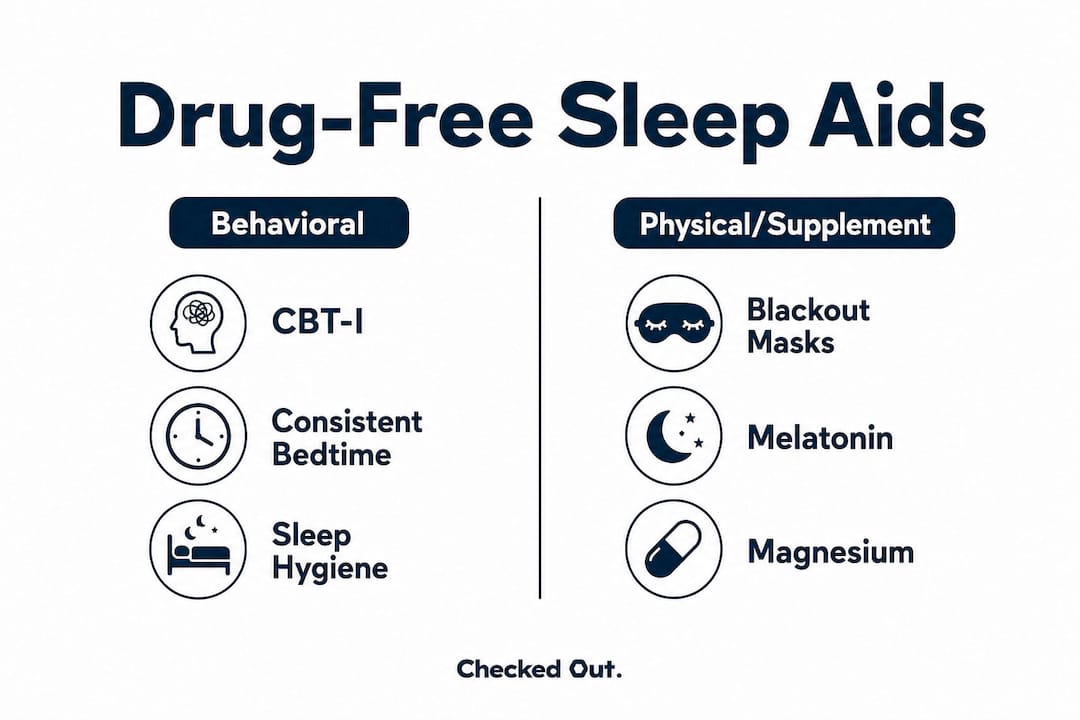
For most people struggling with sleep, the most effective drug-free path combines behavioral change with targeted supplementation, not one or the other. CBT-I (Cognitive Behavioral Therapy for Insomnia) is the evidence-backed first-line treatment for chronic insomnia, outperforming every supplement in head-to-head research. For shorter-term disruptions, melatonin, magnesium, and L-theanine are the most studied nonpharmaceutical options, and physical tools like 3D blackout masks and mouth tape address environmental factors that no pill can touch.
Here is a quick map of where each category fits:
-
Best for circadian shifts and jet lag: Melatonin (low dose, timed to destination)
-
Best nightly supports for sleep quality: Magnesium, L-theanine
-
Best calming botanicals (evidence mixed): Chamomile, valerian, tart cherry juice
-
Best physical environment aids: Contoured blackout masks, mouth tape, transdermal patches
-
Best for chronic insomnia: CBT-I, ideally with a trained therapist or digital program
One safety note before you go further: supplements in the U.S. are regulated as dietary products, not drugs. The FDA does not preapprove their safety or efficacy, so label accuracy varies. If you take prescription medications or have a significant health condition, check with a clinician before adding anything new.
Table of Contents
Which drug-free sleep aid is right for your situation?
The right approach depends on what is actually breaking your sleep. A traveler crossing six time zones needs something different from someone who has been staring at the ceiling every night for three months.
-
Behavioral (CBT-I, sleep hygiene): Best for chronic insomnia lasting more than three months. CBT-I targets the cognitive and behavioral patterns that keep insomnia alive, producing durable results rather than temporary relief.
-
Melatonin: Best for circadian disruption, jet lag, and shift work. Evidence for shortening sleep onset in these contexts is solid. Less convincing for general insomnia.
-
Magnesium: Best for people whose sleep quality is poor rather than their ability to fall asleep. Supports GABA pathways and muscle relaxation. Most useful as a nightly adjunct.
-
L-theanine: Best for stress-related sleep difficulty. Promotes alpha-wave activity without sedation, making it a good pre-sleep wind-down support.
-
Valerian and chamomile: Mild, low-risk options for occasional restlessness. Evidence is mixed, but both are well-tolerated for short-term use.
-
Tart cherry juice: A natural source of melatonin precursors. Modest evidence for improving sleep duration, particularly in older adults.
-
Lavender aromatherapy: Small-to-moderate improvements in sleep quality in multiple analyses, with minimal risk when used appropriately.
-
Physical aids (contoured blackout mask, mouth tape, transdermal patches): Best for travel, light-disrupted environments, or anyone who wants to optimize their sleep environment without ingesting anything.
Pro Tip: Pairing a low-risk physical aid like a blackout mask with a behavioral anchor like a consistent bedtime often produces faster improvement than either approach alone. The environment change reinforces the behavioral cue.
For travelers who want a ready-to-use combination, Checkedoutwellness’s sleep patch, mouth tape, and mask pack maps directly to several of these use cases: the transdermal patch delivers magnesium, L-theanine, GABA, and B vitamins through the skin over eight hours, the mouth tape supports nasal breathing, and the 3D contoured mask blocks light in any environment.
What does the research actually say about effectiveness?
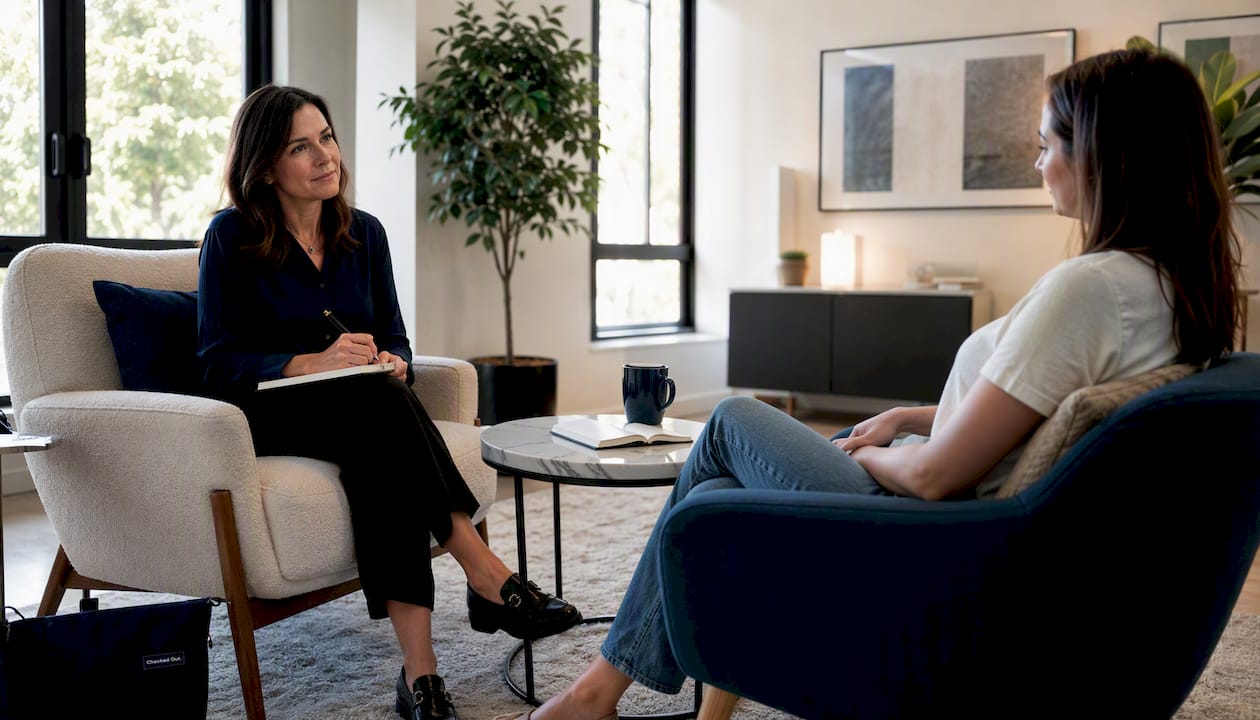
The evidence hierarchy here is clearer than most people realize. A network meta-analysis of 53 RCTs found that CBT-I ranked highest for reducing sleep latency and improving sleep efficiency among all non-pharmacological therapies tested, including acupuncture and acupressure. That is not a small distinction. CBT-I treats the underlying cognitive and behavioral drivers of insomnia rather than masking symptoms, which is why its effects persist after treatment ends.
Supplements tell a more complicated story. Systematic reviews find variable but sometimes positive effects for valerian, melatonin, and other botanicals, with significant heterogeneity across studies due to inconsistent dosing and formulations. Melatonin has the strongest evidence base for circadian-related sleep problems. Magnesium and L-theanine show modest support for sleep quality, particularly in people who are deficient or under chronic stress. Valerian, chamomile, and tart cherry juice have limited and mixed evidence, though their safety profiles are generally favorable.
| Aid |
Evidence strength |
Primary benefit |
Common side effects |
| CBT-I |
Strong (multiple RCTs) |
Reduces sleep latency, improves efficiency |
None inherent; requires time and effort |
| Melatonin |
Good for circadian issues |
Shortens time to sleep onset for jet lag/shift work |
Morning grogginess at high doses |
| Magnesium |
Modest |
Improves sleep quality, reduces nighttime waking |
Loose stools at high doses |
| L-theanine |
Modest |
Reduces stress-related sleep difficulty |
Rarely reported; generally well-tolerated |
| Valerian |
Limited/mixed |
Mild sedation, reduced sleep latency |
Next-day grogginess, headache |
| Chamomile |
Limited |
Mild calming effect |
Rare allergic reaction |
| Tart cherry juice |
Limited |
Modest improvement in sleep duration |
High sugar content |
| Lavender (aromatherapy) |
Small-to-moderate |
Improved sleep quality metrics |
Skin irritation if applied topically |
The regulatory context matters here. As Sleep Foundation notes, dietary supplements in the U.S. are not FDA-verified for safety or efficacy, and label variability is common. Johns Hopkins Medicine has flagged that independent testing frequently finds melatonin at concentrations that differ meaningfully from what the label states. Third-party testing and GMP manufacturing are not optional extras for serious users.
When should you try drug-free aids vs. see a clinician?
Self-directed drug-free options are appropriate for a defined set of situations. Outside those situations, they can delay care that actually helps.
Try self-directed options when:
- Sleep difficulty is tied to a specific trigger (travel, time zone change, a stressful week)
- Symptoms have lasted less than three months
- You have no significant medical conditions or prescription medications that interact with supplements
- Daytime function is mildly affected, not severely impaired
Timeframes to judge effect:
- Melatonin for jet lag: 3–7 nights
- Magnesium or L-theanine for sleep quality: 2–4 weeks
- Herbal options (valerian, chamomile): 2–6 weeks for a fair trial
- CBT-I: 6–8 weeks for a full course
See a clinician if:
- Insomnia has persisted for more than three months despite self-directed efforts
- You experience regular daytime impairment (cognitive fog, mood changes, difficulty functioning)
- A bed partner reports heavy snoring, gasping, or breathing pauses (possible sleep apnea)
- You have restless legs symptoms or periodic limb movements
- You are pregnant, breastfeeding, or managing a child’s sleep
- You take anticoagulants, antidepressants, immunosuppressants, or other medications with known supplement interactions
For chronic insomnia specifically, CBT-I is the clinically recommended first-line treatment. Supplements can support the process, but they do not resolve the behavioral and cognitive patterns that maintain chronic insomnia.
Dosing and timing
Getting the dose right matters more than most people think, especially with melatonin. Higher doses are not necessarily better. For circadian shifts, low doses taken before the target bedtime at the destination are more effective than the higher doses common in some U.S. products. For sleep-onset support unrelated to jet lag, low to moderate doses are typically used in research.
Magnesium glycinate or magnesium threonate are common forms associated with sleep benefits, taken before bed. L-theanine is typically used in moderate doses in the evening. Glycine, an amino acid with emerging evidence for sleep quality, is commonly taken before bed. Valerian extract and tart cherry juice have been studied in various dose ranges.
| Supplement |
Typical dose range |
Timing |
Key safety note |
| Melatonin |
low dose |
30–60 min before target bedtime |
Avoid high doses; morning grogginess risk |
| Magnesium |
moderate dose |
30–60 min before bed |
Higher doses may cause loose stools |
| L-theanine |
moderate doses |
Evening |
Well-tolerated; rare interactions |
| Glycine |
3 g |
Before bed |
Generally safe; limited long-term data |
| Valerian |
common doses |
30–60 min before bed |
Next-day grogginess; avoid with CNS depressants |
| Tart cherry juice |
8 oz |
Twice daily |
High sugar; check if managing blood sugar |
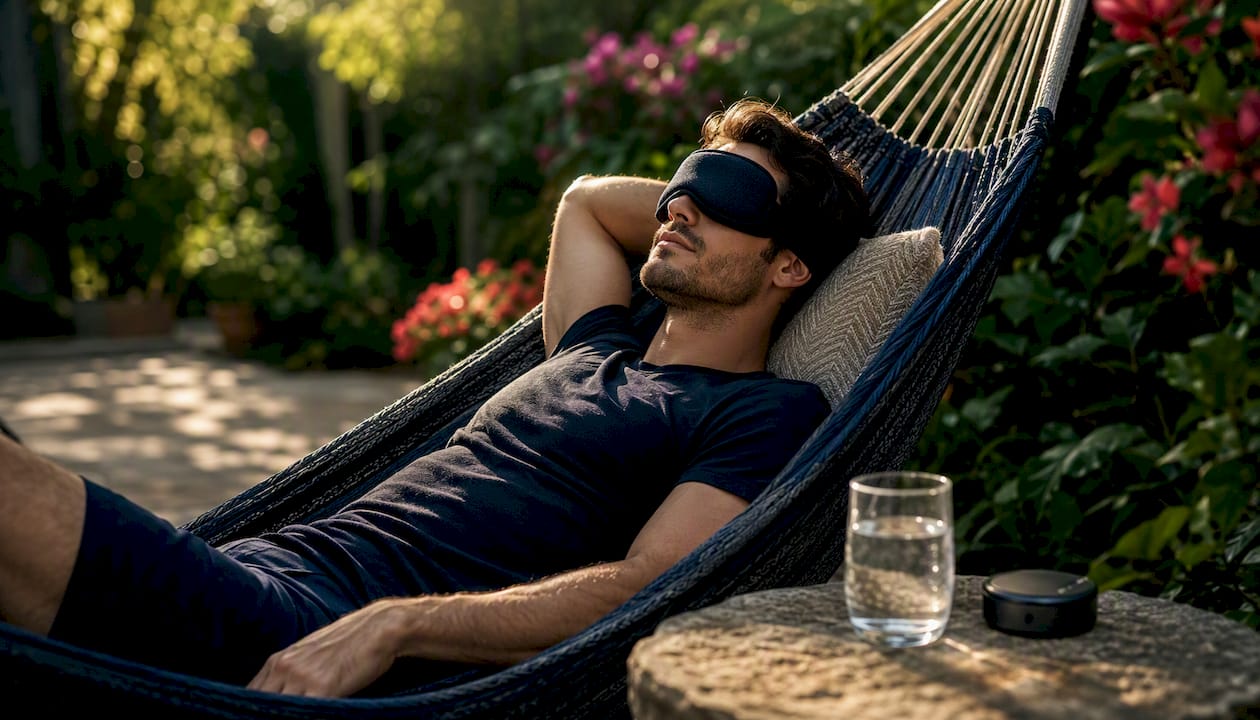
A contoured 3D blackout mask works best when it sits away from your eyelids, allowing natural eye movement without pressure. This matters for REM sleep comfort. Fit it before you dim the lights so you can adjust the contour properly.
Mouth tape for nasal breathing is most beneficial for people who are confirmed mouth breathers during sleep. Start with a small piece across the center of your lips rather than a full seal, and never use it if you have nasal congestion, a deviated septum, or any breathing difficulty. Transdermal patches are a practical option for travelers because they bypass the digestive system entirely, delivering actives steadily through the skin over several hours without requiring you to remember a pill mid-flight.
Pro Tip: When evaluating any supplement, look for a Certificate of Analysis (COA) from a third-party lab like NSF International or USP. GMP or ISO 22716 manufacturing certification tells you the facility meets pharmaceutical-grade production standards, not just that the label looks professional.
For a deeper look at building a light sleeper supplement stack that combines these elements thoughtfully, Checkedoutwellness has a practical guide worth reading alongside this one.
The Checkedoutwellness drug-free pack: what it includes and who it suits
Checkedoutwellness built its core pack around three components that address the most common barriers to quality sleep: cofactor depletion, mouth breathing, and light exposure.
-
8-hour sustained-release transdermal sleep patch: Delivers magnesium, B6, B12, GABA, L-theanine, Ecklonia Cava, and Korean Pine Oil through the skin over a full night. No synthetic melatonin. No sedative dependency. The sustained-release mechanism means actives are available throughout the night rather than peaking and dropping within the first two hours.
-
Peptide-infused dermatology-grade mouth tape: Supports nasal breathing during sleep and includes peptides for lip repair. Designed for nightly use or travel, with a skin-safe adhesive.
-
3D contoured blackout sleep mask: Blocks light completely without pressing on the eyelids, preserving comfort through REM cycles. Useful in hotel rooms, on planes, or anywhere light control is compromised.
All three products are manufactured in South Korea under ISO 22716 GMP pharmaceutical standards, which means the facility, processes, and ingredient sourcing meet the same production controls applied to pharmaceutical manufacturing. Given the label-accuracy problems documented in the supplement industry, that manufacturing standard is a meaningful differentiator.
Who this pack suits best:
- Frequent travelers dealing with circadian disruption and variable sleep environments
- Light sleepers who wake easily from light or noise
- Biohackers and high performers who want nonpharmaceutical sleep support without dependency risk
- Anyone who wants a ready-to-use, quality-controlled bundle rather than assembling individual products
Who should consult a clinician first: pregnant or breastfeeding individuals, people with untreated sleep apnea, those on anticoagulants or CNS-active medications, and children.
Subscription options are available for consistent monthly delivery, which matters practically: supplement benefits compound with consistent use, and running out mid-travel defeats the purpose.
Precautions, drug interactions, and groups who need extra care
“Natural” does not mean risk-free. Herbs and supplements can interact with prescription medications in clinically significant ways, and some botanicals carry rare but serious risks.
Key interaction classes to know:
-
Anticoagulants (warfarin, aspirin therapy): Valerian, chamomile, and fish oil can potentiate blood-thinning effects.
-
CNS depressants (benzodiazepines, opioids, alcohol): Valerian and kava amplify sedation; combining them raises fall and respiratory risk.
-
Antidepressants (SSRIs, MAOIs): St. John’s Wort (sometimes found in sleep blends) has well-documented interactions. L-theanine is generally lower risk but worth disclosing.
-
Immunosuppressants: Some herbal extracts can affect immune modulation; disclose all supplements to your prescribing clinician.
Always tell your pharmacist or prescribing clinician about every supplement you take, including “natural” products. Supplement-drug interactions are underreported because patients often assume natural products are automatically safe to combine with prescriptions. A pharmacist can flag interactions in minutes.
Special populations:
Pregnant and breastfeeding individuals should avoid most herbal sleep supplements; safety data is limited or absent. Older adults metabolize supplements more slowly and are at higher fall risk from any sedating agent, including valerian. Children’s sleep problems warrant pediatric evaluation rather than adult supplement protocols. People with liver disease should avoid kava entirely and use valerian cautiously. Anyone with suspected sleep apnea should be evaluated before using mouth tape or any sleep aid, since untreated apnea requires airway management, not supplementation.
Stop any supplement and seek care if you experience severe daytime sleepiness, new cognitive changes, falls, or any unexpected physical reaction.
Simple routines that improve sleep tonight and over time
Behavioral anchors are what make supplements and devices work better. Without them, you are adding tools to a system that is still working against you.
Nightly routine checklist:
- Set a consistent wake time, even on weekends. This is the single most powerful circadian anchor.
- Get natural light within 30 minutes of waking to set your cortisol rhythm for the day.
- Cut caffeine by 1–2 PM; alcohol within three hours of bed fragments sleep architecture even when it feels sedating.
- Dim lights and avoid blue-light screens 60 minutes before bed.
- Use a brief wind-down practice: 5–10 minutes of gentle stretching, slow breathing, or calming music.
Combining supplements and devices with behavioral anchors:
- Apply your transdermal patch or take your supplement 30–60 minutes before your wind-down begins, not right before you lie down.
- Put on your blackout mask and mouth tape as part of your wind-down ritual, not as an afterthought. Consistency turns the physical act into a sleep cue.
- For travel, time melatonin to your destination’s bedtime starting the night before you fly. Use your mask and patch on the flight itself to begin the transition.
Pro Tip: The two-week compound effect is real. A consistent wake time plus light exposure in the morning plus a 60-minute screen-free wind-down produces measurable improvement in sleep latency and morning energy within 14 days for most people. Add supplements as a layer on top of that foundation, not instead of it.
For a full travel sleep recovery guide, Checkedoutwellness has detailed protocols for managing circadian disruption before, during, and after long-haul travel.
Key Takeaways
CBT-I is the most evidence-backed drug-free treatment for chronic insomnia, while melatonin, magnesium, and L-theanine offer targeted support for circadian shifts and sleep quality when paired with consistent behavioral anchors.
| Point |
Details |
| CBT-I is first-line for chronic insomnia |
A 53-RCT meta-analysis ranked CBT-I highest for sleep latency and efficiency among non-pharmacological therapies. |
| Melatonin works best for circadian issues |
Use low dose timed to destination bedtime for jet lag; evidence for general insomnia is weaker. |
| Supplement label accuracy varies |
Independent testing finds significant deviations in active ingredient content; prioritize GMP/ISO-certified, third-party-tested products. |
| Behavioral anchors amplify every tool |
A consistent wake time and 60-minute screen-free wind-down improve sleep within two weeks and make supplements more effective. |
| Checkedoutwellness for travelers and light sleepers |
The patch, mouth tape, and 3D mask pack delivers magnesium, L-theanine, GABA, and B vitamins transdermally under ISO 22716 GMP standards. |
Why evidence-first thinking changes everything about sleep aids
There is a version of the drug-free sleep conversation that feels empowering but quietly misleads people. It goes like this: “Ditch the pills, go natural, and you will sleep better.” The sentiment is right. The framing leaves something out.
The most common mistake is treating supplements as the intervention when they are really the support layer. Melatonin does not fix the racing thoughts that keep you awake at midnight. Magnesium does not resolve the conditioned arousal that makes your bed feel like a place of wakefulness rather than rest. Those patterns require behavioral work, specifically CBT-I, to unwind. Supplements and physical tools work best when they are layered onto that foundation, not substituted for it.
What Checkedoutwellness cares about is the full picture. The patch formulation was designed to support the body’s own tryptophan-to-serotonin-to-melatonin conversion pathway rather than flood the system with synthetic melatonin. The manufacturing standard (ISO 22716 GMP) exists because the brand’s founders understood that label variability in the supplement industry is not a minor inconvenience; it is a trust problem. And the subscription model exists because consistency is where the benefit actually lives. One good night from a patch is a data point. Thirty consistent nights is a new baseline.
The body keeps score quietly. Chronic sleep debt accumulates in ways that do not always feel obvious until they do. The best drug-free sleep strategy is the one you can sustain, built on behavior first, supported by quality tools, and honest about when professional help is the right next step.
Sleep better tonight with Checkedoutwellness
If you have read this far, you already know that the best drug-free sleep aids are not about finding one magic supplement. They are about building a system: the right behavioral foundation, the right targeted supports, and tools you can trust because they are made to a standard that actually means something.
Checkedoutwellness’s sleep patch, mouth tape, and mask bundle gives you three of those tools in one quality-controlled pack, manufactured to ISO 22716 GMP standards in South Korea. The 8-hour sustained-release patch delivers magnesium, L-theanine, GABA, B6, and B12 transdermally through the night. The dermatology-grade mouth tape supports nasal breathing. The 3D contoured mask handles light, wherever you are sleeping. Monthly subscriptions keep your supply consistent without the effort of reordering. Visit Checkedoutwellness to choose your bundle or start with a single product and see what a quality-first approach to drug-free sleep actually feels like.
This article is for general informational purposes only and is not a substitute for professional medical advice. Confirm current supplement guidelines and any potential interactions with a qualified clinician or pharmacist.
Useful sources and further reading
The following sources informed this article and are worth reading directly for deeper context on evidence, safety, and clinical guidance.
-
Sleep Disorders and Complementary Health Approaches | NCCIH — Government overview of evidence for relaxation techniques, melatonin, and complementary therapies for sleep.
- Efficacy and safety of non-pharmacological therapies for primary insomnia: a network meta-analysis | Frontiers — 53-RCT analysis ranking CBT-I and acupressure for core insomnia outcomes.
- Natural Sleep Aids: Which Are the Most Effective? | Sleep Foundation — Accessible review of supplement evidence and FDA regulatory context.
- Natural sleep aids: Home remedies to help you sleep | Johns Hopkins Medicine — Clinical perspective on supplement label accuracy and lifestyle-first approach.
- Herbal and natural supplements for improving sleep: A literature review | PMC — Systematic review of RCT evidence for valerian, melatonin, hops, and other botanicals.
-
Best Natural Remedies for Sleep | NCOA — Practical summary of evidence-backed options with guidance on when to prioritize CBT-I.
-
Beyond Sleeping Pills: A Look at Nonpharmacological Approaches | Pharmacist Therapeutic Research — Pharmacist-level review of aromatherapy, music therapy, tai chi, and supplement interactions.
- Drug-free insomnia treatment: Effective CBT-I | Sleep Health Solutions Ohio — Clinician commentary on CBT-I as first-line treatment and its mechanism of action.
Supplements in the U.S. are regulated as dietary products under FDA rules, not as drugs. These sources represent a mix of RCT meta-analyses, systematic reviews, and expert clinical guidance. Use them as a starting point, not a substitute for individualized medical advice.
Recommended

Best Drug-Free Sleep Aids: Evidence-Backed Options
For most people struggling with sleep, the most effective drug-free path combines behavioral change with targeted supplementation, not one or the other. CBT-I (Cognitive Behavioral Therapy for Insomnia) is the evidence-backed first-line treatment for chronic insomnia, outperforming every supplement in head-to-head research. For shorter-term disruptions, melatonin, magnesium, and L-theanine are the most studied nonpharmaceutical options, and physical tools like 3D blackout masks and mouth tape address environmental factors that no pill can touch.
Here is a quick map of where each category fits:
One safety note before you go further: supplements in the U.S. are regulated as dietary products, not drugs. The FDA does not preapprove their safety or efficacy, so label accuracy varies. If you take prescription medications or have a significant health condition, check with a clinician before adding anything new.
Table of Contents
Which drug-free sleep aid is right for your situation?
The right approach depends on what is actually breaking your sleep. A traveler crossing six time zones needs something different from someone who has been staring at the ceiling every night for three months.
Pro Tip: Pairing a low-risk physical aid like a blackout mask with a behavioral anchor like a consistent bedtime often produces faster improvement than either approach alone. The environment change reinforces the behavioral cue.
For travelers who want a ready-to-use combination, Checkedoutwellness’s sleep patch, mouth tape, and mask pack maps directly to several of these use cases: the transdermal patch delivers magnesium, L-theanine, GABA, and B vitamins through the skin over eight hours, the mouth tape supports nasal breathing, and the 3D contoured mask blocks light in any environment.
What does the research actually say about effectiveness?
The evidence hierarchy here is clearer than most people realize. A network meta-analysis of 53 RCTs found that CBT-I ranked highest for reducing sleep latency and improving sleep efficiency among all non-pharmacological therapies tested, including acupuncture and acupressure. That is not a small distinction. CBT-I treats the underlying cognitive and behavioral drivers of insomnia rather than masking symptoms, which is why its effects persist after treatment ends.
Supplements tell a more complicated story. Systematic reviews find variable but sometimes positive effects for valerian, melatonin, and other botanicals, with significant heterogeneity across studies due to inconsistent dosing and formulations. Melatonin has the strongest evidence base for circadian-related sleep problems. Magnesium and L-theanine show modest support for sleep quality, particularly in people who are deficient or under chronic stress. Valerian, chamomile, and tart cherry juice have limited and mixed evidence, though their safety profiles are generally favorable.
The regulatory context matters here. As Sleep Foundation notes, dietary supplements in the U.S. are not FDA-verified for safety or efficacy, and label variability is common. Johns Hopkins Medicine has flagged that independent testing frequently finds melatonin at concentrations that differ meaningfully from what the label states. Third-party testing and GMP manufacturing are not optional extras for serious users.
When should you try drug-free aids vs. see a clinician?
Self-directed drug-free options are appropriate for a defined set of situations. Outside those situations, they can delay care that actually helps.
Try self-directed options when:
Timeframes to judge effect:
See a clinician if:
For chronic insomnia specifically, CBT-I is the clinically recommended first-line treatment. Supplements can support the process, but they do not resolve the behavioral and cognitive patterns that maintain chronic insomnia.
How to use supplements and physical tools safely
Dosing and timing
Getting the dose right matters more than most people think, especially with melatonin. Higher doses are not necessarily better. For circadian shifts, low doses taken before the target bedtime at the destination are more effective than the higher doses common in some U.S. products. For sleep-onset support unrelated to jet lag, low to moderate doses are typically used in research.
Magnesium glycinate or magnesium threonate are common forms associated with sleep benefits, taken before bed. L-theanine is typically used in moderate doses in the evening. Glycine, an amino acid with emerging evidence for sleep quality, is commonly taken before bed. Valerian extract and tart cherry juice have been studied in various dose ranges.
Using physical sleep tools
A contoured 3D blackout mask works best when it sits away from your eyelids, allowing natural eye movement without pressure. This matters for REM sleep comfort. Fit it before you dim the lights so you can adjust the contour properly.
Mouth tape for nasal breathing is most beneficial for people who are confirmed mouth breathers during sleep. Start with a small piece across the center of your lips rather than a full seal, and never use it if you have nasal congestion, a deviated septum, or any breathing difficulty. Transdermal patches are a practical option for travelers because they bypass the digestive system entirely, delivering actives steadily through the skin over several hours without requiring you to remember a pill mid-flight.
Pro Tip: When evaluating any supplement, look for a Certificate of Analysis (COA) from a third-party lab like NSF International or USP. GMP or ISO 22716 manufacturing certification tells you the facility meets pharmaceutical-grade production standards, not just that the label looks professional.
For a deeper look at building a light sleeper supplement stack that combines these elements thoughtfully, Checkedoutwellness has a practical guide worth reading alongside this one.
The Checkedoutwellness drug-free pack: what it includes and who it suits
Checkedoutwellness built its core pack around three components that address the most common barriers to quality sleep: cofactor depletion, mouth breathing, and light exposure.
All three products are manufactured in South Korea under ISO 22716 GMP pharmaceutical standards, which means the facility, processes, and ingredient sourcing meet the same production controls applied to pharmaceutical manufacturing. Given the label-accuracy problems documented in the supplement industry, that manufacturing standard is a meaningful differentiator.
Who this pack suits best:
Who should consult a clinician first: pregnant or breastfeeding individuals, people with untreated sleep apnea, those on anticoagulants or CNS-active medications, and children.
Subscription options are available for consistent monthly delivery, which matters practically: supplement benefits compound with consistent use, and running out mid-travel defeats the purpose.
Precautions, drug interactions, and groups who need extra care
“Natural” does not mean risk-free. Herbs and supplements can interact with prescription medications in clinically significant ways, and some botanicals carry rare but serious risks.
Key interaction classes to know:
Special populations:
Pregnant and breastfeeding individuals should avoid most herbal sleep supplements; safety data is limited or absent. Older adults metabolize supplements more slowly and are at higher fall risk from any sedating agent, including valerian. Children’s sleep problems warrant pediatric evaluation rather than adult supplement protocols. People with liver disease should avoid kava entirely and use valerian cautiously. Anyone with suspected sleep apnea should be evaluated before using mouth tape or any sleep aid, since untreated apnea requires airway management, not supplementation.
Stop any supplement and seek care if you experience severe daytime sleepiness, new cognitive changes, falls, or any unexpected physical reaction.
Simple routines that improve sleep tonight and over time
Behavioral anchors are what make supplements and devices work better. Without them, you are adding tools to a system that is still working against you.
Nightly routine checklist:
Combining supplements and devices with behavioral anchors:
Pro Tip: The two-week compound effect is real. A consistent wake time plus light exposure in the morning plus a 60-minute screen-free wind-down produces measurable improvement in sleep latency and morning energy within 14 days for most people. Add supplements as a layer on top of that foundation, not instead of it.
For a full travel sleep recovery guide, Checkedoutwellness has detailed protocols for managing circadian disruption before, during, and after long-haul travel.
Key Takeaways
CBT-I is the most evidence-backed drug-free treatment for chronic insomnia, while melatonin, magnesium, and L-theanine offer targeted support for circadian shifts and sleep quality when paired with consistent behavioral anchors.
Why evidence-first thinking changes everything about sleep aids
There is a version of the drug-free sleep conversation that feels empowering but quietly misleads people. It goes like this: “Ditch the pills, go natural, and you will sleep better.” The sentiment is right. The framing leaves something out.
The most common mistake is treating supplements as the intervention when they are really the support layer. Melatonin does not fix the racing thoughts that keep you awake at midnight. Magnesium does not resolve the conditioned arousal that makes your bed feel like a place of wakefulness rather than rest. Those patterns require behavioral work, specifically CBT-I, to unwind. Supplements and physical tools work best when they are layered onto that foundation, not substituted for it.
What Checkedoutwellness cares about is the full picture. The patch formulation was designed to support the body’s own tryptophan-to-serotonin-to-melatonin conversion pathway rather than flood the system with synthetic melatonin. The manufacturing standard (ISO 22716 GMP) exists because the brand’s founders understood that label variability in the supplement industry is not a minor inconvenience; it is a trust problem. And the subscription model exists because consistency is where the benefit actually lives. One good night from a patch is a data point. Thirty consistent nights is a new baseline.
The body keeps score quietly. Chronic sleep debt accumulates in ways that do not always feel obvious until they do. The best drug-free sleep strategy is the one you can sustain, built on behavior first, supported by quality tools, and honest about when professional help is the right next step.
Sleep better tonight with Checkedoutwellness
If you have read this far, you already know that the best drug-free sleep aids are not about finding one magic supplement. They are about building a system: the right behavioral foundation, the right targeted supports, and tools you can trust because they are made to a standard that actually means something.
Checkedoutwellness’s sleep patch, mouth tape, and mask bundle gives you three of those tools in one quality-controlled pack, manufactured to ISO 22716 GMP standards in South Korea. The 8-hour sustained-release patch delivers magnesium, L-theanine, GABA, B6, and B12 transdermally through the night. The dermatology-grade mouth tape supports nasal breathing. The 3D contoured mask handles light, wherever you are sleeping. Monthly subscriptions keep your supply consistent without the effort of reordering. Visit Checkedoutwellness to choose your bundle or start with a single product and see what a quality-first approach to drug-free sleep actually feels like.
This article is for general informational purposes only and is not a substitute for professional medical advice. Confirm current supplement guidelines and any potential interactions with a qualified clinician or pharmacist.
Useful sources and further reading
The following sources informed this article and are worth reading directly for deeper context on evidence, safety, and clinical guidance.
Supplements in the U.S. are regulated as dietary products under FDA rules, not as drugs. These sources represent a mix of RCT meta-analyses, systematic reviews, and expert clinical guidance. Use them as a starting point, not a substitute for individualized medical advice.
Recommended