Sleep is defined as the single most powerful modifiable factor for biological aging, second only to smoking in its ability to predict how long you live. The role of sleep in longevity is no longer a wellness talking point. It is hard science. A landmark study using UK Biobank data on 500,000 people confirmed that optimal sleep of 6.4–7.8 hours nightly is directly linked to slower biological aging across the brain, heart, and lungs. Sleeping less than 7 hours predicts shorter life expectancy more strongly than poor diet, physical inactivity, or social isolation. The body keeps score quietly, and sleep is where it settles the tab.
What is the role of sleep in longevity?
The relationship between sleep and lifespan follows a U-shaped curve. Both too little and too much sleep accelerate biological aging, but for different reasons. Short and long sleep operate through distinct biological pathways, which means the risks are not simply two sides of the same coin.
Sleeping fewer than 6 hours consistently raises cortisol, increases systemic inflammation, and drives oxidative stress. These are the same mechanisms that age your cells faster. Sleeping more than 8 hours regularly is often a signal of underlying illness, not a sign of superior recovery. Excessive sleep tends to be a marker of latent disease rather than restorative rest.

Sleep quality matters as much as duration. Fragmented sleep, even within the optimal hour range, disrupts the deep and REM stages your body depends on for cellular repair. Disturbed sleep architecture blocks glymphatic clearance and mitochondrial repair, two processes that are central to slowing cellular aging.
Key signs your sleep duration may be off:
- You wake feeling unrefreshed despite 7+ hours in bed
- You rely on caffeine within 90 minutes of waking
- You feel mentally foggy by early afternoon
- You sleep significantly longer on weekends than weekdays
Pro Tip: Track your sleep with a wearable for two weeks before making changes. Duration alone tells you very little. Look at your deep sleep and REM percentages to understand where your recovery is actually breaking down.
How does sleep biologically impact longevity and aging?

Sleep is not passive rest. It is the body’s primary maintenance window, and what happens during those hours determines how fast or slow your organs age.
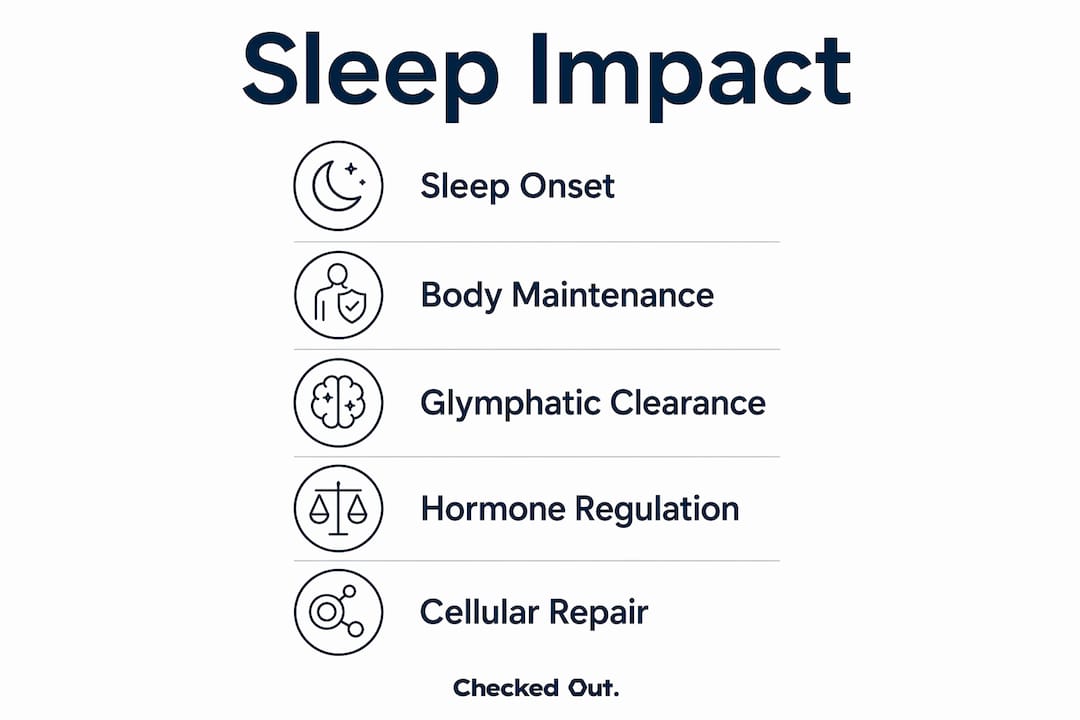
The glymphatic system, your brain’s waste clearance network, activates almost exclusively during sleep. It flushes out neurotoxic proteins, including amyloid beta and tau, that accumulate during waking hours and are linked to neurodegeneration. When you cut sleep short, this clearance process is interrupted. The proteins accumulate. The brain ages faster.
Beyond the brain, sleep governs mitochondrial repair, DNA damage correction, and immune system calibration. Mitochondria, the energy-producing structures in every cell, require sleep to repair oxidative damage. Without adequate sleep, that damage compounds nightly. The immune system uses sleep to consolidate memory of pathogens and regulate inflammatory responses. Chronic short sleep keeps inflammation chronically elevated, which accelerates aging across every organ system.
“Poor sleep and aging interact in a self-reinforcing cycle. Aging-related inflammation worsens sleep quality, and poor sleep accelerates aging through oxidative stress. Breaking this cycle requires deliberate, consistent sleep management, not just occasional good nights.”
The bidirectional nature of sleep and aging is what makes this so consequential. As you age, sleep architecture naturally degrades. You get less deep sleep. REM becomes shorter and more fragmented. If you do not actively protect sleep quality, aging accelerates the very process that was protecting you from aging faster. Circadian regularity, meaning consistent sleep and wake times, is one of the most effective but least discussed interventions for breaking this cycle.
The core biological functions sleep performs each night:
- Glymphatic clearance of neurotoxic waste proteins
- Mitochondrial repair and energy system restoration
- DNA damage correction at the cellular level
- Immune system calibration and inflammatory regulation
- Cortisol and stress hormone reset
What lifestyle factors work with sleep to extend lifespan?
Sleep does not operate in isolation. It sits inside a network of behaviors, and the research now shows that small, concurrent improvements across sleep, physical activity, and nutrition produce compounding longevity gains that no single change can match alone.
A cohort study published in The Lancet found that modest combined improvements in sleep (as little as 15–24 minutes more per night), exercise, and diet quality reduce all-cause mortality by approximately 10% and add up to 4 years of healthspan. That is a meaningful return on what are genuinely achievable changes. You do not need to overhaul your life. You need to move the needle on all three levers simultaneously.
The reason combined changes work better than isolated ones comes down to physiology. Poor sleep impairs appetite regulation00676-5/fulltext) and reduces motivation for physical activity. Better sleep makes better food choices easier and exercise more sustainable. The three behaviors reinforce each other in a way that makes the whole greater than the sum of its parts.
| Lifestyle factor |
Minimum effective change |
Longevity benefit |
| Sleep |
15–24 min more per night |
Reduced biological aging rate |
| Physical activity |
Modest daily increase |
Lower all-cause mortality |
| Nutrition |
Incremental diet quality improvement |
Extended healthspan |
| Combined (SPAN) |
All three simultaneously |
Up to 4 additional years of healthspan |
For people focused on aging reversal methods, this synergy is the most evidence-backed starting point available. Supplements and interventions get far more attention, but the SPAN framework (sleep, physical activity, nutrition) offers a feasible, low-cost strategy that large-scale cohort data actually supports.
Pro Tip: If you can only change one thing this week, go to bed 20 minutes earlier. That single shift, sustained over months, starts the cascade. Better sleep improves your food choices the next day and makes exercise feel less like a burden.
What practical steps can you take to optimize sleep for longevity?
Optimizing sleep for lifespan is not about perfection. It is about consistency and removing the friction that disrupts your natural sleep architecture night after night.
Build a sleep environment that works for your biology:
- Block all light sources. Even low-level light during sleep suppresses melatonin and fragments sleep stages. A contoured blackout sleep mask eliminates this without requiring blackout curtains.
- Keep your room cool. Core body temperature drops during sleep onset, and a cooler room supports that process.
- Eliminate noise or use consistent white or brown noise to prevent cortisol spikes from sudden sounds.
Protect your circadian rhythm above all else:
- Wake at the same time every day, including weekends. This single habit anchors your circadian clock more effectively than any supplement.
- Get natural light exposure within 30 minutes of waking. This sets your cortisol peak early and allows melatonin to rise on schedule at night.
- Avoid bright screens for 60–90 minutes before bed. Blue light delays melatonin onset and shortens total sleep time.
Support your body’s natural sleep chemistry:
- Magnesium, B6, and GABA are cofactors in the tryptophan-to-serotonin-to-melatonin conversion pathway. Most adults are deficient in at least one. Addressing these deficiencies supports your body’s own melatonin production without creating dependency.
- Limit alcohol within 3 hours of sleep. Alcohol sedates but destroys REM architecture, leaving you feeling unrested despite hours in bed.
You can find a deeper breakdown of these strategies in this sleep quality improvement list from Checkedoutwellness, which covers 10 evidence-backed techniques in practical detail.
Pro Tip: Monitor both duration and quality, not just how many hours you logged. A night of 7.5 hours with 45 minutes of deep sleep is not the same as 7.5 hours with 90 minutes of deep sleep. The architecture is where longevity lives.
Key Takeaways
Sleep duration and quality are the most underutilized longevity tools available, with optimal nightly sleep of 6.4–7.8 hours directly slowing biological aging across the brain, heart, and lungs.
| Point |
Details |
| Optimal sleep duration |
6.4–7.8 hours nightly links to the slowest rates of biological aging across organs. |
| Both extremes accelerate aging |
Sleeping under 6 or over 8 hours speeds up organ aging through distinct biological pathways. |
| Sleep quality matters as much as hours |
Fragmented deep and REM sleep blocks glymphatic clearance and mitochondrial repair. |
| Combined lifestyle changes compound gains |
Adding 15–24 minutes of sleep alongside modest diet and exercise changes reduces mortality risk by ~10%. |
| Circadian consistency is the foundation |
A fixed wake time anchors your biological clock more effectively than any single supplement or intervention. |
Why sleep is the longevity strategy most people are still sleeping on
By Geeta
I have spent years watching people obsess over supplements, biohacking protocols, and expensive interventions while sleeping 5 or 6 hours a night and wondering why nothing sticks. The honest truth is that sleep is the foundation everything else is built on, and most people treat it like a variable they can adjust based on how busy life gets.
What changed my perspective was understanding sleep architecture, not just duration. I used to think 7 hours was 7 hours. Then I started looking at the actual stages. The difference between 7 hours with adequate deep sleep and 7 hours with fragmented, shallow cycles is the difference between cellular repair and cellular debt. The body keeps score, and it collects that debt in the form of accelerated aging.
The research on the bidirectional relationship between sleep and aging is what I find most sobering. Poor sleep accelerates aging, and aging degrades sleep quality. If you do not intervene deliberately, the cycle tightens on its own. Circadian regularity, a concept that sounds almost too simple, is genuinely one of the most powerful tools we have for interrupting that cycle. Waking at the same time every day is not a wellness cliché. It is a biological anchor.
My recommendation is to treat sleep as a proactive investment, not a recovery tool. You do not sleep to recover from yesterday. You sleep to protect tomorrow. That reframe changes everything about how you prioritize it. For anyone serious about sleep and lifespan, the science is clear. The gap is in execution.
— Geeta
Sleep products designed to support your longevity goals
The science on sleep and lifespan is clear. The harder part is closing the gap between knowing and doing, especially when your sleep environment, stress levels, or travel schedule work against you.

Checkedoutwellness builds drug-free sleep tools for people who take this seriously. The natural sleep patch delivers magnesium, B6, B12, and GABA transdermally, supporting your body’s own melatonin production without synthetic hormones or dependency. Every product is manufactured in South Korea under ISO 22716 GMP pharmaceutical standards. If you want to understand the formulation behind the products, the science page breaks it down in full. These are tools built for the longevity generation, for people who know that better sleep is not a luxury. It is the work.
FAQ
What is the optimal sleep duration for longevity?
Research using UK Biobank data on 500,000 people shows that 6.4–7.8 hours of nightly sleep links to the slowest rates of biological aging across the brain, heart, and lungs. Both shorter and longer sleep durations accelerate organ aging.
Does sleep quality matter as much as sleep duration?
Sleep quality matters equally to duration. Fragmented deep and REM sleep disrupts glymphatic clearance and mitochondrial repair, the two processes most critical for slowing cellular aging, even when total hours appear adequate.
How does sleep affect longevity compared to diet and exercise?
Sleeping less than 7 hours predicts shorter life expectancy more strongly than poor diet, physical inactivity, or social isolation, and ranks second only to smoking as a lifespan predictor. Combined improvements in sleep, diet, and exercise00676-5/fulltext) reduce all-cause mortality by approximately 10%.
Why does sleeping too much also shorten lifespan?
Excessive sleep above 8 hours is typically a marker of underlying illness rather than superior recovery. Long sleep and short sleep operate through distinct biological pathways, but both produce faster biological aging and increased disease risk.
What is the most effective single change for better sleep?
Waking at the same time every day, including weekends, anchors your circadian rhythm more effectively than any supplement. Consistent wake time stabilizes cortisol patterns, supports natural melatonin onset, and improves both sleep duration and architecture over time.
Recommended

The Role of Sleep in Longevity: Your 2026 Guide
Sleep is defined as the single most powerful modifiable factor for biological aging, second only to smoking in its ability to predict how long you live. The role of sleep in longevity is no longer a wellness talking point. It is hard science. A landmark study using UK Biobank data on 500,000 people confirmed that optimal sleep of 6.4–7.8 hours nightly is directly linked to slower biological aging across the brain, heart, and lungs. Sleeping less than 7 hours predicts shorter life expectancy more strongly than poor diet, physical inactivity, or social isolation. The body keeps score quietly, and sleep is where it settles the tab.
What is the role of sleep in longevity?
The relationship between sleep and lifespan follows a U-shaped curve. Both too little and too much sleep accelerate biological aging, but for different reasons. Short and long sleep operate through distinct biological pathways, which means the risks are not simply two sides of the same coin.
Sleeping fewer than 6 hours consistently raises cortisol, increases systemic inflammation, and drives oxidative stress. These are the same mechanisms that age your cells faster. Sleeping more than 8 hours regularly is often a signal of underlying illness, not a sign of superior recovery. Excessive sleep tends to be a marker of latent disease rather than restorative rest.
Sleep quality matters as much as duration. Fragmented sleep, even within the optimal hour range, disrupts the deep and REM stages your body depends on for cellular repair. Disturbed sleep architecture blocks glymphatic clearance and mitochondrial repair, two processes that are central to slowing cellular aging.
Key signs your sleep duration may be off:
Pro Tip: Track your sleep with a wearable for two weeks before making changes. Duration alone tells you very little. Look at your deep sleep and REM percentages to understand where your recovery is actually breaking down.
How does sleep biologically impact longevity and aging?
Sleep is not passive rest. It is the body’s primary maintenance window, and what happens during those hours determines how fast or slow your organs age.
The glymphatic system, your brain’s waste clearance network, activates almost exclusively during sleep. It flushes out neurotoxic proteins, including amyloid beta and tau, that accumulate during waking hours and are linked to neurodegeneration. When you cut sleep short, this clearance process is interrupted. The proteins accumulate. The brain ages faster.
Beyond the brain, sleep governs mitochondrial repair, DNA damage correction, and immune system calibration. Mitochondria, the energy-producing structures in every cell, require sleep to repair oxidative damage. Without adequate sleep, that damage compounds nightly. The immune system uses sleep to consolidate memory of pathogens and regulate inflammatory responses. Chronic short sleep keeps inflammation chronically elevated, which accelerates aging across every organ system.
The bidirectional nature of sleep and aging is what makes this so consequential. As you age, sleep architecture naturally degrades. You get less deep sleep. REM becomes shorter and more fragmented. If you do not actively protect sleep quality, aging accelerates the very process that was protecting you from aging faster. Circadian regularity, meaning consistent sleep and wake times, is one of the most effective but least discussed interventions for breaking this cycle.
The core biological functions sleep performs each night:
What lifestyle factors work with sleep to extend lifespan?
Sleep does not operate in isolation. It sits inside a network of behaviors, and the research now shows that small, concurrent improvements across sleep, physical activity, and nutrition produce compounding longevity gains that no single change can match alone.
A cohort study published in The Lancet found that modest combined improvements in sleep (as little as 15–24 minutes more per night), exercise, and diet quality reduce all-cause mortality by approximately 10% and add up to 4 years of healthspan. That is a meaningful return on what are genuinely achievable changes. You do not need to overhaul your life. You need to move the needle on all three levers simultaneously.
The reason combined changes work better than isolated ones comes down to physiology. Poor sleep impairs appetite regulation00676-5/fulltext) and reduces motivation for physical activity. Better sleep makes better food choices easier and exercise more sustainable. The three behaviors reinforce each other in a way that makes the whole greater than the sum of its parts.
For people focused on aging reversal methods, this synergy is the most evidence-backed starting point available. Supplements and interventions get far more attention, but the SPAN framework (sleep, physical activity, nutrition) offers a feasible, low-cost strategy that large-scale cohort data actually supports.
Pro Tip: If you can only change one thing this week, go to bed 20 minutes earlier. That single shift, sustained over months, starts the cascade. Better sleep improves your food choices the next day and makes exercise feel less like a burden.
What practical steps can you take to optimize sleep for longevity?
Optimizing sleep for lifespan is not about perfection. It is about consistency and removing the friction that disrupts your natural sleep architecture night after night.
Build a sleep environment that works for your biology:
Protect your circadian rhythm above all else:
Support your body’s natural sleep chemistry:
You can find a deeper breakdown of these strategies in this sleep quality improvement list from Checkedoutwellness, which covers 10 evidence-backed techniques in practical detail.
Pro Tip: Monitor both duration and quality, not just how many hours you logged. A night of 7.5 hours with 45 minutes of deep sleep is not the same as 7.5 hours with 90 minutes of deep sleep. The architecture is where longevity lives.
Key Takeaways
Sleep duration and quality are the most underutilized longevity tools available, with optimal nightly sleep of 6.4–7.8 hours directly slowing biological aging across the brain, heart, and lungs.
Why sleep is the longevity strategy most people are still sleeping on
By Geeta
I have spent years watching people obsess over supplements, biohacking protocols, and expensive interventions while sleeping 5 or 6 hours a night and wondering why nothing sticks. The honest truth is that sleep is the foundation everything else is built on, and most people treat it like a variable they can adjust based on how busy life gets.
What changed my perspective was understanding sleep architecture, not just duration. I used to think 7 hours was 7 hours. Then I started looking at the actual stages. The difference between 7 hours with adequate deep sleep and 7 hours with fragmented, shallow cycles is the difference between cellular repair and cellular debt. The body keeps score, and it collects that debt in the form of accelerated aging.
The research on the bidirectional relationship between sleep and aging is what I find most sobering. Poor sleep accelerates aging, and aging degrades sleep quality. If you do not intervene deliberately, the cycle tightens on its own. Circadian regularity, a concept that sounds almost too simple, is genuinely one of the most powerful tools we have for interrupting that cycle. Waking at the same time every day is not a wellness cliché. It is a biological anchor.
My recommendation is to treat sleep as a proactive investment, not a recovery tool. You do not sleep to recover from yesterday. You sleep to protect tomorrow. That reframe changes everything about how you prioritize it. For anyone serious about sleep and lifespan, the science is clear. The gap is in execution.
Sleep products designed to support your longevity goals
The science on sleep and lifespan is clear. The harder part is closing the gap between knowing and doing, especially when your sleep environment, stress levels, or travel schedule work against you.
Checkedoutwellness builds drug-free sleep tools for people who take this seriously. The natural sleep patch delivers magnesium, B6, B12, and GABA transdermally, supporting your body’s own melatonin production without synthetic hormones or dependency. Every product is manufactured in South Korea under ISO 22716 GMP pharmaceutical standards. If you want to understand the formulation behind the products, the science page breaks it down in full. These are tools built for the longevity generation, for people who know that better sleep is not a luxury. It is the work.
FAQ
What is the optimal sleep duration for longevity?
Research using UK Biobank data on 500,000 people shows that 6.4–7.8 hours of nightly sleep links to the slowest rates of biological aging across the brain, heart, and lungs. Both shorter and longer sleep durations accelerate organ aging.
Does sleep quality matter as much as sleep duration?
Sleep quality matters equally to duration. Fragmented deep and REM sleep disrupts glymphatic clearance and mitochondrial repair, the two processes most critical for slowing cellular aging, even when total hours appear adequate.
How does sleep affect longevity compared to diet and exercise?
Sleeping less than 7 hours predicts shorter life expectancy more strongly than poor diet, physical inactivity, or social isolation, and ranks second only to smoking as a lifespan predictor. Combined improvements in sleep, diet, and exercise00676-5/fulltext) reduce all-cause mortality by approximately 10%.
Why does sleeping too much also shorten lifespan?
Excessive sleep above 8 hours is typically a marker of underlying illness rather than superior recovery. Long sleep and short sleep operate through distinct biological pathways, but both produce faster biological aging and increased disease risk.
What is the most effective single change for better sleep?
Waking at the same time every day, including weekends, anchors your circadian rhythm more effectively than any supplement. Consistent wake time stabilizes cortisol patterns, supports natural melatonin onset, and improves both sleep duration and architecture over time.
Recommended