Step by step sleep optimization is the systematic process of improving sleep quality and duration through evidence-based daily routines and environmental changes aligned with your body’s circadian biology. Most people treat poor sleep as a willpower problem. It is actually a systems problem. Your body has a precise internal clock, and every choice you make from the moment you wake up either supports or disrupts it. This guide covers the science-backed sleep steps that work, from morning light exposure and caffeine timing to bedroom temperature and cognitive offloading before bed.
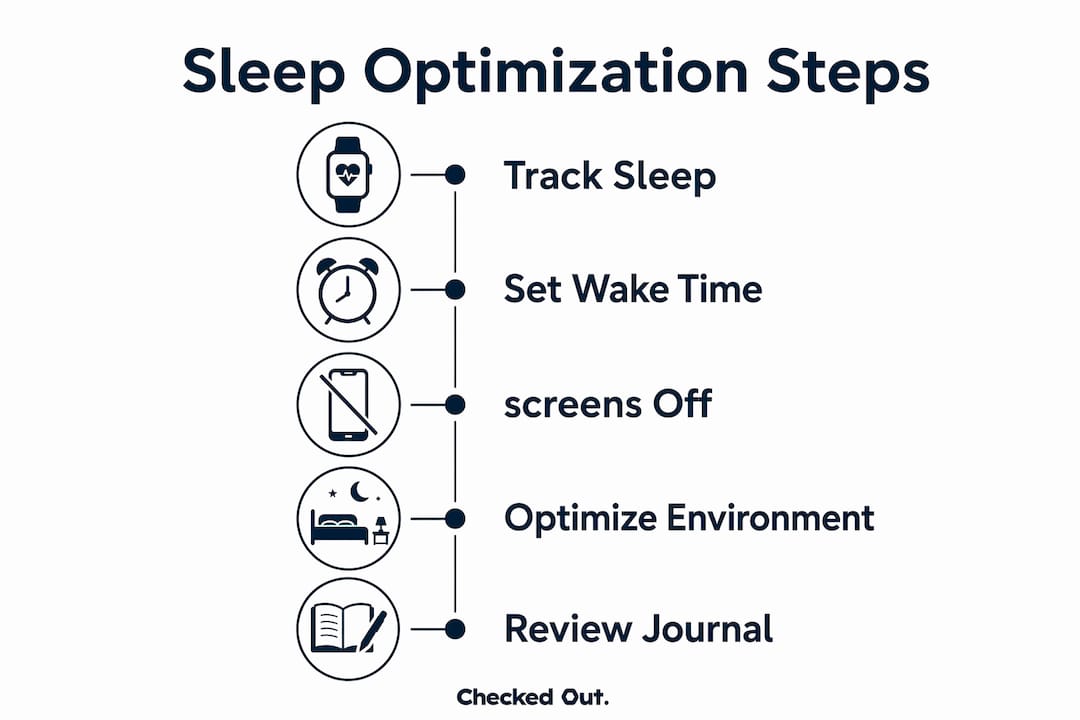
What are the foundational prerequisites for step by step sleep optimization?
Before you change a single habit, you need to understand two biological levers that control sleep. The first is your circadian rhythm, the internal 24-hour clock regulated by light, temperature, and timing cues. The second is sleep pressure, the chemical buildup of adenosine in your brain that makes you feel sleepy the longer you stay awake. Every effective sleep improvement technique works by supporting one or both of these systems.
What you need before you start
You do not need expensive technology. The tools that matter most are simple and inexpensive:
-
Sleep journal or notebook. A physical paper journal for tracking sleep times, mood, and energy. Paper matters. Pen-and-paper journaling is more effective than digital note-taking for cognitive offloading because screens activate wakeful cognitive modes that inhibit relaxation.
-
Thermometer. Your bedroom temperature directly affects how fast you fall asleep and how deeply you sleep.
-
Blackout curtains or a sleep mask. Complete darkness is non-negotiable for melatonin production.
-
A consistent alarm. Set one fixed wake time and protect it like a meeting you cannot cancel.
Wearables like fitness trackers can add useful data, but they are optional. Consistency in tracking, even with a paper log, beats sporadic data from a device you forget to charge.
Pro Tip: Start your sleep journal tonight. Write down your bedtime, wake time, and a one-word energy rating each morning. Seven days of data will show you patterns you cannot see in your head.
The most critical prerequisite is mindset. Building sleep habits incrementally, starting with one or two anchor behaviors and layering new elements over six weeks, produces measurably better results than trying to overhaul everything at once. Pick your fixed wake time first. Everything else builds from there.
What are the step-by-step daily and nightly routines to optimize sleep?
A reliable sleep quality guide works across a full 24-hour cycle, not just the hour before bed. Here is the sequence that aligns your biology with your schedule.
Morning: set your clock
-
Get outside within 30–60 minutes of waking. Spend 10–20 minutes in direct outdoor sunlight. Morning sunlight exposure anchors melatonin onset 14–16 hours later, which means a 7:00 AM walk outside sets your body up to feel genuinely sleepy around 10:00 PM. Glass windows block the blue and UV-A wavelengths your suprachiasmatic nucleus needs, so outdoor exposure is the requirement, not a suggestion.
-
Delay caffeine by 90 minutes. Adenosine, the chemical that creates sleep pressure, clears from your system in the first 90 minutes after waking. Drinking coffee immediately blunts this process and creates an afternoon energy crash. Wait until 90 minutes after waking, then enjoy your coffee.
-
Set your fixed wake time and hold it. Consistent wake and sleep times, including weekends, stabilize your internal circadian clock more than any supplement or device. Sleeping in on Saturday by two hours is the equivalent of flying two time zones east. Your Monday morning pays the price.
Afternoon: protect sleep pressure
-
Cut caffeine by 2:00 PM. Caffeine has a half-life of 5–7 hours. A 3:00 PM coffee still has half its caffeine active at 9:00 PM, reducing deep sleep quality by 15–20%. Afternoon tea, pre-workout drinks, and dark chocolate all count.
-
Avoid long naps after 3:00 PM. A 20-minute nap before 3:00 PM restores alertness without draining sleep pressure. Napping after 3:00 PM, or napping for longer than 30 minutes, bleeds the adenosine buildup your body needs to fall asleep at night.
Evening: signal the transition
-
Dim your lights 2–3 hours before bed. Blue light blocking through glasses, screen filters, or simply dimming overhead lights prevents melatonin suppression and keeps your circadian phase on track. Bright overhead lighting at 9:00 PM tells your brain it is noon.
-
Take a warm bath or shower 60–90 minutes before bed. Water at 40–43°C (104–109°F) draws blood to the skin’s surface. When you step out, your core body temperature drops rapidly. That drop in core temperature is the physiological trigger for sleep onset, reducing the time it takes to fall asleep by 8–10 minutes on average. Bathing too close to bedtime backfires because residual body heat delays the drop.
-
Do a brain dump on paper. Spend 5–15 minutes writing down every pending task, worry, or thought in a physical notebook. Cognitive offloading on paper reduces intrusive nighttime thoughts and cuts sleep latency by approximately 9 minutes. This is not journaling for reflection. It is clearing your mental RAM before shutdown.
Pro Tip: Set a “screens off” alarm 60 minutes before your target bedtime. Treat it the same way you treat a morning alarm. The wind-down is not optional.
How can you optimize your sleep environment for best restorative rest?
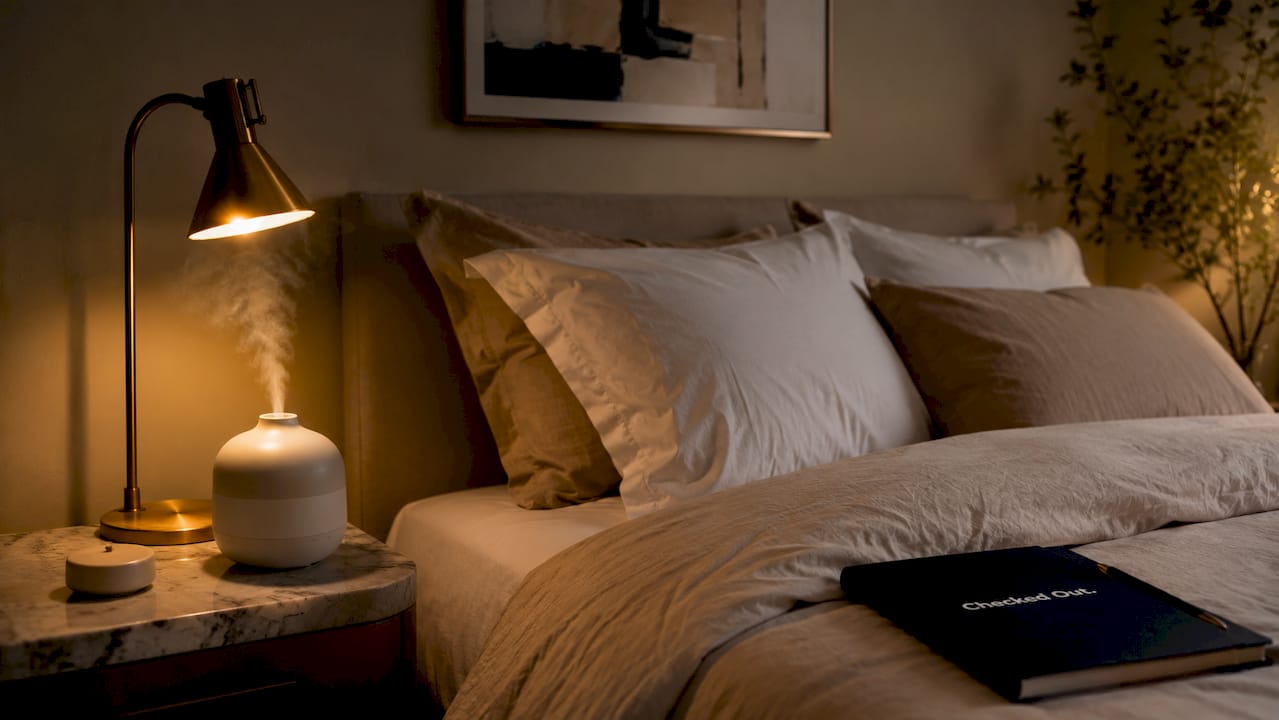
Your bedroom is the most controllable variable in your sleep quality guide. Most people underestimate how much the physical space shapes sleep architecture.
Temperature
Keep your bedroom between 65–68°F (18–20°C). Your body requires a core temperature drop of approximately 1°C to initiate sleep. Temperatures above 75°F significantly reduce deep slow-wave sleep, the most restorative phase of the sleep cycle. A programmable thermostat, a fan, or breathable bedding all help manage this.
Darkness
Complete darkness is the standard. Even small light sources, like a charging LED or a streetlight through thin curtains, suppress melatonin. The bedroom environment adjustments that matter most are:
- Blackout curtains or blackout blinds on every window
- A contoured sleep mask for travel or rooms you cannot fully control
- Tape or covers over any electronic indicator lights
- Charging phones outside the bedroom entirely
Sound
Noise disruptions fragment sleep architecture even when they do not fully wake you. White or pink noise masks environmental sounds and improves sleep continuity, particularly in urban environments or shared living situations. A simple fan, a white noise machine, or a pink noise audio track all work. Earplugs are effective but can cause discomfort for side sleepers.
Stimulus control
Use your bed only for sleep and sex. This is a core principle of Cognitive Behavioral Therapy for Insomnia (CBT-I), the gold standard clinical treatment for chronic sleep problems. When you work, scroll, or watch shows in bed, your brain stops associating the bed with sleep. The association rebuilds quickly once you enforce the boundary consistently.
What are common challenges in sleep optimization and how to troubleshoot them?
Even a well-designed sleep routine runs into friction. These are the most common barriers and how to address them directly.
-
Hidden caffeine. Many people cut coffee but miss caffeine in green tea, pre-workout supplements, energy drinks, and even some pain relievers. Read labels. The 2:00 PM cutoff applies to all caffeine sources.
-
Alcohol as a sleep aid. Alcohol feels sedating but fragments sleep in the second half of the night by suppressing REM sleep and increasing nighttime awakenings. It is not a sleep aid. It is a sleep disruptor with a delayed effect.
-
Racing thoughts at bedtime. This is the most common complaint among high performers. The brain dump technique described above addresses this directly. Writing upcoming tasks on paper closes mental loops that keep the prefrontal cortex active when it should be quieting down.
-
Weekend schedule drift. Sleeping in on weekends feels restorative but shifts your circadian phase. Limit weekend sleep-ins to no more than 30 minutes past your weekday wake time. If you are genuinely sleep-deprived, go to bed earlier rather than sleeping later.
-
Shift work and irregular schedules. Shift workers face a genuine physiological challenge. The most effective strategy is to anchor one consistent sleep block, even if the timing shifts, and use blackout curtains and white noise to protect sleep quality regardless of the hour. Behavioral health strategies that address schedule consistency can also help manage the cognitive and emotional load that comes with disrupted sleep patterns.
“When sleep problems persist despite consistent routines and environmental adjustments, the underlying cause may be a clinical sleep disorder such as sleep apnea, restless leg syndrome, or a circadian rhythm disorder. A sleep study or consultation with a board-certified sleep physician is the appropriate next step. Self-optimization has real limits, and recognizing those limits is part of a sound protocol.”
Common sleep health mistakes like inconsistent wake times and late-night screen use are fixable. Undiagnosed disorders are not.
Key Takeaways
Effective sleep optimization requires aligning your daily behaviors, bedroom environment, and wake time consistency with your body’s circadian biology before adding any supplements or devices.
| Point |
Details |
| Fix your wake time first |
A consistent wake time, held even on weekends, is the single most powerful circadian anchor. |
| Morning sunlight is non-negotiable |
Ten to twenty minutes of outdoor light within 60 minutes of waking sets melatonin onset 14–16 hours later. |
| Caffeine has a long reach |
Cut all caffeine sources by 2:00 PM to protect deep sleep quality. |
| Environment controls recovery |
Keep your bedroom at 65–68°F, fully dark, and use white or pink noise to protect sleep continuity. |
| Cognitive offloading reduces latency |
A 5–15 minute paper brain dump before bed cuts the time it takes to fall asleep by approximately 9 minutes. |
What I’ve learned from building a sleep protocol that actually sticks
The hardest part of improving sleep is not the science. The science is clear and consistent. The hard part is accepting that the changes feel boring before they feel effective.
When I first started working through a structured sleep routine, I wanted the dramatic fix. The supplement, the device, the one thing that would change everything overnight. What actually worked was embarrassingly simple: a fixed 6:30 AM wake time, 15 minutes outside before coffee, and a paper notebook on my nightstand. Three things. That was the foundation.
The cognitive offloading piece surprised me most. I was skeptical that writing a to-do list on paper would do anything meaningful for sleep. But the effect is real and fast. The brain treats unfinished tasks as open loops that demand attention. Writing them down on paper signals completion. The mind releases them. You feel it within a few nights.
What I tell people now is this: do not try to build the full protocol in week one. Start with your wake time and your morning light. Hold those for two weeks before adding anything else. Restorative sleep strategies built layer by layer stick. Overnight overhauls collapse under the weight of too much change at once.
The body keeps score quietly. Small, consistent inputs compound into genuinely different sleep quality over weeks. Trust the process long enough to see the data.
— Geeta
Natural sleep support from Checkedoutwellness

A well-built sleep routine creates the conditions your body needs to do its best work overnight. Checkedoutwellness products are designed to support that process without synthetic melatonin or dependency-forming ingredients. The natural sleep patches deliver cofactors like magnesium, B6, B12, and GABA transdermally, supporting your body’s own melatonin production pathway. The contoured blackout sleep mask creates the complete darkness your bedroom needs, whether you are at home or traveling. All products are manufactured under ISO 22716 GMP pharmaceutical standards in South Korea. Visit Checkedoutwellness to find sleep aids that fit the protocol you are building.
FAQ
What is step by step sleep optimization?
Step by step sleep optimization is the process of improving sleep quality through sequenced, evidence-based changes to daily routines and bedroom conditions. It works by aligning behavior with circadian biology rather than relying on supplements alone.
How long does it take to see results from a sleep routine?
Most people notice measurable improvements in sleep onset and morning energy within two to three weeks of holding a consistent wake time and morning light exposure. Full benefits from a layered protocol typically appear within six weeks.
What is the best time to stop drinking caffeine?
Cut all caffeine by 2:00 PM. Caffeine’s half-life of 5–7 hours means afternoon intake remains active in your system well into the night, reducing deep sleep quality by 15–20%.
Does bedroom temperature really affect sleep quality?
Yes. A bedroom above 75°F significantly reduces deep slow-wave sleep. The target range is 65–68°F, which supports the core body temperature drop of approximately 1°C that triggers sleep onset.
When should I see a doctor about sleep problems?
Seek a medical assessment if sleep problems persist after four to six weeks of consistent routine and environmental adjustments. Conditions like sleep apnea, restless leg syndrome, and circadian rhythm disorders require clinical evaluation, not lifestyle fixes alone.
Recommended

Step by Step Sleep Optimization: Your 2026 Guide
Step by step sleep optimization is the systematic process of improving sleep quality and duration through evidence-based daily routines and environmental changes aligned with your body’s circadian biology. Most people treat poor sleep as a willpower problem. It is actually a systems problem. Your body has a precise internal clock, and every choice you make from the moment you wake up either supports or disrupts it. This guide covers the science-backed sleep steps that work, from morning light exposure and caffeine timing to bedroom temperature and cognitive offloading before bed.
What are the foundational prerequisites for step by step sleep optimization?
Before you change a single habit, you need to understand two biological levers that control sleep. The first is your circadian rhythm, the internal 24-hour clock regulated by light, temperature, and timing cues. The second is sleep pressure, the chemical buildup of adenosine in your brain that makes you feel sleepy the longer you stay awake. Every effective sleep improvement technique works by supporting one or both of these systems.
What you need before you start
You do not need expensive technology. The tools that matter most are simple and inexpensive:
Wearables like fitness trackers can add useful data, but they are optional. Consistency in tracking, even with a paper log, beats sporadic data from a device you forget to charge.
Pro Tip: Start your sleep journal tonight. Write down your bedtime, wake time, and a one-word energy rating each morning. Seven days of data will show you patterns you cannot see in your head.
The most critical prerequisite is mindset. Building sleep habits incrementally, starting with one or two anchor behaviors and layering new elements over six weeks, produces measurably better results than trying to overhaul everything at once. Pick your fixed wake time first. Everything else builds from there.
What are the step-by-step daily and nightly routines to optimize sleep?
A reliable sleep quality guide works across a full 24-hour cycle, not just the hour before bed. Here is the sequence that aligns your biology with your schedule.
Morning: set your clock
Get outside within 30–60 minutes of waking. Spend 10–20 minutes in direct outdoor sunlight. Morning sunlight exposure anchors melatonin onset 14–16 hours later, which means a 7:00 AM walk outside sets your body up to feel genuinely sleepy around 10:00 PM. Glass windows block the blue and UV-A wavelengths your suprachiasmatic nucleus needs, so outdoor exposure is the requirement, not a suggestion.
Delay caffeine by 90 minutes. Adenosine, the chemical that creates sleep pressure, clears from your system in the first 90 minutes after waking. Drinking coffee immediately blunts this process and creates an afternoon energy crash. Wait until 90 minutes after waking, then enjoy your coffee.
Set your fixed wake time and hold it. Consistent wake and sleep times, including weekends, stabilize your internal circadian clock more than any supplement or device. Sleeping in on Saturday by two hours is the equivalent of flying two time zones east. Your Monday morning pays the price.
Afternoon: protect sleep pressure
Cut caffeine by 2:00 PM. Caffeine has a half-life of 5–7 hours. A 3:00 PM coffee still has half its caffeine active at 9:00 PM, reducing deep sleep quality by 15–20%. Afternoon tea, pre-workout drinks, and dark chocolate all count.
Avoid long naps after 3:00 PM. A 20-minute nap before 3:00 PM restores alertness without draining sleep pressure. Napping after 3:00 PM, or napping for longer than 30 minutes, bleeds the adenosine buildup your body needs to fall asleep at night.
Evening: signal the transition
Dim your lights 2–3 hours before bed. Blue light blocking through glasses, screen filters, or simply dimming overhead lights prevents melatonin suppression and keeps your circadian phase on track. Bright overhead lighting at 9:00 PM tells your brain it is noon.
Take a warm bath or shower 60–90 minutes before bed. Water at 40–43°C (104–109°F) draws blood to the skin’s surface. When you step out, your core body temperature drops rapidly. That drop in core temperature is the physiological trigger for sleep onset, reducing the time it takes to fall asleep by 8–10 minutes on average. Bathing too close to bedtime backfires because residual body heat delays the drop.
Do a brain dump on paper. Spend 5–15 minutes writing down every pending task, worry, or thought in a physical notebook. Cognitive offloading on paper reduces intrusive nighttime thoughts and cuts sleep latency by approximately 9 minutes. This is not journaling for reflection. It is clearing your mental RAM before shutdown.
Pro Tip: Set a “screens off” alarm 60 minutes before your target bedtime. Treat it the same way you treat a morning alarm. The wind-down is not optional.
How can you optimize your sleep environment for best restorative rest?
Your bedroom is the most controllable variable in your sleep quality guide. Most people underestimate how much the physical space shapes sleep architecture.
Temperature
Keep your bedroom between 65–68°F (18–20°C). Your body requires a core temperature drop of approximately 1°C to initiate sleep. Temperatures above 75°F significantly reduce deep slow-wave sleep, the most restorative phase of the sleep cycle. A programmable thermostat, a fan, or breathable bedding all help manage this.
Darkness
Complete darkness is the standard. Even small light sources, like a charging LED or a streetlight through thin curtains, suppress melatonin. The bedroom environment adjustments that matter most are:
Sound
Noise disruptions fragment sleep architecture even when they do not fully wake you. White or pink noise masks environmental sounds and improves sleep continuity, particularly in urban environments or shared living situations. A simple fan, a white noise machine, or a pink noise audio track all work. Earplugs are effective but can cause discomfort for side sleepers.
Stimulus control
Use your bed only for sleep and sex. This is a core principle of Cognitive Behavioral Therapy for Insomnia (CBT-I), the gold standard clinical treatment for chronic sleep problems. When you work, scroll, or watch shows in bed, your brain stops associating the bed with sleep. The association rebuilds quickly once you enforce the boundary consistently.
What are common challenges in sleep optimization and how to troubleshoot them?
Even a well-designed sleep routine runs into friction. These are the most common barriers and how to address them directly.
Hidden caffeine. Many people cut coffee but miss caffeine in green tea, pre-workout supplements, energy drinks, and even some pain relievers. Read labels. The 2:00 PM cutoff applies to all caffeine sources.
Alcohol as a sleep aid. Alcohol feels sedating but fragments sleep in the second half of the night by suppressing REM sleep and increasing nighttime awakenings. It is not a sleep aid. It is a sleep disruptor with a delayed effect.
Racing thoughts at bedtime. This is the most common complaint among high performers. The brain dump technique described above addresses this directly. Writing upcoming tasks on paper closes mental loops that keep the prefrontal cortex active when it should be quieting down.
Weekend schedule drift. Sleeping in on weekends feels restorative but shifts your circadian phase. Limit weekend sleep-ins to no more than 30 minutes past your weekday wake time. If you are genuinely sleep-deprived, go to bed earlier rather than sleeping later.
Shift work and irregular schedules. Shift workers face a genuine physiological challenge. The most effective strategy is to anchor one consistent sleep block, even if the timing shifts, and use blackout curtains and white noise to protect sleep quality regardless of the hour. Behavioral health strategies that address schedule consistency can also help manage the cognitive and emotional load that comes with disrupted sleep patterns.
Common sleep health mistakes like inconsistent wake times and late-night screen use are fixable. Undiagnosed disorders are not.
Key Takeaways
Effective sleep optimization requires aligning your daily behaviors, bedroom environment, and wake time consistency with your body’s circadian biology before adding any supplements or devices.
What I’ve learned from building a sleep protocol that actually sticks
The hardest part of improving sleep is not the science. The science is clear and consistent. The hard part is accepting that the changes feel boring before they feel effective.
When I first started working through a structured sleep routine, I wanted the dramatic fix. The supplement, the device, the one thing that would change everything overnight. What actually worked was embarrassingly simple: a fixed 6:30 AM wake time, 15 minutes outside before coffee, and a paper notebook on my nightstand. Three things. That was the foundation.
The cognitive offloading piece surprised me most. I was skeptical that writing a to-do list on paper would do anything meaningful for sleep. But the effect is real and fast. The brain treats unfinished tasks as open loops that demand attention. Writing them down on paper signals completion. The mind releases them. You feel it within a few nights.
What I tell people now is this: do not try to build the full protocol in week one. Start with your wake time and your morning light. Hold those for two weeks before adding anything else. Restorative sleep strategies built layer by layer stick. Overnight overhauls collapse under the weight of too much change at once.
The body keeps score quietly. Small, consistent inputs compound into genuinely different sleep quality over weeks. Trust the process long enough to see the data.
Natural sleep support from Checkedoutwellness
A well-built sleep routine creates the conditions your body needs to do its best work overnight. Checkedoutwellness products are designed to support that process without synthetic melatonin or dependency-forming ingredients. The natural sleep patches deliver cofactors like magnesium, B6, B12, and GABA transdermally, supporting your body’s own melatonin production pathway. The contoured blackout sleep mask creates the complete darkness your bedroom needs, whether you are at home or traveling. All products are manufactured under ISO 22716 GMP pharmaceutical standards in South Korea. Visit Checkedoutwellness to find sleep aids that fit the protocol you are building.
FAQ
What is step by step sleep optimization?
Step by step sleep optimization is the process of improving sleep quality through sequenced, evidence-based changes to daily routines and bedroom conditions. It works by aligning behavior with circadian biology rather than relying on supplements alone.
How long does it take to see results from a sleep routine?
Most people notice measurable improvements in sleep onset and morning energy within two to three weeks of holding a consistent wake time and morning light exposure. Full benefits from a layered protocol typically appear within six weeks.
What is the best time to stop drinking caffeine?
Cut all caffeine by 2:00 PM. Caffeine’s half-life of 5–7 hours means afternoon intake remains active in your system well into the night, reducing deep sleep quality by 15–20%.
Does bedroom temperature really affect sleep quality?
Yes. A bedroom above 75°F significantly reduces deep slow-wave sleep. The target range is 65–68°F, which supports the core body temperature drop of approximately 1°C that triggers sleep onset.
When should I see a doctor about sleep problems?
Seek a medical assessment if sleep problems persist after four to six weeks of consistent routine and environmental adjustments. Conditions like sleep apnea, restless leg syndrome, and circadian rhythm disorders require clinical evaluation, not lifestyle fixes alone.
Recommended