Mouth tape is not a proven treatment for dry mouth during sleep, and for many people it carries real risks that outweigh the potential benefit. The Cleveland Clinic is direct about this: mouth taping is not a routine medical therapy, and it can be dangerous for anyone with undiagnosed sleep apnea or nasal obstruction. A systematic review of 10 studies involving 213 patients found mixed, limited results across heterogeneous trials. Some people reported modest improvements in certain measures; others showed no benefit at all.
That said, a narrow group may see some relief. Here is a quick self-screen:
-
May see some benefit: Confirmed nasal breathers, people with mild snoring and no sleep apnea, CPAP users with mouth leak (under clinician guidance only)
-
Should avoid it entirely: Anyone with known or suspected obstructive sleep apnea, significant nasal congestion, cardiovascular or respiratory conditions, children, or anyone who has had recent facial surgery
Pro Tip: If you decide to try mouth tape before speaking with a clinician, start with a small strip placed vertically at the center of your lips, not a full seal. Practice for 10 minutes while awake first.
Key Takeaways
Mouth tape is not a proven dry mouth remedy and carries real risks, but for screened, nasal-breathing adults, a medical-grade hydrocolloid strip used carefully is a lower-risk option than improvised alternatives.
| Point |
Details |
| Evidence is limited |
A systematic review of 10 studies and 213 patients found mixed, mostly inconclusive results for dry mouth and snoring relief. |
| Screening is non-negotiable |
Anyone with suspected sleep apnea, nasal obstruction, or cardiovascular conditions should not use mouth tape without clinician clearance. |
| Safer alternatives exist first |
Hydration (8–12 cups/day), a room humidifier, xylitol gum, and saliva substitutes carry far less risk and stronger evidence. |
| CPAP users have a specific use case |
A 2025 crossover study found oral occlusion increased nightly CPAP use by 51.8 minutes, but only under clinical supervision. |
| Checkedoutwellness option |
The brand’s peptide-infused hydrocolloid mouth tape is manufactured to ISO 22716 GMP standards and designed for gentle overnight skin contact. |
Table of Contents
What mouth taping is and how people do it
Mouth taping, or oral occlusion, means placing adhesive tape over the lips before sleep to keep the mouth closed and encourage breathing through the nose. The intended mechanism is straightforward: nasal passages warm, filter, and humidify incoming air. When you breathe through your mouth instead, that air arrives cold and dry, pulling moisture from the soft tissues of the throat and palate. Taping the lips shut is meant to redirect airflow through the nose and reduce that evaporative drying.
Common materials range from purpose-made hydrocolloid strips and medical-grade hypoallergenic tape to chin straps and fabric athletic tape. Tape selection matters more than most people realize. Generic cloth tape or duct tape can cause skin tears, allergic reactions, and significant discomfort on removal, especially with repeated nightly use.
The practice has spread far beyond clinical settings, driven largely by social media. People try it for:
- Reducing snoring and morning dry mouth
- Improving sleep quality and nasal breathing habits
- As an adjunct to CPAP therapy for mouth leak
- General wellness trends promoted on platforms like TikTok and Instagram
That last driver is worth pausing on. Sleep medicine specialists note that social media adoption has outrun the evidence by a wide margin, and most studies that do show benefit specifically excluded participants with nasal obstruction, precisely because of safety concerns.
What the research actually says about mouth tape and dry mouth
The honest answer is that the evidence is thin, mixed, and not yet strong enough to support a general recommendation. The systematic review published on PMC included 10 studies with a combined 213 patients. A few of those studies reported modest reductions in apnea-hypopnea index (AHI) scores or snoring frequency. Most showed no statistically meaningful benefit. None were large enough to draw firm conclusions, and the populations, tape types, and outcome measures varied too much to pool cleanly.
Key finding: Across 10 studies and 213 patients, results were heterogeneous. Only a handful reported significant AHI reductions, and potential harm was identified in participants where nasal obstruction was present.
Clinical experts reviewing the evidence consistently describe the overall quality as low. Professional sleep physicians do not recommend mouth taping as a routine practice, partly because it can worsen breathing in some people and partly because it may mask symptoms of obstructive sleep apnea, delaying a diagnosis that genuinely matters for long-term health.
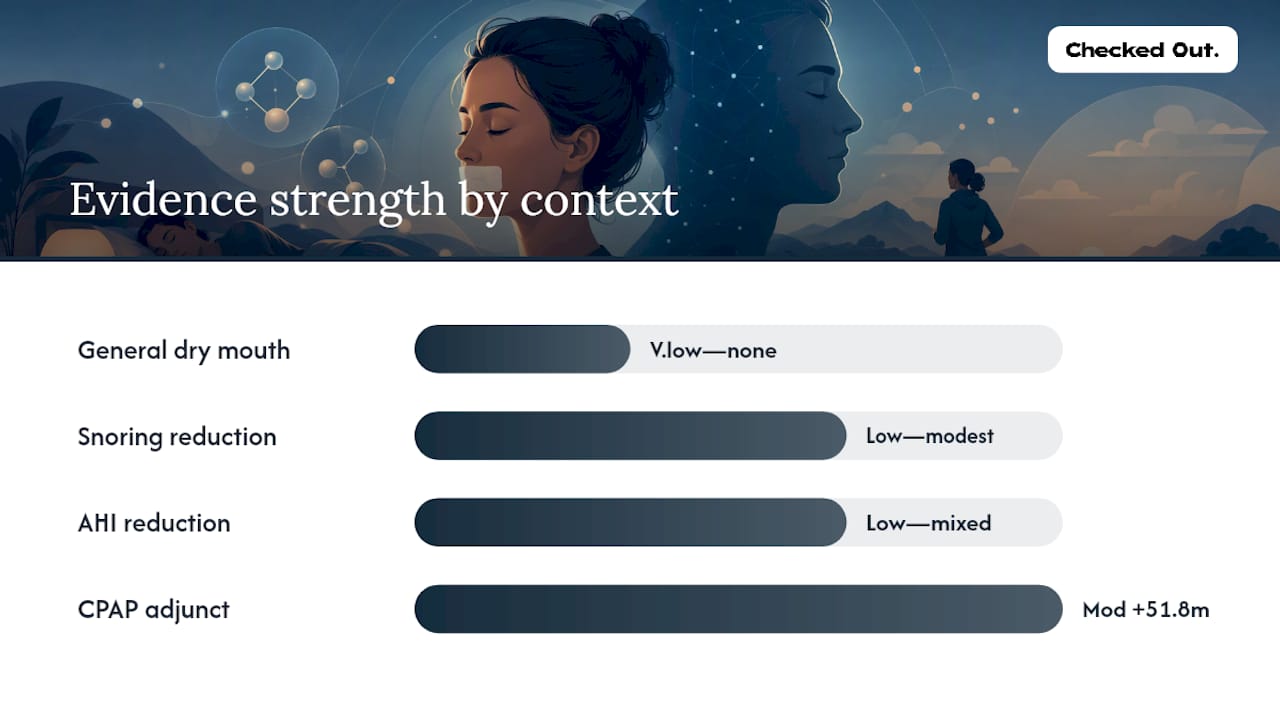
One context where a clearer signal exists: CPAP users with persistent mouth leak. A 2025 crossover study found that adding oral occlusion to CPAP therapy increased nightly CPAP usage by an average of 51.8 minutes and reduced mouth and throat dryness compared with CPAP alone. That is a targeted, supervised clinical use case, not a general consumer recommendation.
| Context |
Evidence strength |
Direction of effect |
| General dry mouth relief |
Very low |
Mixed, mostly no benefit |
| Snoring reduction |
Low |
Some modest improvement in select studies |
| AHI reduction (sleep apnea) |
Low |
Inconsistent; potential harm if nasal obstruction present |
| CPAP adjunct for mouth leak |
Moderate (single 2025 crossover study) |
Meaningful increase in CPAP adherence and reduced dryness |
Who should not use mouth tape and why
The risks are real and specific. Before you reach for any tape, run through this list honestly.
Concrete risks include:
- Breathing difficulty if nasal passages are partially or fully blocked
- Worsened oxygen desaturation in people with undiagnosed sleep apnea
- Skin irritation, allergic reaction, or tearing on removal with non-medical-grade adhesives
- Anxiety, claustrophobia, or sleep disruption from the sensation of mouth occlusion
- Aspiration or regurgitation risk in people with acid reflux or swallowing difficulties
Clear contraindications:
- Known or suspected obstructive sleep apnea (OSA) without clinician clearance
- Significant nasal obstruction from a deviated septum, polyps, or chronic congestion
- Children under 18
- People with cardiovascular or respiratory conditions that affect nighttime breathing
- Anyone who has had recent oral, nasal, or facial surgery
The deeper concern is the masking effect. Sleep specialists warn that mouth breathing at night is sometimes the body’s compensatory response to a partially obstructed upper airway. Taping the mouth shut removes that backup. For someone with undiagnosed OSA, that can mean longer apnea events and lower blood oxygen levels through the night. The body keeps score quietly, and the consequences of delayed OSA diagnosis extend well beyond dry mouth.
Red flags that warrant medical evaluation before any experiment:
- Loud, persistent snoring reported by a partner
- Waking with choking or gasping
- Excessive daytime sleepiness despite adequate sleep time
- Recurrent morning headaches
- Frequent nighttime urination
How to try mouth taping more safely if you still want to
If you have cleared the contraindications above, spoken with your doctor, and still want to test this, a stepwise approach reduces risk considerably.
-
Check nasal patency first. Close your mouth, breathe only through your nose for two full minutes while sitting upright. If that is uncomfortable or impossible, your nasal airway is not clear enough for overnight taping.
-
Practice while awake. Apply a small strip to the center of your lips and breathe normally through your nose for 10 minutes during the day. If you feel anxious or restricted, that response will be amplified at night.
-
Choose the right material. Medical-grade, hypoallergenic, hydrocolloid-based strips are better tolerated than cloth or athletic tape. Look for dermatologist-tested labeling. Checkedoutwellness’s hydrocolloid mouth tape is designed specifically for overnight skin contact and gentle removal.
-
Use a small center strip, not a full seal. Place a vertical strip at the center of the lips. This encourages nasal breathing without fully occluding the mouth if you need to open it quickly.
-
Sleep on your side, not your back. Back sleeping increases the risk of airway collapse and makes any breathing restriction more consequential.
-
Tell someone. If you live with a partner, let them know you are testing this so they can alert you if anything seems wrong.
-
Stop immediately if you feel distress. Waking with anxiety, shortness of breath, or a sense of suffocation is a signal to stop, not push through.
Pro Tip: CPAP users considering mouth tape to address mouth leak should get explicit clinician approval first. The 2025 crossover study showing improved adherence was conducted under clinical supervision — the benefit is real, but so is the need for proper setup and monitoring.
Safer, evidence-based alternatives for dry mouth at night
Mouth taping is one of the riskier options on the dry mouth remedies list. These alternatives carry far less risk and most have stronger evidence behind them.
Hydration and environment:
- Drink 8–12 cups of water daily, per MedlinePlus guidance, and keep a glass of water on your nightstand
- Run a cool-mist or ultrasonic humidifier in your bedroom to raise ambient humidity
- Use a saline nasal rinse before bed to clear nasal passages and encourage nasal breathing naturally
Oral care and salivary stimulation:
- Chew sugar-free gum containing xylitol during the day to stimulate saliva production
- Use alcohol-free oral rinses rather than standard mouthwash, which dries tissues
- Apply an over-the-counter saliva substitute gel or spray at bedtime (products like Biotène Oral Balance Gel or similar formulations)
- Avoid alcohol and tobacco, both of which suppress salivary flow
Medication and medical review:
- Ask your clinician to review your current medications. Antihistamines, diuretics, antidepressants, and blood pressure medications are among the most common causes of drug-induced xerostomia. The NIDCR notes that dry mouth frequently stems from medications or underlying conditions that a clinician can address directly.
- If dryness is severe and persistent, ask about prescription saliva stimulants such as pilocarpine or cevimeline, which are appropriate for specific diagnoses like Sjögren’s syndrome.
For CPAP users specifically:
- Add a heated humidifier to your CPAP circuit
- Check mask fit; a poorly sealed mask forces mouth breathing as a compensatory response
- Consider a full-face mask if mouth leak persists despite adjustments
Mayo Clinic guidance reinforces that these conservative measures are the appropriate first line before any more invasive or experimental approach.
When dry mouth at night means it’s time to see a clinician
Persistent dry mouth is not always a breathing mechanics problem. Sometimes the body is telling you something more specific.
See a clinician if you experience:
- Dry mouth that persists despite adequate hydration and humidifier use
- Recurrent oral infections, mouth sores, or difficulty swallowing
- Loud snoring or gasping reported by a bed partner
- Waking unrefreshed despite 7–9 hours of sleep
- Significant daytime fatigue or difficulty concentrating
Which specialist fits which symptom:
-
Primary care physician: First stop for medication review and to rule out systemic causes like diabetes or autoimmune conditions
-
Dentist: Salivary flow testing, oral health assessment, and topical treatments for xerostomia
-
ENT (otolaryngologist): Nasal obstruction, deviated septum, polyps, or structural airway issues
-
Sleep medicine specialist: Snoring, gasping, daytime sleepiness, or any suspicion of obstructive sleep apnea
A polysomnogram (overnight sleep study) is the gold standard for diagnosing OSA. If your symptoms include snoring plus daytime fatigue plus morning dry mouth, that combination warrants a referral before you experiment with any form of oral occlusion. Conservative measures like hydration, humidifiers, and nasal rinses are reasonable to try first for isolated dry mouth with no other red flags.
This article provides general information and is not a substitute for professional medical advice. Consult your clinician for guidance specific to your health history.
A candid perspective on mouth tape and dry mouth
The gap between what mouth taping promises on social media and what the clinical evidence actually supports is wider than most people realize.
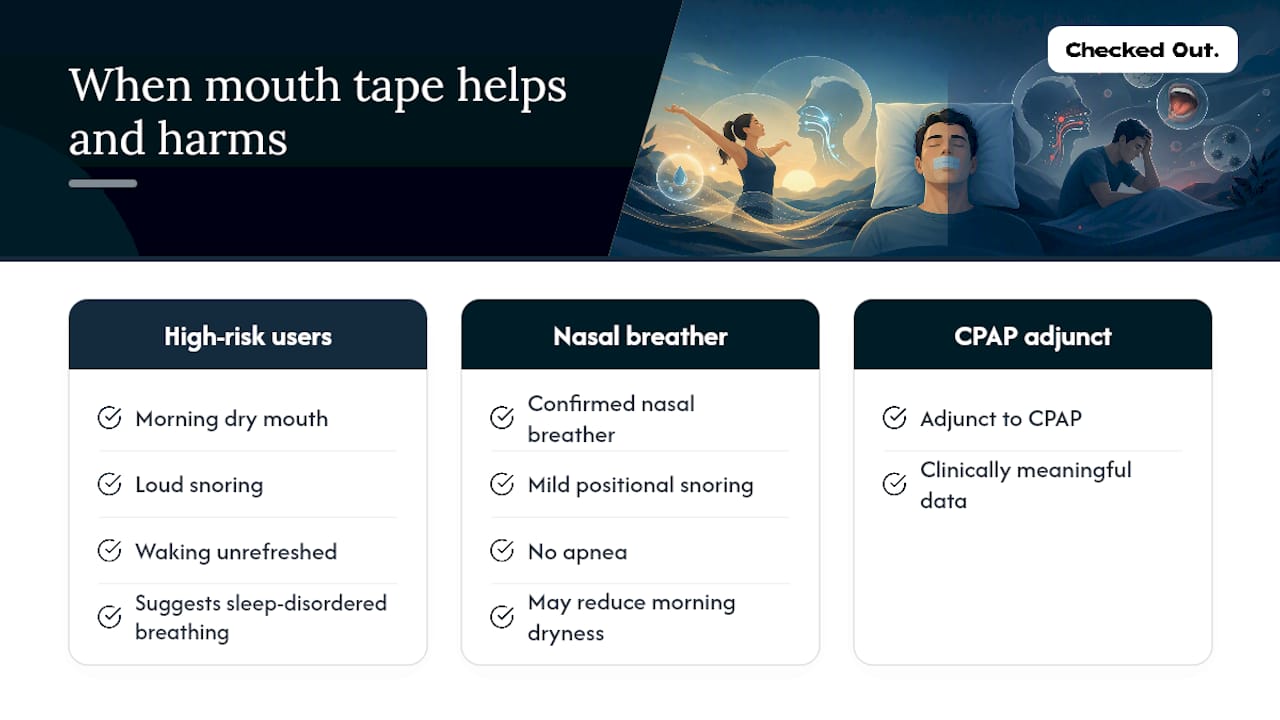
Here is what I think gets missed in most of the content out there: the people most likely to reach for mouth tape as a dry mouth remedy are often the same people who most need a sleep study first. Morning dry mouth, loud snoring, and waking unrefreshed are a triad that points toward sleep-disordered breathing, not a simple nasal breathing habit. Taping the mouth shut in that scenario does not fix the problem. It removes a safety valve.
That said, dismissing mouth taping entirely misses the nuance. For a confirmed nasal breather with mild, positional snoring and no apnea, a well-chosen medical-grade strip may genuinely reduce morning dryness. The CPAP adjunct data is also real and clinically meaningful. The issue is that most people trying this at home have not done the screening that makes it safe.
What I find genuinely encouraging is the direction the conversation is moving. More sleep specialists are talking about nasal breathing as a foundational health behavior, not a wellness trend. The tools are getting better. Hydrocolloid technology, dermatology-grade adhesives, and purpose-built strips designed for overnight skin contact represent a real improvement over the DIY tape experiments that generated most of the early safety concerns. Choosing the right product, doing the right screening, and pairing tape with solid sleep hygiene fundamentals is a very different proposition from blindly following a viral video.
The body deserves better than a shortcut. And sometimes the most empowering thing you can do is slow down, get the evaluation, and build the habit correctly.
Checkedoutwellness mouth tape: a transparent look at what it offers
If you have done the screening, confirmed nasal patency, and want a product built for overnight use rather than improvised from whatever is in the medicine cabinet, Checkedoutwellness’s hydrocolloid mouth tape is worth considering.
The tape is formulated with peptide-infused hydrocolloid technology, the same material used in dermatology-grade wound dressings, which means it stays in place overnight without aggressive adhesion and removes gently without tearing skin. It is manufactured in South Korea under ISO 22716 GMP pharmaceutical standards, the same framework applied to cosmetic and medical-grade skincare. The design encourages nasal breathing while also supporting lip hydration, which addresses one of the most common complaints about cheaper alternatives: the dry, cracked lips that come from a night of adhesive contact.
Checkedoutwellness is transparent about what this product is and is not. It is a sleep-support tool, not a medical device, and it works best as part of a broader sleep health approach that includes good sleep hygiene, hydration, and, where relevant, clinician guidance. If you want to understand the manufacturing standards and ingredient rationale behind the product, the brand’s science page lays it out plainly. Start with the safety checklist in this article, then decide if this fits your situation.
Sources
These sources informed the guidance in this article. Each is freely accessible and worth reading if you want to go deeper before speaking with your clinician.
Consult your primary care physician, dentist, or sleep specialist for advice tailored to your specific health history before starting any new sleep intervention.
Recommended

Mouth Tape for Dry Mouth: Is It Safe?
Mouth tape is not a proven treatment for dry mouth during sleep, and for many people it carries real risks that outweigh the potential benefit. The Cleveland Clinic is direct about this: mouth taping is not a routine medical therapy, and it can be dangerous for anyone with undiagnosed sleep apnea or nasal obstruction. A systematic review of 10 studies involving 213 patients found mixed, limited results across heterogeneous trials. Some people reported modest improvements in certain measures; others showed no benefit at all.
That said, a narrow group may see some relief. Here is a quick self-screen:
Pro Tip: If you decide to try mouth tape before speaking with a clinician, start with a small strip placed vertically at the center of your lips, not a full seal. Practice for 10 minutes while awake first.
Key Takeaways
Mouth tape is not a proven dry mouth remedy and carries real risks, but for screened, nasal-breathing adults, a medical-grade hydrocolloid strip used carefully is a lower-risk option than improvised alternatives.
Table of Contents
What mouth taping is and how people do it
Mouth taping, or oral occlusion, means placing adhesive tape over the lips before sleep to keep the mouth closed and encourage breathing through the nose. The intended mechanism is straightforward: nasal passages warm, filter, and humidify incoming air. When you breathe through your mouth instead, that air arrives cold and dry, pulling moisture from the soft tissues of the throat and palate. Taping the lips shut is meant to redirect airflow through the nose and reduce that evaporative drying.
Common materials range from purpose-made hydrocolloid strips and medical-grade hypoallergenic tape to chin straps and fabric athletic tape. Tape selection matters more than most people realize. Generic cloth tape or duct tape can cause skin tears, allergic reactions, and significant discomfort on removal, especially with repeated nightly use.
The practice has spread far beyond clinical settings, driven largely by social media. People try it for:
That last driver is worth pausing on. Sleep medicine specialists note that social media adoption has outrun the evidence by a wide margin, and most studies that do show benefit specifically excluded participants with nasal obstruction, precisely because of safety concerns.
What the research actually says about mouth tape and dry mouth
The honest answer is that the evidence is thin, mixed, and not yet strong enough to support a general recommendation. The systematic review published on PMC included 10 studies with a combined 213 patients. A few of those studies reported modest reductions in apnea-hypopnea index (AHI) scores or snoring frequency. Most showed no statistically meaningful benefit. None were large enough to draw firm conclusions, and the populations, tape types, and outcome measures varied too much to pool cleanly.
Clinical experts reviewing the evidence consistently describe the overall quality as low. Professional sleep physicians do not recommend mouth taping as a routine practice, partly because it can worsen breathing in some people and partly because it may mask symptoms of obstructive sleep apnea, delaying a diagnosis that genuinely matters for long-term health.
One context where a clearer signal exists: CPAP users with persistent mouth leak. A 2025 crossover study found that adding oral occlusion to CPAP therapy increased nightly CPAP usage by an average of 51.8 minutes and reduced mouth and throat dryness compared with CPAP alone. That is a targeted, supervised clinical use case, not a general consumer recommendation.
Who should not use mouth tape and why
The risks are real and specific. Before you reach for any tape, run through this list honestly.
Concrete risks include:
Clear contraindications:
The deeper concern is the masking effect. Sleep specialists warn that mouth breathing at night is sometimes the body’s compensatory response to a partially obstructed upper airway. Taping the mouth shut removes that backup. For someone with undiagnosed OSA, that can mean longer apnea events and lower blood oxygen levels through the night. The body keeps score quietly, and the consequences of delayed OSA diagnosis extend well beyond dry mouth.
Red flags that warrant medical evaluation before any experiment:
How to try mouth taping more safely if you still want to
If you have cleared the contraindications above, spoken with your doctor, and still want to test this, a stepwise approach reduces risk considerably.
Pro Tip: CPAP users considering mouth tape to address mouth leak should get explicit clinician approval first. The 2025 crossover study showing improved adherence was conducted under clinical supervision — the benefit is real, but so is the need for proper setup and monitoring.
Safer, evidence-based alternatives for dry mouth at night
Mouth taping is one of the riskier options on the dry mouth remedies list. These alternatives carry far less risk and most have stronger evidence behind them.
Hydration and environment:
Oral care and salivary stimulation:
Medication and medical review:
For CPAP users specifically:
Mayo Clinic guidance reinforces that these conservative measures are the appropriate first line before any more invasive or experimental approach.
When dry mouth at night means it’s time to see a clinician
Persistent dry mouth is not always a breathing mechanics problem. Sometimes the body is telling you something more specific.
See a clinician if you experience:
Which specialist fits which symptom:
A polysomnogram (overnight sleep study) is the gold standard for diagnosing OSA. If your symptoms include snoring plus daytime fatigue plus morning dry mouth, that combination warrants a referral before you experiment with any form of oral occlusion. Conservative measures like hydration, humidifiers, and nasal rinses are reasonable to try first for isolated dry mouth with no other red flags.
This article provides general information and is not a substitute for professional medical advice. Consult your clinician for guidance specific to your health history.
A candid perspective on mouth tape and dry mouth
The gap between what mouth taping promises on social media and what the clinical evidence actually supports is wider than most people realize.
Here is what I think gets missed in most of the content out there: the people most likely to reach for mouth tape as a dry mouth remedy are often the same people who most need a sleep study first. Morning dry mouth, loud snoring, and waking unrefreshed are a triad that points toward sleep-disordered breathing, not a simple nasal breathing habit. Taping the mouth shut in that scenario does not fix the problem. It removes a safety valve.
That said, dismissing mouth taping entirely misses the nuance. For a confirmed nasal breather with mild, positional snoring and no apnea, a well-chosen medical-grade strip may genuinely reduce morning dryness. The CPAP adjunct data is also real and clinically meaningful. The issue is that most people trying this at home have not done the screening that makes it safe.
What I find genuinely encouraging is the direction the conversation is moving. More sleep specialists are talking about nasal breathing as a foundational health behavior, not a wellness trend. The tools are getting better. Hydrocolloid technology, dermatology-grade adhesives, and purpose-built strips designed for overnight skin contact represent a real improvement over the DIY tape experiments that generated most of the early safety concerns. Choosing the right product, doing the right screening, and pairing tape with solid sleep hygiene fundamentals is a very different proposition from blindly following a viral video.
The body deserves better than a shortcut. And sometimes the most empowering thing you can do is slow down, get the evaluation, and build the habit correctly.
Checkedoutwellness mouth tape: a transparent look at what it offers
If you have done the screening, confirmed nasal patency, and want a product built for overnight use rather than improvised from whatever is in the medicine cabinet, Checkedoutwellness’s hydrocolloid mouth tape is worth considering.
The tape is formulated with peptide-infused hydrocolloid technology, the same material used in dermatology-grade wound dressings, which means it stays in place overnight without aggressive adhesion and removes gently without tearing skin. It is manufactured in South Korea under ISO 22716 GMP pharmaceutical standards, the same framework applied to cosmetic and medical-grade skincare. The design encourages nasal breathing while also supporting lip hydration, which addresses one of the most common complaints about cheaper alternatives: the dry, cracked lips that come from a night of adhesive contact.
Checkedoutwellness is transparent about what this product is and is not. It is a sleep-support tool, not a medical device, and it works best as part of a broader sleep health approach that includes good sleep hygiene, hydration, and, where relevant, clinician guidance. If you want to understand the manufacturing standards and ingredient rationale behind the product, the brand’s science page lays it out plainly. Start with the safety checklist in this article, then decide if this fits your situation.
Sources
These sources informed the guidance in this article. Each is freely accessible and worth reading if you want to go deeper before speaking with your clinician.
Consult your primary care physician, dentist, or sleep specialist for advice tailored to your specific health history before starting any new sleep intervention.
Recommended