You can prevent or sharply reduce jet lag without melatonin by sequencing four things in order: timed light exposure, gradual pre-trip sleep shifts, disciplined in-flight sleep hygiene, and a structured 72-hour anchor routine after landing. None of it requires a supplement. It requires timing, and a few tools that make the timing easier to hold, like a light-blocking sleep mask or a drug-free sleep patch that supports natural sleep processes.
TL;DR:
- Starting small, incremental schedule shifts and timed light exposure before departure significantly improve jet lag recovery for most travelers.
- In-flight sleep should be aligned with destination nighttime, using blackout masks, earplugs, and nasal breathing aids to optimize rest.
- Exposure to morning light upon arrival accelerates circadian re-entrainment, especially when landing in the morning, while avoiding bright light at night is crucial for evening arrivals.
- Most adjustments take about one day per time zone crossed, with eastward trips usually requiring more adjustment time than westward ones.
- Timing and consistency of light, meals, and sleep cues outweigh reliance on supplements or products, which only serve as supportive tools.
Checkedoutwellness
Support Better Sleep While Traveling
Explore drug-free sleep products designed to support natural sleep processes during travel and disrupted routines.
Table of Contents
What Is a Pre-Trip Routine to Reset Your Body Clock?
Your circadian clock doesn’t like sudden change. It likes rehearsal. Clinical guidance from Harvard Health recommends nudging bedtime and mealtimes by a small amount each day, starting a few days before departure, so your internal clock is already partway to destination time when you board.
The direction of the shift depends on where you’re headed. Flying east means your day gets shorter, so you go to bed and wake up earlier each day. Flying west stretches your day, so you push bedtime and wake time later. Johns Hopkins Medicine recommends the same a small daily increment starting several days before travel, as a simple rule most travelers can actually stick to.
Light is the lever that makes the shift stick. For eastward travel, seek bright light in the morning and dim your evenings early. For westward travel, flip it: seek evening light and avoid bright morning light for the first few days. If outdoor light isn’t available at the right hour, a light box can substitute, though morning sun still works faster than almost anything indoors.
A few habits make the shift smoother:
- Move dinner and your last caffeine intake earlier or later along with your new sleep window, not on the old schedule.
- Cut caffeine several hours before your new target bedtime.
- Exercise earlier in the day if you’re shifting bedtime earlier, later in the day if you’re shifting it back.
- Sleep in full darkness during the shift window, even at home, so your body registers a real “night.”
Pro Tip: Start wearing your blackout sleep mask during the pre-trip shift, not just on the plane. If your bedroom has any light leak, a contoured mask makes the artificial “night” you’re creating actually convincing to your brain. Some travelers also apply a transdermal sleep patch the night before departure, simply to support a normal wind-down while everything else is in flux.
How Do You Manage Sleep and Hydration During the Flight?
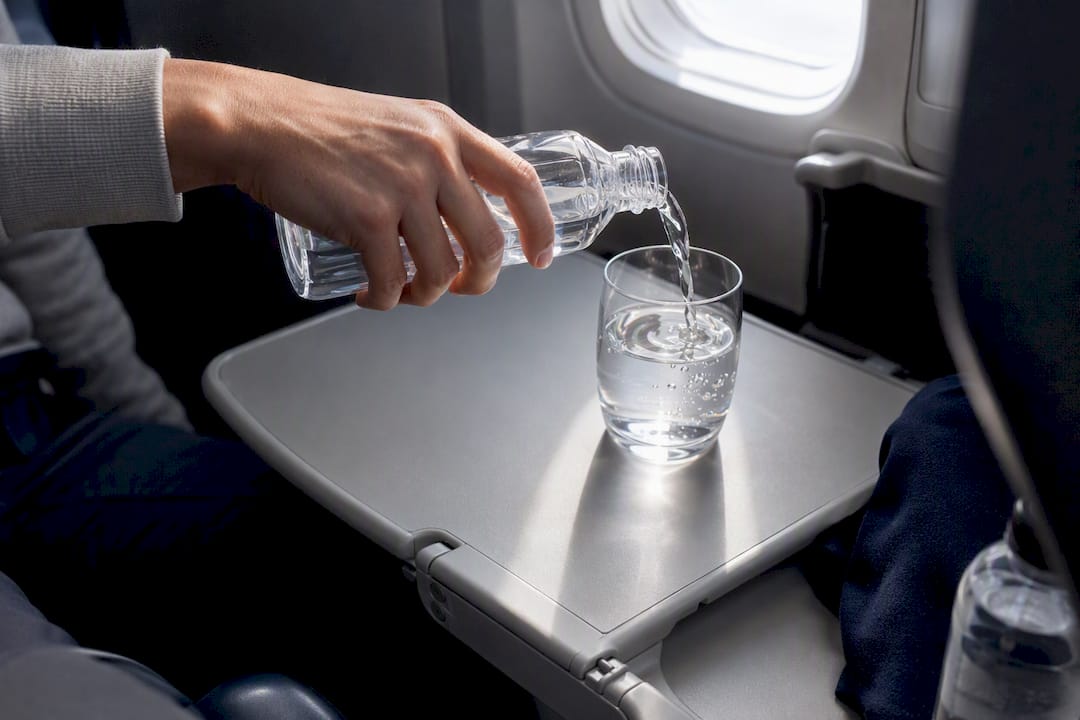
Cabin air is dry, and alcohol makes it worse, so choosing from healthy morning drinks can help maintain hydration and calm focus during travel. Harvard’s travel guidance is blunt about it: hydrate consistently and go easy on alcohol, because dehydration on top of a shifted schedule fragments sleep further. Caffeine deserves the same caution. Skip it within about six hours of whenever you plan to sleep on the plane, even if that’s the middle of the afternoon by your home clock.
Time your in-flight sleep to destination night whenever the flight schedule allows it, not to how tired you feel by your old clock. If you’re landing in daylight and need to stay upright, a short nap of 20 to 30 minutes can hold off exhaustion without leaving you groggy or eating into the sleep pressure you’ll need that first destination night.
The environment matters as much as the timing:
- A blackout mask blocks cabin lighting and the glow from neighboring screens.
- Earplugs or noise-canceling headphones cut engine drone that fragments light sleep.
- Mouth tape encourages nasal breathing, which several travelers find reduces the dry-mouth waking and snoring that come with recycled cabin air.
- An aisle seat near the front makes it easier to stand and stretch every couple of hours, which helps circulation on long-haul flights.
What Should You Do in the First 72 Hours After Landing?
Your arrival-day choices decide how fast you re-entrain. NHLBI guidance points to light exposure, schedule discipline, and short strategic naps as the frontline tools for resetting a disrupted circadian rhythm, and the same logic applies the moment you land.
-
Land in the morning? Get outside immediately. Morning sun is dramatically brighter than any indoor lighting, even on a cloudy day, and it’s the fastest phase-anchoring signal available according to CDC Yellow Book guidance. Skip the hotel curtains and take a walk instead.
-
Land at night? Keep light low, avoid screens, and head toward sleep on local time even if your body insists it’s midafternoon.
-
Eat on local meal times starting with your first meal, not your body’s leftover schedule. Meal timing works as a secondary cue that reinforces what light is telling your clock, a pattern researchers at Yale School of Medicine describe as one of several zeitgebers your system reads alongside light.
-
If you’re fading before local bedtime, take a nap capped at 20 to 30 minutes, early in the day. Longer naps or late-day naps eat into the sleep drive you need that night.
-
Track two things over the next three days: how quickly you fall asleep at night, and how alert you feel by mid-afternoon. Steady improvement in both is the real signal your clock is catching up.
Expect roughly one day of adjustment per time zone crossed, though this varies by person and by direction of travel. Eastward trips tend to hit harder than westward ones for most people.
Pro Tip: Stack your morning light exposure with something else your body reads as “daytime”: a short walk, a stretch, or eating breakfast outside. Layering cues this way, rather than relying on light alone, tends to anchor the new schedule faster.
What Does the Evidence Actually Support?
The strongest evidence backs the boring stuff: light timing and gradual schedule shifts. NHLBI lists timed light exposure and behavioral scheduling as primary treatments for circadian rhythm disruption, and Harvard’s clinical guidance treats pre-trip schedule shifts of 30 to 90 minutes a day as a core, low-risk intervention.
Where the evidence gets thin is supplements. A systematic review published in Nutrients looked at the ingredients marketed for air travel and found most lack solid in-flight evidence. Melatonin came out with the most supportive data among them, but that’s a different conversation than this one. The takeaway for a drug-free approach is that most of what’s sold as a jet-lag fix on a pharmacy shelf hasn’t been tested rigorously in real travelers.
Roughly one day per time zone. That’s the general adjustment window clinical guidance points to, and it holds up better than most supplement claims because it comes from observed circadian behavior, not marketing copy. Individual response still varies with age, direction of travel, and how well you executed the pre-trip shift.
- Light and schedule shifts: strong, consistent clinical support.
- Short strategic naps: supported as a fatigue management tool, not a fix on their own.
- Most oral travel supplements: weak or inconsistent evidence outside of melatonin, which sits outside this drug-free approach entirely.
How Checked Out Wellness Products Fit Into This Routine
None of this replaces the routine above. The tools just make the routine easier to actually follow when you’re jet-lagged, sitting in a hotel room, and your discipline is running low. A contoured blackout sleep mask does the job of enforcing the artificial night your shifted schedule depends on, especially during the pre-trip phase when you’re trying to sleep while it’s still light outside.
Mouth tape supports nasal breathing overnight, which matters when cabin air or a new climate leaves your throat dry and your sleep fragmented. And the transdermal sleep patches deliver magnesium, B6, B12, GABA, and L-theanine, cofactors that support natural sleep processes. The products are manufactured to quality standards in South Korea. Used alongside the light and timing strategies above, they’re a supportive layer, not a shortcut around them.
Why Timing Beats Every Product on the Shelf
Most jet lag advice sells the tool before it sells the timing, and that’s backward. A blackout mask does nothing for your circadian rhythm if you wear it during the wrong hours. A patch full of good cofactors doesn’t matter if you’re getting bright light exposure at the exact moment your body needs darkness. The research on circadian resetting is consistent on this point: small, correctly sequenced signals beat any single fix, no matter how good that fix is.
What gets underrated is the pre-trip window. Most travelers treat jet lag as something that starts at the airport. By the time you’re boarding, you’ve already missed three days of free, no-cost circadian shifting that would have made the whole trip easier. The single highest-leverage move in this entire playbook is starting the light and schedule shift before you leave home, not after you land.
If you take one thing from this: stop trying to power through jet lag with willpower and caffeine. Sequence the cues instead. Your clock responds to light, timing, and consistency, not effort.
— Geeta
Build a Drug-Free Travel Sleep Kit That Actually Fits the Plan
The routines above work better when your gear isn’t fighting you. Checked Out Wellness is built around exactly the tools this playbook calls for: a transdermal sleep patch that delivers magnesium, B6, B12, GABA, and L-theanine overnight without synthetic melatonin, a contoured blackout sleep mask that enforces real darkness during pre-trip shifts and in-flight sleep windows, and peptide-infused mouth tape for steadier nasal breathing on long-haul legs.

Every product is made to ISO 22716 GMP standards in South Korea, and the mask, patches, and mouth tape work as a set precisely because each one supports a different part of the timeline: home before departure, the cabin in transit, and the hotel room during your first 72 hours. If you want the fuller kit breakdown before you buy, the travel sleep kit guide walks through how the pieces pair together. Otherwise, start with the current lineup and build a kit around your next trip’s timeline.
This article is general information, not a substitute for advice from a qualified doctor. Consult a qualified healthcare professional about your own circumstances before acting on anything here.
Sources
FAQ
Can You Actually Beat Jet Lag Without Melatonin?
Yes. Timed light exposure, gradual pre-trip sleep shifts, in-flight sleep hygiene, and a structured post-arrival routine are the primary evidence-backed methods, according to NHLBI, and none of them require a supplement.
How Many Days Before a Trip Should I Start Shifting My Sleep Schedule?
Start a few days before departure, shifting bedtime and mealtimes incrementally toward your destination’s time zone, per Harvard Health.
How Long Does It Take to Fully Adjust to a New Time Zone?
Plan on about one day of adjustment per time zone crossed, though the exact pace varies by person, age, and travel direction, with eastward trips typically taking longer to settle.
Are Blackout Masks and Mouth Tape Backed by Any Research?
They’re best understood as environmental tools that enforce the darkness and nasal breathing your circadian strategy already depends on, rather than standalone treatments. Products like the Checked Out Wellness contoured blackout mask work by supporting the timed-darkness principle that clinical guidance already recommends.
Do I Need Naps to Recover From Jet Lag?
Short naps of 20 to 30 minutes can sustain alertness without hurting nighttime sleep, but longer or late-day naps can undercut the sleep pressure you need to reset your clock, according to NHLBI guidance.
Recommended

Beat Jet Lag Without Melatonin: Reset in 72 Hours for Frequent Flyers
You can prevent or sharply reduce jet lag without melatonin by sequencing four things in order: timed light exposure, gradual pre-trip sleep shifts, disciplined in-flight sleep hygiene, and a structured 72-hour anchor routine after landing. None of it requires a supplement. It requires timing, and a few tools that make the timing easier to hold, like a light-blocking sleep mask or a drug-free sleep patch that supports natural sleep processes.
Table of Contents
What Is a Pre-Trip Routine to Reset Your Body Clock?
Your circadian clock doesn’t like sudden change. It likes rehearsal. Clinical guidance from Harvard Health recommends nudging bedtime and mealtimes by a small amount each day, starting a few days before departure, so your internal clock is already partway to destination time when you board.
The direction of the shift depends on where you’re headed. Flying east means your day gets shorter, so you go to bed and wake up earlier each day. Flying west stretches your day, so you push bedtime and wake time later. Johns Hopkins Medicine recommends the same a small daily increment starting several days before travel, as a simple rule most travelers can actually stick to.
Light is the lever that makes the shift stick. For eastward travel, seek bright light in the morning and dim your evenings early. For westward travel, flip it: seek evening light and avoid bright morning light for the first few days. If outdoor light isn’t available at the right hour, a light box can substitute, though morning sun still works faster than almost anything indoors.
A few habits make the shift smoother:
Pro Tip: Start wearing your blackout sleep mask during the pre-trip shift, not just on the plane. If your bedroom has any light leak, a contoured mask makes the artificial “night” you’re creating actually convincing to your brain. Some travelers also apply a transdermal sleep patch the night before departure, simply to support a normal wind-down while everything else is in flux.
How Do You Manage Sleep and Hydration During the Flight?
Cabin air is dry, and alcohol makes it worse, so choosing from healthy morning drinks can help maintain hydration and calm focus during travel. Harvard’s travel guidance is blunt about it: hydrate consistently and go easy on alcohol, because dehydration on top of a shifted schedule fragments sleep further. Caffeine deserves the same caution. Skip it within about six hours of whenever you plan to sleep on the plane, even if that’s the middle of the afternoon by your home clock.
Time your in-flight sleep to destination night whenever the flight schedule allows it, not to how tired you feel by your old clock. If you’re landing in daylight and need to stay upright, a short nap of 20 to 30 minutes can hold off exhaustion without leaving you groggy or eating into the sleep pressure you’ll need that first destination night.
The environment matters as much as the timing:
What Should You Do in the First 72 Hours After Landing?
Your arrival-day choices decide how fast you re-entrain. NHLBI guidance points to light exposure, schedule discipline, and short strategic naps as the frontline tools for resetting a disrupted circadian rhythm, and the same logic applies the moment you land.
Expect roughly one day of adjustment per time zone crossed, though this varies by person and by direction of travel. Eastward trips tend to hit harder than westward ones for most people.
Pro Tip: Stack your morning light exposure with something else your body reads as “daytime”: a short walk, a stretch, or eating breakfast outside. Layering cues this way, rather than relying on light alone, tends to anchor the new schedule faster.
What Does the Evidence Actually Support?
The strongest evidence backs the boring stuff: light timing and gradual schedule shifts. NHLBI lists timed light exposure and behavioral scheduling as primary treatments for circadian rhythm disruption, and Harvard’s clinical guidance treats pre-trip schedule shifts of 30 to 90 minutes a day as a core, low-risk intervention.
Where the evidence gets thin is supplements. A systematic review published in Nutrients looked at the ingredients marketed for air travel and found most lack solid in-flight evidence. Melatonin came out with the most supportive data among them, but that’s a different conversation than this one. The takeaway for a drug-free approach is that most of what’s sold as a jet-lag fix on a pharmacy shelf hasn’t been tested rigorously in real travelers.
How Checked Out Wellness Products Fit Into This Routine
None of this replaces the routine above. The tools just make the routine easier to actually follow when you’re jet-lagged, sitting in a hotel room, and your discipline is running low. A contoured blackout sleep mask does the job of enforcing the artificial night your shifted schedule depends on, especially during the pre-trip phase when you’re trying to sleep while it’s still light outside.
Mouth tape supports nasal breathing overnight, which matters when cabin air or a new climate leaves your throat dry and your sleep fragmented. And the transdermal sleep patches deliver magnesium, B6, B12, GABA, and L-theanine, cofactors that support natural sleep processes. The products are manufactured to quality standards in South Korea. Used alongside the light and timing strategies above, they’re a supportive layer, not a shortcut around them.
Why Timing Beats Every Product on the Shelf
Most jet lag advice sells the tool before it sells the timing, and that’s backward. A blackout mask does nothing for your circadian rhythm if you wear it during the wrong hours. A patch full of good cofactors doesn’t matter if you’re getting bright light exposure at the exact moment your body needs darkness. The research on circadian resetting is consistent on this point: small, correctly sequenced signals beat any single fix, no matter how good that fix is.
What gets underrated is the pre-trip window. Most travelers treat jet lag as something that starts at the airport. By the time you’re boarding, you’ve already missed three days of free, no-cost circadian shifting that would have made the whole trip easier. The single highest-leverage move in this entire playbook is starting the light and schedule shift before you leave home, not after you land.
If you take one thing from this: stop trying to power through jet lag with willpower and caffeine. Sequence the cues instead. Your clock responds to light, timing, and consistency, not effort.
Build a Drug-Free Travel Sleep Kit That Actually Fits the Plan
The routines above work better when your gear isn’t fighting you. Checked Out Wellness is built around exactly the tools this playbook calls for: a transdermal sleep patch that delivers magnesium, B6, B12, GABA, and L-theanine overnight without synthetic melatonin, a contoured blackout sleep mask that enforces real darkness during pre-trip shifts and in-flight sleep windows, and peptide-infused mouth tape for steadier nasal breathing on long-haul legs.
Every product is made to ISO 22716 GMP standards in South Korea, and the mask, patches, and mouth tape work as a set precisely because each one supports a different part of the timeline: home before departure, the cabin in transit, and the hotel room during your first 72 hours. If you want the fuller kit breakdown before you buy, the travel sleep kit guide walks through how the pieces pair together. Otherwise, start with the current lineup and build a kit around your next trip’s timeline.
This article is general information, not a substitute for advice from a qualified doctor. Consult a qualified healthcare professional about your own circumstances before acting on anything here.
Sources
FAQ
Can You Actually Beat Jet Lag Without Melatonin?
Yes. Timed light exposure, gradual pre-trip sleep shifts, in-flight sleep hygiene, and a structured post-arrival routine are the primary evidence-backed methods, according to NHLBI, and none of them require a supplement.
How Many Days Before a Trip Should I Start Shifting My Sleep Schedule?
Start a few days before departure, shifting bedtime and mealtimes incrementally toward your destination’s time zone, per Harvard Health.
How Long Does It Take to Fully Adjust to a New Time Zone?
Plan on about one day of adjustment per time zone crossed, though the exact pace varies by person, age, and travel direction, with eastward trips typically taking longer to settle.
Are Blackout Masks and Mouth Tape Backed by Any Research?
They’re best understood as environmental tools that enforce the darkness and nasal breathing your circadian strategy already depends on, rather than standalone treatments. Products like the Checked Out Wellness contoured blackout mask work by supporting the timed-darkness principle that clinical guidance already recommends.
Do I Need Naps to Recover From Jet Lag?
Short naps of 20 to 30 minutes can sustain alertness without hurting nighttime sleep, but longer or late-day naps can undercut the sleep pressure you need to reset your clock, according to NHLBI guidance.
Recommended