If you’re searching for alternatives to DreamRecovery.com, the strongest options fall into two distinct categories: structured, evidence-based addiction recovery programs and AI-powered dream journaling tools. The confusion is understandable. The “Dream Recovery” name appears across both clinical rehab and sleep wellness spaces, so knowing which type of support you actually need is the first step.
Here’s a quick map of what’s out there:
-
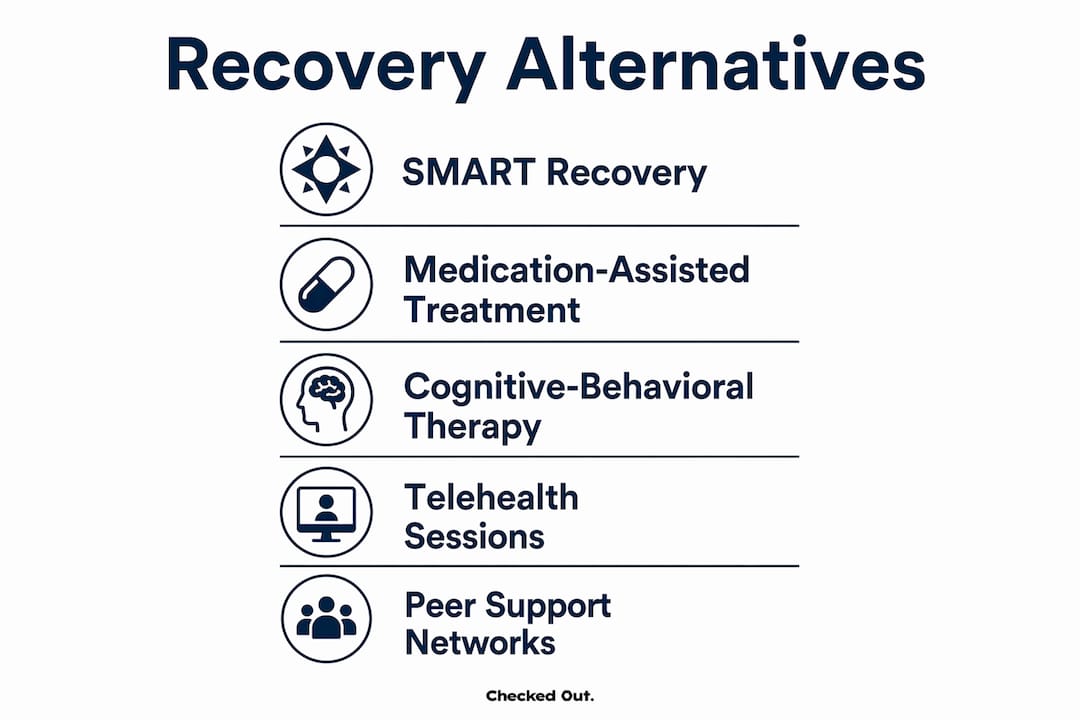
SMART Recovery — evidence-based, community-driven addiction support using cognitive-behavioral tools, free to access nationwide
-
I Am Sober — a sobriety tracking and motivation app with social community threads
-
Dream Journal Ultimate — AI-powered dream journaling with symbol analysis, trusted by thousands for over a decade
-
myDream — voice or text dream recording with instant AI interpretation and a trends dashboard
-
Somniary — Jungian-style AI dream analysis with a strong privacy commitment and no data storage
-
Somnium — AI symbol analysis linked to real-life events, with monthly dream insight reports
-
Clinical PHP/IOP programs — Joint Commission-accredited treatment centers offering Partial Hospitalization, Intensive Outpatient, and Medication-Assisted Treatment, accepted by most major private insurers
Insurance coverage and geographic reach vary widely across these options. SMART Recovery meetings exist in most U.S. states and online. Clinical programs tend to cluster in urban centers, and many exclude Medicare and Medicaid while accepting private plans like Aetna, Cigna, and UnitedHealthcare.
How SMART Recovery works as a recovery alternative
SMART Recovery stands apart from most peer support programs because it doesn’t require abstinence as a starting condition. The program uses science-backed methods rooted in cognitive-behavioral therapy, motivational interviewing, and rational emotive behavior therapy. That combination makes it genuinely adaptable to people at different stages of addiction, not just those already committed to full sobriety.
Meetings run both in-person and online, with no attendance requirements or formal membership. The peer engagement model is structured around four core points: building and maintaining motivation, coping with urges, managing thoughts and feelings, and living a balanced life. Family members can participate in separate support tracks.
Key features of SMART Recovery:
-
No abstinence requirement at entry, unlike many 12-step programs
-
Cognitive-behavioral tools taught directly in meetings, not just discussed
-
Online meetings available seven days a week, covering every U.S. time zone
-
Evidence base drawn from published addiction research, updated regularly
-
Peer facilitators trained through SMART’s own certification program
Recovery outcomes improve when community and family inclusion are built into the model, not added as afterthoughts. SMART’s structure reflects that.
Pro Tip: If you’re weighing SMART Recovery against a clinical program, try attending two or three online meetings before committing to anything. The format is low-pressure, and you’ll quickly sense whether the peer dynamic fits how you process change.
How to evaluate addiction recovery programs before you commit
The single most reliable predictor of a program’s quality is its structure, not its setting. A beachside facility with a beautiful campus means little if the clinical programming lacks accreditation or evidence-based components.
-
Accreditation: Look for Joint Commission certification. It signals that the program meets nationally recognized standards for clinical care.
-
Level of care: PHP (Partial Hospitalization Program) offers the most intensive outpatient structure. IOP (Intensive Outpatient Program) suits people with stable home environments. Standard outpatient works for maintenance phases.
-
MAT availability: Medication-Assisted Treatment using buprenorphine or naltrexone significantly reduces relapse risk. Programs that exclude MAT on philosophical grounds are working against the evidence.
-
Insurance: Most private plans cover PHP and IOP. Medicare and Medicaid are excluded by many private programs, so verify coverage before enrolling.
-
Evidence-based therapies: CBT, DBT, motivational interviewing, and psychoeducation should appear explicitly in the program description, not just implied.
-
Family programming: Programs that include family therapy consistently produce better long-term outcomes than those focused solely on the individual.
Program effectiveness depends more on accreditation and evidence-based practices than on branding or location prestige. A program’s name recognition tells you almost nothing about its clinical rigor.
Pro Tip: Ask any program directly: “Are you Joint Commission accredited, and do you offer MAT?” If they deflect or can’t answer clearly, that’s your answer.

Not every recovery support looks like a clinical program. Apps and AI-powered platforms fill real gaps, particularly for people managing sobriety day-to-day or exploring self-awareness through dream work.

I Am Sober tracks sobriety milestones, delivers motivational prompts, and connects people through social community threads. It won’t replace therapy, but the accountability layer it provides between sessions is genuinely useful.
The AI dream journaling space has grown quickly. Four platforms worth knowing:
-
Dream Journal Ultimate — over a decade of development, combining AI symbol analysis, a dream dictionary, lucid dreaming guides, and a global community. PIN and biometric locking protect your entries.
-
myDream — records dreams by voice or text, delivers instant AI interpretation, and builds a personalized trends dashboard showing recurring symbols and emotional cycles over time.
-
Somniary — Jungian-style interpretation with a firm privacy commitment. No dream data is stored after your session ends; everything dissolves when you close the tab.
-
Somnium — links dream symbols to real-life events you log, then generates a monthly Dream Insights Report. Users have reported notable improvements in lucid dream frequency with consistent use over a few months.
One boundary applies to all of these: AI dream analysis is a reflective tool, not a clinical therapy. It can surface patterns and prompt self-inquiry, but it doesn’t replace a licensed therapist. Ethically designed platforms are transparent about this distinction.
Privacy matters here too. Somniary guarantees no data retention and encrypts all communication during use. When choosing any dream journaling platform, check whether it stores your entries and under what conditions.
Leading evidence-based addiction recovery alternatives in the U.S.
Beyond SMART Recovery, several program types represent the current standard of care for addiction treatment in the United States.
Medication-Assisted Treatment (MAT) programs using buprenorphine or naltrexone are supported by decades of clinical research. They reduce withdrawal severity and lower relapse rates more reliably than abstinence-only approaches. MAT is available through federally qualified health centers, private clinics, and telehealth providers across all 50 states.
Cognitive-Behavioral Therapy (CBT) delivered in outpatient settings addresses the thought patterns that sustain addictive behavior. It’s one of the most studied interventions in addiction medicine and transfers well to both individual and group formats.
Telehealth-based IOP programs have expanded access significantly, particularly in rural areas where in-person PHP isn’t practical. Many accept private insurance and offer scheduling flexibility for people balancing work or family obligations.
How program access varies across U.S. regions
Geography shapes your options more than most people expect. Urban centers like Los Angeles, New York, and Chicago have dense concentrations of accredited PHP and IOP programs. Rural states, particularly in the Mountain West and parts of the South, have far fewer in-person options.
Telehealth has narrowed that gap. SMART Recovery’s online meeting schedule covers every time zone, and several MAT providers now operate entirely through video appointments. For drug-free recovery support that complements clinical treatment, digital tools remove geography as a barrier entirely.
What peer support networks actually look like in practice
Peer support in recovery takes several forms, and the differences matter.
12-step programs like AA and NA use a sponsor model built on shared lived experience. Attendance is free, meetings are everywhere, and the spiritual framework works well for many people. It’s not evidence-based in the clinical sense, but the social accountability it creates is real.
SMART Recovery uses trained facilitators rather than sponsors, keeping meetings structured around skill-building rather than storytelling alone. The peer dynamic is collaborative rather than hierarchical.
Online recovery communities attached to apps like I Am Sober offer asynchronous support through shared milestones and community threads. They work best as a supplement to structured programming, not a replacement.
The most durable recoveries tend to combine clinical structure with ongoing peer connection. A PHP or IOP program provides the therapeutic foundation: CBT, MAT, relapse prevention planning, and family therapy. Community programs like SMART Recovery or peer apps sustain momentum between sessions and after formal treatment ends.
Sleep quality plays a quiet but significant role in this process. Disrupted sleep raises cortisol, impairs emotional regulation, and increases craving intensity. Supporting overnight recovery through drug-free, science-backed approaches is one of the most underused tools in long-term addiction recovery.
What the evidence says about recovery program outcomes
SMART Recovery’s methodology draws from published cognitive-behavioral research, and its peer-facilitated model has been evaluated in multiple studies showing improvements in self-efficacy and reduced substance use. MAT programs using buprenorphine and naltrexone have the strongest evidence base of any pharmacological intervention in addiction medicine, with consistent reductions in opioid use and overdose mortality across large-scale studies.
Programs that include family therapy and psychoeducation produce better outcomes than those focused on the individual alone. The evidence here is consistent: community and family inclusion aren’t optional enhancements. They’re core to what makes structured recovery work.
Sleep is where recovery quietly consolidates. If you’re rebuilding after addiction or simply trying to restore the rest your body needs, Checkedoutwellness offers science-backed, drug-free sleep recovery products designed to support your body’s own melatonin production without synthetic additives or dependency risk.
Key Takeaways
Evidence-based addiction recovery alternatives consistently outperform unstructured approaches when they combine clinical accreditation, MAT access, and community peer support.
| Point |
Details |
| SMART Recovery’s core strength |
Uses cognitive-behavioral tools and peer meetings with no abstinence requirement at entry. |
| Accreditation signals quality |
Joint Commission certification is the clearest indicator of clinical rigor in any program. |
| Insurance gaps are common |
Many private programs exclude Medicare and Medicaid; verify coverage before enrolling. |
| AI dream tools have real limits |
Platforms like Somniary and Somnium support self-reflection but are not substitutes for therapy. |
| Sleep supports long-term recovery |
Restoring sleep quality reduces cortisol dysregulation and craving intensity during recovery. |
Recommended

Best DreamRecovery.com Alternatives for Addiction Recovery
If you’re searching for alternatives to DreamRecovery.com, the strongest options fall into two distinct categories: structured, evidence-based addiction recovery programs and AI-powered dream journaling tools. The confusion is understandable. The “Dream Recovery” name appears across both clinical rehab and sleep wellness spaces, so knowing which type of support you actually need is the first step.
Here’s a quick map of what’s out there:
Insurance coverage and geographic reach vary widely across these options. SMART Recovery meetings exist in most U.S. states and online. Clinical programs tend to cluster in urban centers, and many exclude Medicare and Medicaid while accepting private plans like Aetna, Cigna, and UnitedHealthcare.
How SMART Recovery works as a recovery alternative
SMART Recovery stands apart from most peer support programs because it doesn’t require abstinence as a starting condition. The program uses science-backed methods rooted in cognitive-behavioral therapy, motivational interviewing, and rational emotive behavior therapy. That combination makes it genuinely adaptable to people at different stages of addiction, not just those already committed to full sobriety.
Meetings run both in-person and online, with no attendance requirements or formal membership. The peer engagement model is structured around four core points: building and maintaining motivation, coping with urges, managing thoughts and feelings, and living a balanced life. Family members can participate in separate support tracks.
Key features of SMART Recovery:
Recovery outcomes improve when community and family inclusion are built into the model, not added as afterthoughts. SMART’s structure reflects that.
Pro Tip: If you’re weighing SMART Recovery against a clinical program, try attending two or three online meetings before committing to anything. The format is low-pressure, and you’ll quickly sense whether the peer dynamic fits how you process change.
How to evaluate addiction recovery programs before you commit
The single most reliable predictor of a program’s quality is its structure, not its setting. A beachside facility with a beautiful campus means little if the clinical programming lacks accreditation or evidence-based components.
Program effectiveness depends more on accreditation and evidence-based practices than on branding or location prestige. A program’s name recognition tells you almost nothing about its clinical rigor.
Pro Tip: Ask any program directly: “Are you Joint Commission accredited, and do you offer MAT?” If they deflect or can’t answer clearly, that’s your answer.
Non-traditional tools: recovery apps and AI dream journaling
Not every recovery support looks like a clinical program. Apps and AI-powered platforms fill real gaps, particularly for people managing sobriety day-to-day or exploring self-awareness through dream work.
I Am Sober tracks sobriety milestones, delivers motivational prompts, and connects people through social community threads. It won’t replace therapy, but the accountability layer it provides between sessions is genuinely useful.
The AI dream journaling space has grown quickly. Four platforms worth knowing:
One boundary applies to all of these: AI dream analysis is a reflective tool, not a clinical therapy. It can surface patterns and prompt self-inquiry, but it doesn’t replace a licensed therapist. Ethically designed platforms are transparent about this distinction.
Privacy matters here too. Somniary guarantees no data retention and encrypts all communication during use. When choosing any dream journaling platform, check whether it stores your entries and under what conditions.
Leading evidence-based addiction recovery alternatives in the U.S.
Beyond SMART Recovery, several program types represent the current standard of care for addiction treatment in the United States.
Medication-Assisted Treatment (MAT) programs using buprenorphine or naltrexone are supported by decades of clinical research. They reduce withdrawal severity and lower relapse rates more reliably than abstinence-only approaches. MAT is available through federally qualified health centers, private clinics, and telehealth providers across all 50 states.
Cognitive-Behavioral Therapy (CBT) delivered in outpatient settings addresses the thought patterns that sustain addictive behavior. It’s one of the most studied interventions in addiction medicine and transfers well to both individual and group formats.
Telehealth-based IOP programs have expanded access significantly, particularly in rural areas where in-person PHP isn’t practical. Many accept private insurance and offer scheduling flexibility for people balancing work or family obligations.
How program access varies across U.S. regions
Geography shapes your options more than most people expect. Urban centers like Los Angeles, New York, and Chicago have dense concentrations of accredited PHP and IOP programs. Rural states, particularly in the Mountain West and parts of the South, have far fewer in-person options.
Telehealth has narrowed that gap. SMART Recovery’s online meeting schedule covers every time zone, and several MAT providers now operate entirely through video appointments. For drug-free recovery support that complements clinical treatment, digital tools remove geography as a barrier entirely.
What peer support networks actually look like in practice
Peer support in recovery takes several forms, and the differences matter.
12-step programs like AA and NA use a sponsor model built on shared lived experience. Attendance is free, meetings are everywhere, and the spiritual framework works well for many people. It’s not evidence-based in the clinical sense, but the social accountability it creates is real.
SMART Recovery uses trained facilitators rather than sponsors, keeping meetings structured around skill-building rather than storytelling alone. The peer dynamic is collaborative rather than hierarchical.
Online recovery communities attached to apps like I Am Sober offer asynchronous support through shared milestones and community threads. They work best as a supplement to structured programming, not a replacement.
Combining professional treatment with community support
The most durable recoveries tend to combine clinical structure with ongoing peer connection. A PHP or IOP program provides the therapeutic foundation: CBT, MAT, relapse prevention planning, and family therapy. Community programs like SMART Recovery or peer apps sustain momentum between sessions and after formal treatment ends.
Sleep quality plays a quiet but significant role in this process. Disrupted sleep raises cortisol, impairs emotional regulation, and increases craving intensity. Supporting overnight recovery through drug-free, science-backed approaches is one of the most underused tools in long-term addiction recovery.
What the evidence says about recovery program outcomes
SMART Recovery’s methodology draws from published cognitive-behavioral research, and its peer-facilitated model has been evaluated in multiple studies showing improvements in self-efficacy and reduced substance use. MAT programs using buprenorphine and naltrexone have the strongest evidence base of any pharmacological intervention in addiction medicine, with consistent reductions in opioid use and overdose mortality across large-scale studies.
Programs that include family therapy and psychoeducation produce better outcomes than those focused on the individual alone. The evidence here is consistent: community and family inclusion aren’t optional enhancements. They’re core to what makes structured recovery work.
Sleep is where recovery quietly consolidates. If you’re rebuilding after addiction or simply trying to restore the rest your body needs, Checkedoutwellness offers science-backed, drug-free sleep recovery products designed to support your body’s own melatonin production without synthetic additives or dependency risk.
Key Takeaways
Evidence-based addiction recovery alternatives consistently outperform unstructured approaches when they combine clinical accreditation, MAT access, and community peer support.
Recommended